Learn how to incorporate operational variables, or covariates, into predicting asset survival probabilities.
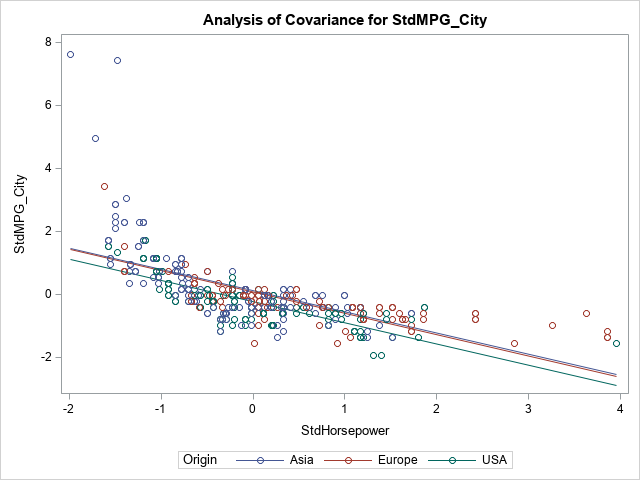
A previous article discusses standardized coefficients in linear regression models and shows how to compute standardized regression coefficients in SAS by using the STB option on the MODEL statement in PROC REG. It also discusses how to interpret a standardized regression coefficient. Recently, a SAS user wanted to know how
A previous article discusses the issue of a confounding variable and uses correlation to give an example. The example shows that the correlation between two variables might be affected by a third variable, which is called a confounding variable. The article mentions that you can use the PARTIAL statement in
Following on from my introductory blog series, Data Science in the Wild, we’re going to start delving into how you can scale up and industrialise your Analytics with SAS Viya. In future blogs we will look at how you can augment your R & Python code to leverage SAS Viya
Artificial intelligence (AI) is one of the most popular topics in the tech industry, along with IoT, cloud and blockchain, to mention just a few. Although it is a very promising technology, it is also connected with very high expectations, quite often beyond the capabilities that AI provides today. As
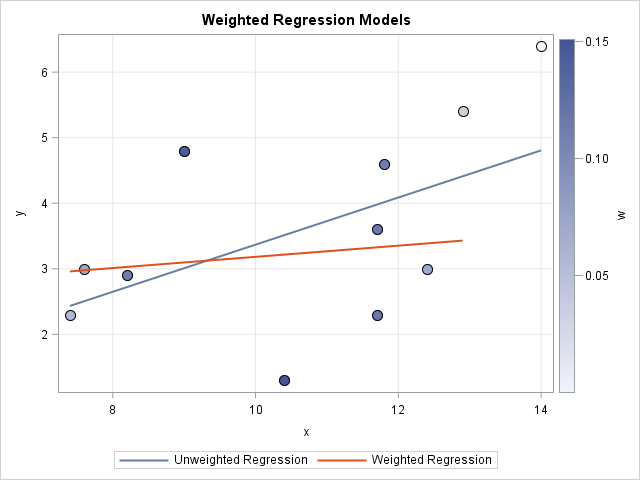
How can you specify weights for a statistical analysis? Hmmm, that's a "weighty" question! Many people on discussion forums ask "What is a weight variable?" and "How do you choose a weight for each observation?" This article gives a brief overview of weight variables in statistics and includes examples of
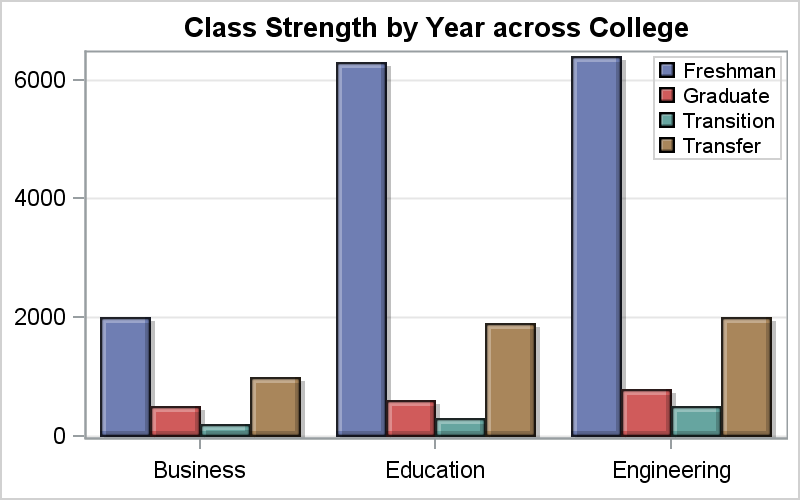
Back in 2013, I wrote a paper for the SAS Global Forum, reviewing the attributes that go towards making a good graph. In this paper, I covered many recommendations from industry thought leaders that can help enhance the effectiveness of graphs to deliver the intended information. One of the aspects that
Authors: Shahrzad Azizzadeh, Kaustubh Khandwe, Bahar Biller, and Paul Venditti On large-scale solar farms, power loss is the silent drain on profits. Unoptimized panels chip away at efficiency, causing hidden losses that people often overlook—but those losses are never insignificant. In this post, we’ll uncover how to spot and solve these
Experimentation is the engine of innovation. Whether optimizing manufacturing processes, testing new materials, or simulating policy outcomes, the ability to run controlled experiments is essential. Design of experiments (DOE) is a well-established statistical methodology that helps organizations systematically explore the relationships between variables and outcomes. However, traditional DOE has its

SAS' Jennifer Hargrove introduces the SAS Medication Adherence Risk model, a way to identify patients at high risk of being non-adherent to their medication therapy so that interventions can be provided to help patients remain adherent.
Who has time to be a nutritionist between work deadlines and swim practice? Not this working mom! But my tiny human needs her fuel, you know? This is why I’m thankful for nutrition labels. A quick scan at the grocery store tells me if that cereal is all sugar bombs
Learn how to fit a random forest and use your model to score new data. In Part 6 and Part 7 of this series, we fit a logistic regression and decision tree to the Home Equity data we saved in Part 4. In this post we will fit a Random
Learn how to fit a decision tree and use your decision tree model to score new data. In Part 6 of this series we took our Home Equity data saved in Part 4 and fit a logistic regression to it. In this post we will use the same data and
Platforma SAS® Viya® oferuje wiele algorytmów klasy uczenia maszynowego (machine learning, ML) czy sztucznej inteligencji (artificial intelligence, AI) do trenowania modeli predykcyjnych (klasyfikacyjnych itp.), takich jak lasy losowe (random forest) czy wzmocnienia gradientowe (gradient boosting), jak również modele uczenia głębokiego (deep learning). Choć wielokrotnie potwierdziły one swoją przydatność w praktyce,
If you are an Enterprise Miner user, do not miss the opportunity to try out Model Studio in SAS Viya. I am sure you will love it!
A team of SAS employees recently participated in a data-for-good project focusing on forest fires in the Amazon. In conjunction with the Amazon Conservation Association (ACA), the team explored options to collect and analyze publicly available imagery and fire data to better understand the drivers for forest fires as well
In our previous section of the series we discussed the impact of missingness and techniques to address this. In this final section of the series we look at how we can use drag-and-drop tools to accelerate our EDA. As mentioned at the beginning of this series, SAS Viya offers multiple
Everyone knows that SAS has been helping programmers and coders build complex machine learning models and solve complex business problems for many years, but did you know that you can also now build machines learning models without a single line of code using SAS Viya? SAS has been helping programmers
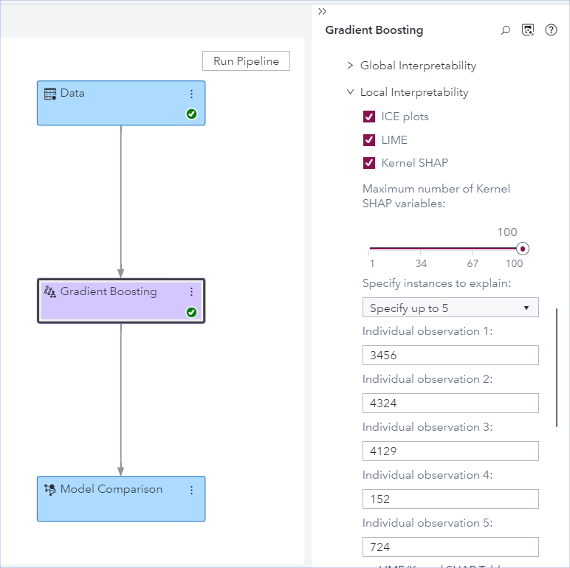
In the preceding two posts, we looked at issues around interpretability of modern black-box machine-learning models and introduced SAS® Model Studio within SAS® Visual Data Mining and Machine Learning. Now we turn our attention to programmatic interpretability.
In the second of a three-part series of posts, SAS' Funda Gunes and her colleague Ricky Tharrington summarize model-agnostic model interpretability in SAS Viya.
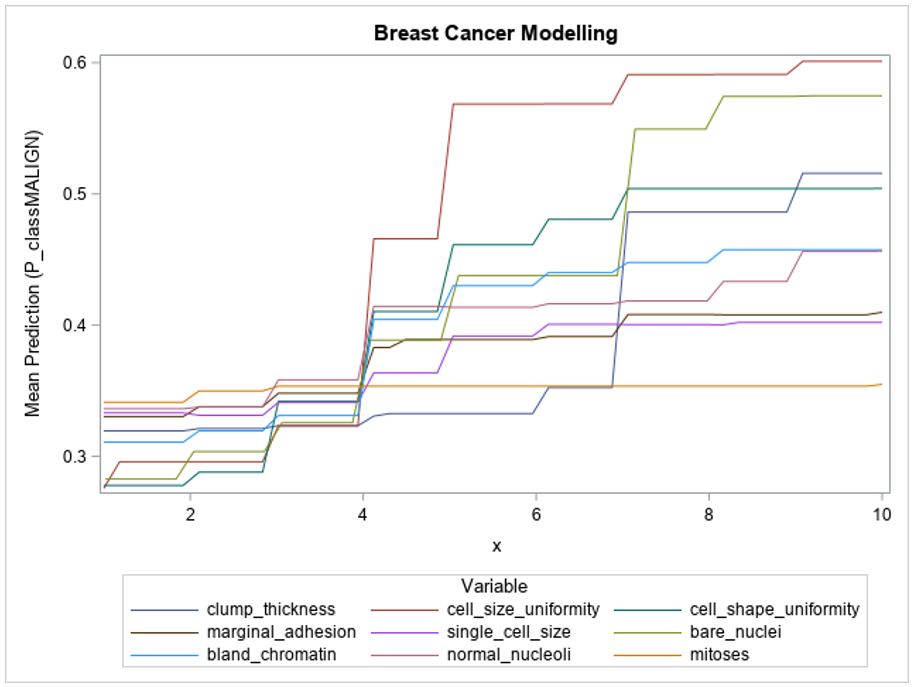
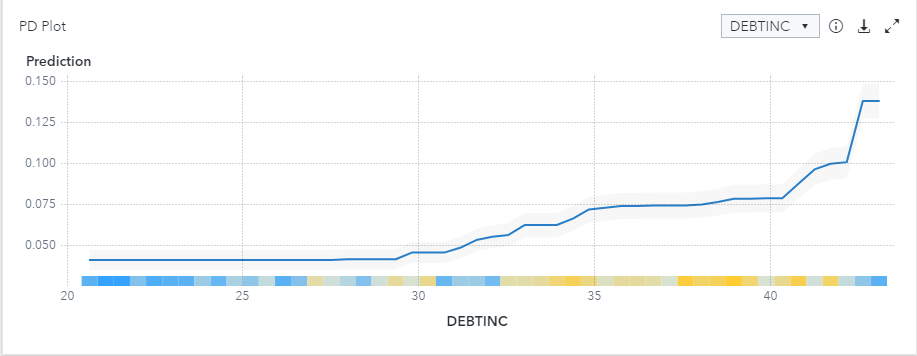
A monotonic relationship exists when a model’s output increases or stays constant in step with an increase in your model’s inputs. Relationships can be monotonically increasing or decreasing with the distinction based on which direction the input and output travel. A common example is in credit risk where you would expect someone’s risk score to increase with the amount of debt they have relative to their income.
In the first of a three-part series of posts, SAS' Funda Gunes and her colleague Ricky Tharrington summarize model-agnostic model interpretability in SAS Viya.
Variable Selection node案例情境說明 根據上篇的介紹,接下來將透過案例情境詳細展示 Variable Selection node 的變數篩選結果,輔助說明的資料集為 SAMPSIO.HMEQ (Home Equity資料集)。
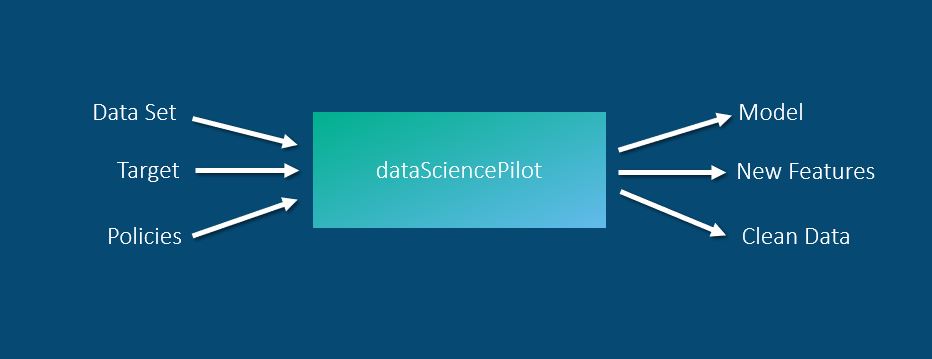
This blog is a part of a series on the Data Science Pilot Action Set. In this blog, we discuss updates to Visual Data Mining and Machine Learning with the release of Viya 3.5. In the middle of my blog series, SAS released Viya 3.5. Included in Viya 3.5 was the
Data scientists naturally use a lot of machine learning algorithms, which work well for detecting patterns, automating simple tasks, generalizing responses and other data heavy tasks. As a subfield of computer science, machine learning evolved from the study of pattern recognition and computational learning theory in artificial intelligence. Over time, machine learning has borrowed from many
Technological advancements are changing every industry – and the health care industry is no exception. The value of AI has never been greater than when it’s used to improve patients’ conditions and save lives. For example, Cancer Center Amsterdam joined forces with SAS to improve patient care outcomes with AI.
머신러닝의 블랙 박스 모델을 소개하는 첫 번째 블로그와 두 번째 블로그를 통해서 머신러닝 모델의 복잡성과 머신러닝의 뛰어난 예측 결과를 활용할 수 있는 해석력이 필요한 이유, 적용 분야에 대해서 소개해드렸는데요. 이번에는 기업 실무자 입장에서 SAS 비주얼 데이터 마이닝 앤드 머신러닝(SAS Visual Data Mining and Machine Learning)을 활용한 SAS 커스터머 인텔리전스 360(SAS Customer Intelligence 360)에서 해석 기법과
Gradient boosting is one of the most widely used machine learning models in practice. See how to use gradient boosting model for classification in SAS Visual Data Mining and Machine Learning.
음악 추천부터 대출 심사, 직원 평가, 암 진단까지 현대 사회는 인공지능(AI)과 머신러닝 기반의 애플리케이션에 둘러싸여 있습니다. 기계가 사람을 대신해 내린 의사결정에 점점 더 많은 영향을 받고 있는데요. 일상적인 것부터 사람의 목숨이 걸린 중대한 의사결정에 이르기까지 우리는 머신러닝 모델에 수많은 질문을 던집니다. 이때 질문에 대한 답변은 ‘예측 모델’이 결정합니다. 생소하고 어려운 개념인데요. 데이터
We have updated our software for improved interpretability since this post was written. For the latest on this topic, read our new series on model-agnostic interpretability. As machine learning takes its place in many recent advances in science and technology, the interpretability of machine learning models grows in importance. We