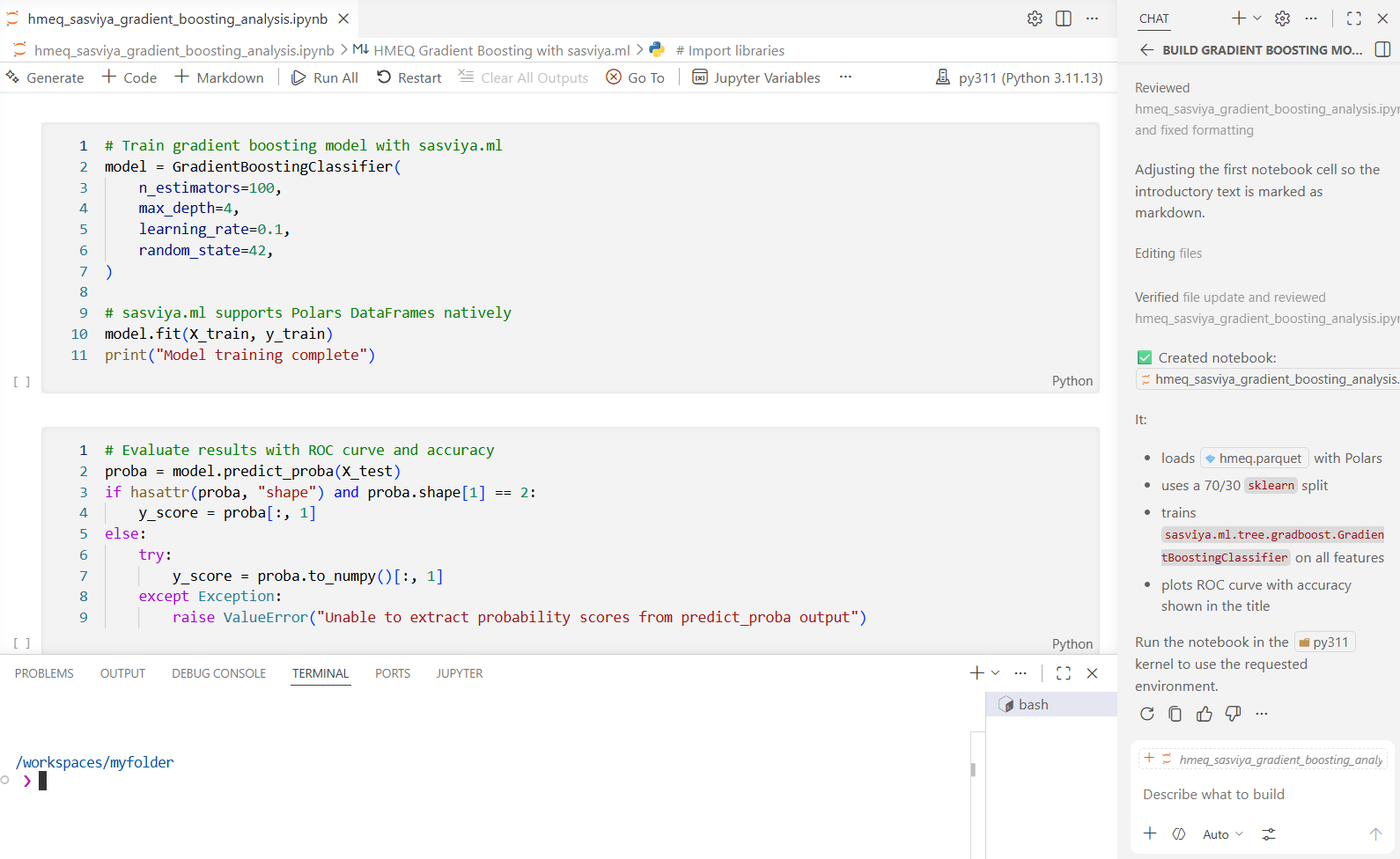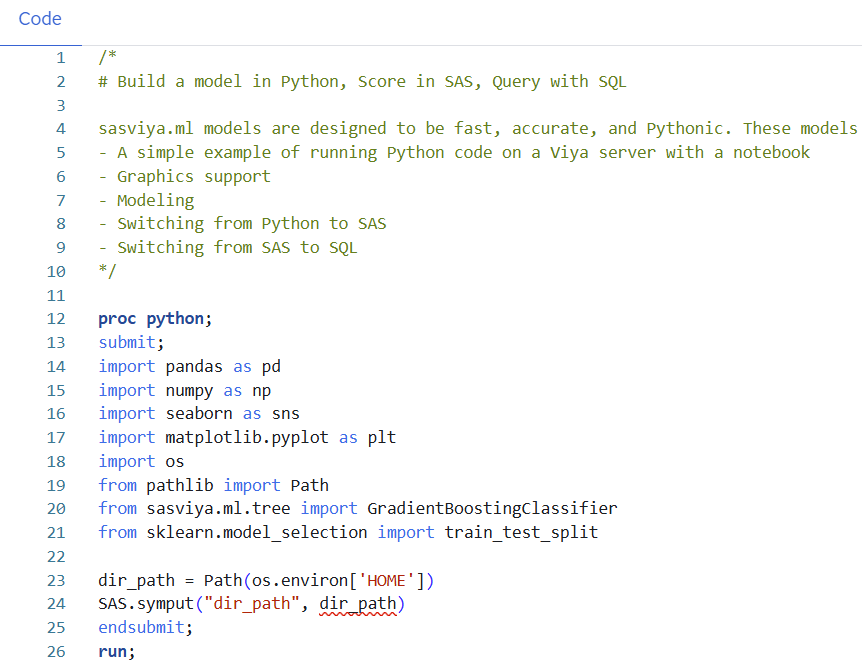
Want the flexibility of modern Python development with the power of SAS behind it? Explore how SAS Viya Workbench combines familiar tools, on-demand compute, and Python-native access to advanced SAS algorithms in a single browser-based environment.
Learn how the SAS Viya MCP Server enables AI assistants like Claude Cowork to orchestrate governed, auditable banking analytics workflows while keeping model execution, governance and oversight within SAS Viya.
Most machine learning models produce a probability, but many times logic is applied to that prediction to produce a decision. That last logic step often lives in a downstream script disconnected from the model it depends on, easy to lose when the model is refreshed. Using the home equity (HMEQ) dataset, this post walks through a practical alternative in SAS Model Studio. A SAS Code node placed after the modeling node weights the predicted default probability by the requested loan amount to produce expected loss in dollars, and the new Model Registration node (2026.05) accumulates that logic into a single model registered in SAS Model Manager. The result is a model and its decision logic captured as one governed, versioned artifact, so whoever scores the model gets the decision-ready output computed the same way every time.