All Posts


O SAS estará presente no Febraban Tech, um dos mais importantes eventos de tecnologia, inovação e negócios da América Latina. Neste ano, o evento acontece nos dias 24, 25 e 26 de agosto, no Distrito Anhembi, reunindo líderes, especialistas e empresas para discutir como dados, analytics e inteligência artificial estão
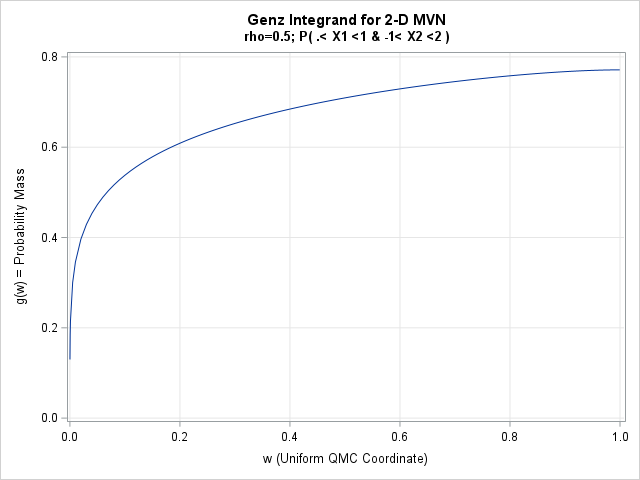

I've been working on a project that uses quasi-Monte Carlo (QMC) techniques to estimate probabilities for multivariate normal (MVN) distributions on finite or infinite rectangular regions. The goal is to enable SAS users to compute these probabilities accurately and efficiently. My implementation is based on a numerical technique called the


Learn how to use SAS code (PROC HTTP) to read and write files from your Microsoft OneDrive, Microsoft Teams or SharePoint Online. You'll learn how to create a Microsoft Office 365 app, connect to it with SAS, and automate the integration with your office productivity environment.


Organizations rarely struggle to build AI models. They struggle to scale them. Across industries, organizations continue to invest heavily in data and AI, yet many initiatives never move beyond pilot projects. The challenge isn't creating better models. It's maintaining the infrastructure that surrounds them. Data pipelines, governance, business rules and
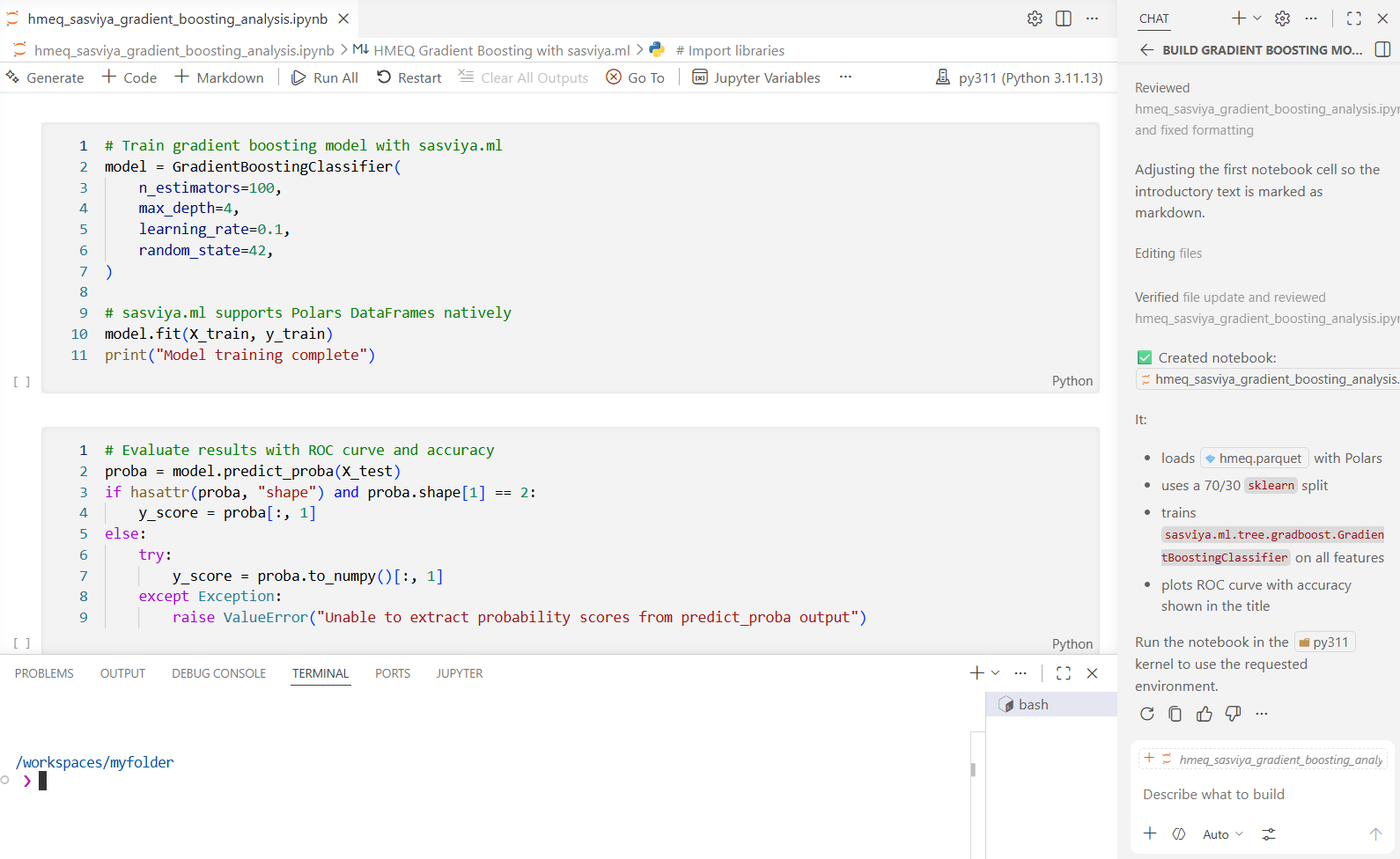

Want the flexibility of modern Python development with the power of SAS behind it? Explore how SAS Viya Workbench combines familiar tools, on-demand compute, and Python-native access to advanced SAS algorithms in a single browser-based environment.


Life somehow has a funny way of always making us busy, and fitting a workout into an already packed schedule seems like an impossible task. However, it doesn't have to be! Many people believe they need to spend an hour or more in the gym to see meaningful health benefits,


Gout has become common enough that most of us know what it is—or at least know someone who has dealt with it. But while gout gets most of the attention, the real issue behind it is uric acid. If you’ve had gout, you may have heard about purines or were
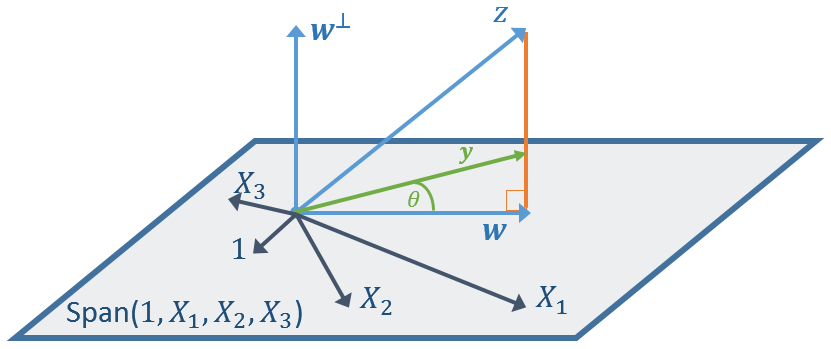
One of the great algorithms of linear algebra is the Gram-Schmidt orthogonalization process, which enables you to construct an orthogonal basis for a linear subspace from any set of linearly independent vectors that span the subspace. The Gram-Schmidt process is the basis for the QR decomposition in numerical linear algebra,


AI is evolving quickly, but where is it headed next? At SAS Innovate 2026, we asked customers, partners and industry leaders a simple question: What do you think the future of AI looks like? Their answers touched on everything from agentic AI and trustworthy AI to the role of human

Posten Bring and Regeneron demonstrate that successful modernization to SAS Viya is not just a technical migration but a strategic transformation that combines cloud scalability, governance, user adoption, and disciplined planning to help organizations become more agile, efficient, and future-ready.


Learn how the SAS Viya MCP Server enables AI assistants like Claude Cowork to orchestrate governed, auditable banking analytics workflows while keeping model execution, governance and oversight within SAS Viya.


The consumerization of health care is no longer a future-state concept. It is here, and it is reshaping expectations faster than many organizations are prepared to meet. Patients today are not just recipients of care. They are consumers comparing experiences across industries. They expect the same level of personalization, convenience


Every missed appointment affects more than one patient. It delays care, leaves valuable clinical time unused, disrupts schedules and creates additional work for care teams already operating under significant pressure. For health care organizations facing growing demand and limited resources, reducing patient no-shows can improve both patient access and operational


There is no question that AI in marketing is here to stay. According to DemandSage, “56% of brands now actively use AI to tailor every customer interaction (content, recommendations and support), while 96% of companies report AI has significantly improved their personalization ROI.” And it does pay off: DemandSage research


AI gets the spotlight. Data does the work. Across industries, organizations are racing to adopt large language models (LLMs), build AI assistants and explore autonomous agents. This ambition is understandable. AI promises faster decisions, new efficiencies and entirely new ways of working. But amid the excitement, many leaders are overlooking