All Posts
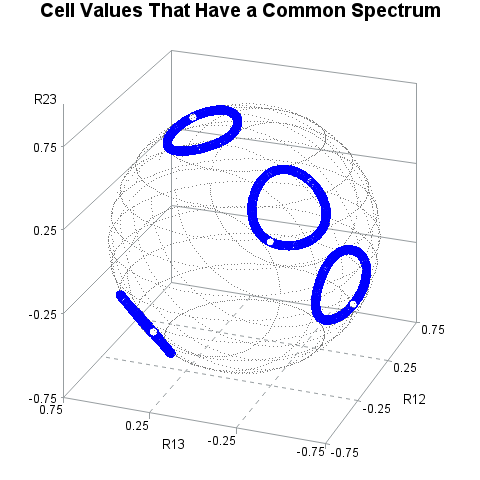

A previous article discusses how to generate a random correlation matrix. On average, in a random correlation matrix, half of the off-diagonal entries are negative and half are positive. For any realization, the proportion of negative correlations might be greater than (or less than) half. This is in contrast to


Run the same analysis on the same data. You should get the same result. Every time. In clinical research, that simply isn’t a best practice. It’s a regulatory expectation. Yet, a surprising number of clinical research teams still rely on individual analysts, local computing environments and manual documentation to ensure


A model can finish running in seconds. Understanding what it is telling you can take much longer. A fit statistic signals how well a model performs. A residual plot reveals whether assumptions hold. A decision tree shows how observations are split into groups. But before any of that can support


Chronic bloating, gas, abdominal discomfort, constipation, or diarrhea can be incredibly frustrating — especially when symptoms seem to show up after almost every meal. If you’ve been told “everything looks normal” but you still don’t feel normal, there may be more going on beneath the surface. That chronic bloating could


Summer internships are all about gaining the skills and experience needed to thrive in the future. But what if interns could use those skills to make a difference right now? SAS’ 2026 summer interns did exactly that through Data for Good, a long-running SAS program that uses data, analytics and


La confianza es uno de los activos más valiosos para los gobiernos. En un entorno marcado por la complejidad social, económica y tecnológica, las instituciones públicas enfrentan el desafío constante de responder con transparencia, eficiencia y resultados tangibles para la ciudadanía. En este contexto, la toma de decisiones confiables se
In a previous article, I implemented an algorithm due to Niels Waller (TAS, 2020) that uses the method of alternating projections (MAP) to generate random correlation matrices that have a specified set of eigenvalues. The algorithm is iterative, and the MAP method is not guaranteed to converge, although Waller claims


AWS 기반 SAS Viya로 모델 모니터링 자동화…보고 시간 단축과 모델 거버넌스 강화 아프리카 최대 금융기관 중 하나인 Absa 은행은 500개 이상의 신용 리스크 모델을 운영하고 있었습니다. 이 과정에서 모델 모니터링과 보고에 최대 4주가 소요되는 문제를 해결하고자 했습니다. 높아지는 고객 기대와 규제 요구에 대응하기 위해 은행은 데이터 및 AI 부문


AI-powered medical record intelligence helps healthcare organizations turn unstructured clinical documents into actionable insights, reducing administrative burden and enabling faster, more consistent review decisions.


세계적인 브랜드 Macy's는 정교하게 설계된 데이터 기반의 마케팅 의사결정을 통해 개인 맞춤화 형태의 유효한 고객 경험을 창출하는 데 집중하고 있습니다. 이 글은 SAS Thought Leadership, Editorial 및 Content 팀의 Amy Dyson의 글을 번역한 것입니다. (영문 링크) Macy’s는 '고객 중심(Customer Obsession)' 전략을 기반으로 고객 충성도와 지속 가능한 성장을 추진하는 기업입니다. 마케팅


Much of the conversation around agentic AI focuses on autonomy. How much work can an agent complete on its own? How many decisions can it make? How far can organizations remove people from the process? Those questions make sense, but they can also obscure where businesses are finding value today.


O SAS estará presente no Febraban Tech, um dos mais importantes eventos de tecnologia, inovação e negócios da América Latina. Neste ano, o evento acontece nos dias 24, 25 e 26 de agosto, no Distrito Anhembi, reunindo líderes, especialistas e empresas para discutir como dados, analytics e inteligência artificial estão
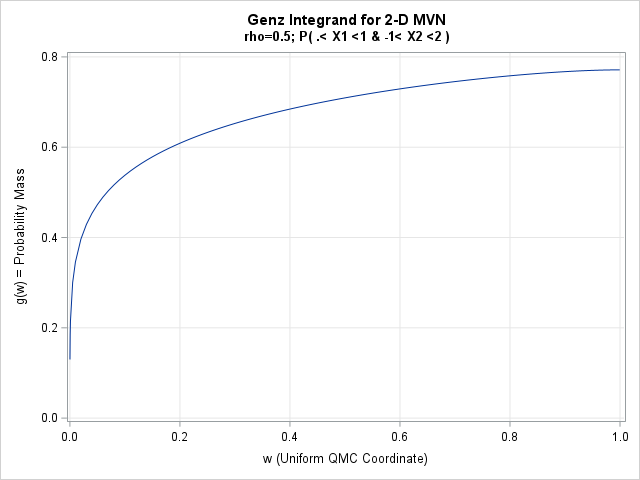
I've been working on a project that uses quasi-Monte Carlo (QMC) techniques to estimate probabilities for multivariate normal (MVN) distributions on finite or infinite rectangular regions. The goal is to enable SAS users to compute these probabilities accurately and efficiently. My implementation is based on a numerical technique called the


Learn how to use SAS code (PROC HTTP) to read and write files from your Microsoft OneDrive, Microsoft Teams or SharePoint Online. You'll learn how to create a Microsoft Office 365 app, connect to it with SAS, and automate the integration with your office productivity environment.


Organizations rarely struggle to build AI models. They struggle to scale them. Across industries, organizations continue to invest heavily in data and AI, yet many initiatives never move beyond pilot projects. The challenge isn't creating better models. It's maintaining the infrastructure that surrounds them. Data pipelines, governance, business rules and