All Posts


Life places thousands of demands on our bodies every day. Whether it's carrying groceries, moving furniture, climbing stairs, gardening, or simply getting out of bed, our ability to meet those demands depends largely on our strength. Building and maintaining strength not only makes the activities of daily life easier, but

When most people think of their core they think of fitness influencers with 6-pack abs. In reality, the core is much more than that. The core is a complex group of muscles that includes the abdominals, obliques, deep stabilizing muscles, muscles of the spine, diaphragm, pelvic floor, and even muscles

When most people hear the word power, they think of elite athletes sprinting down a field, jumping for a rebound, or exploding out of the starting blocks. While power is certainly important for sports performance, it is also one of the most important physical qualities for everyday life and healthy
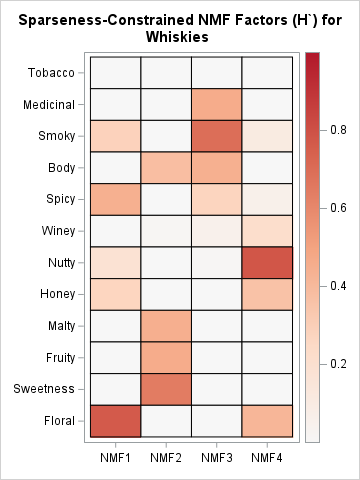

A previous article describes the nonnegative matrix factorization (NMF). You can use the NMF to reveal important features in data that can be used to reduce the dimensionality of the problem. NMF is useful when the data are nonnegative, such as counts or pixel values in an image. The goal


For many SAS users, lexjansen.com was simply a destination. It was the place you went when you needed to find that paper you vaguely remembered from a conference years ago, track down an expert's presentation on a niche topic, or discover the best work that had ever been published on
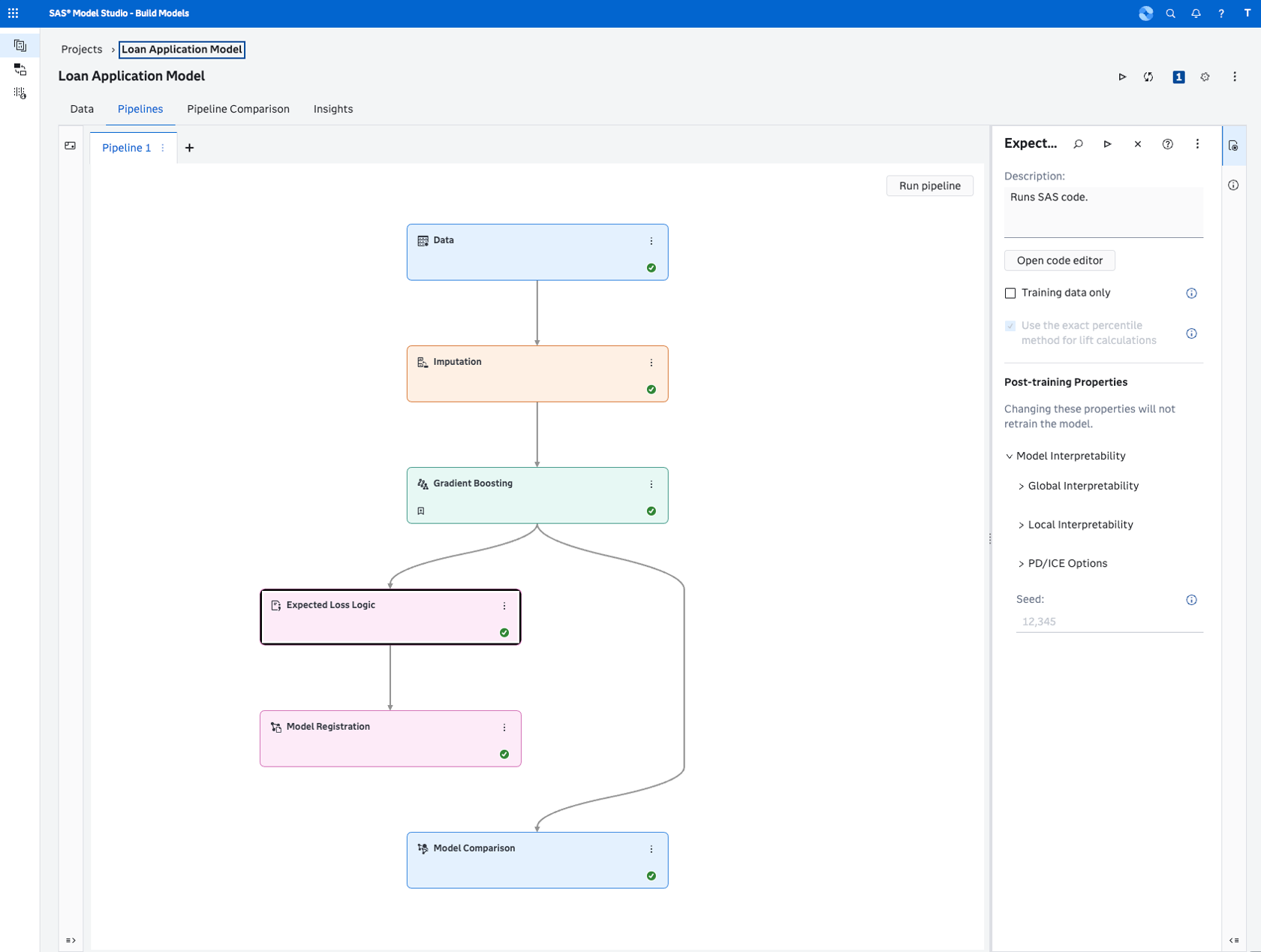

Most machine learning models produce a probability, but many times logic is applied to that prediction to produce a decision. That last logic step often lives in a downstream script disconnected from the model it depends on, easy to lose when the model is refreshed. Using the home equity (HMEQ) dataset, this post walks through a practical alternative in SAS Model Studio. A SAS Code node placed after the modeling node weights the predicted default probability by the requested loan amount to produce expected loss in dollars, and the new Model Registration node (2026.05) accumulates that logic into a single model registered in SAS Model Manager. The result is a model and its decision logic captured as one governed, versioned artifact, so whoever scores the model gets the decision-ready output computed the same way every time.


Small and midsized businesses are entering a defining period for AI adoption. Data, analytics and AI platforms are becoming essential for organizations that want to compete, adapt and grow. These technologies can help smaller businesses improve decisions, automate processes and respond more quickly to changing customer needs. But access to


Open-source technologies have become a standard part of modern analytics, data science and AI. Organizations across regulated industries are adopting tools like Python to accelerate innovation while building more flexible analytics environments. But adopting open-source technologies introduces a new challenge. As organizations modernize, they must also maintain the governance, transparency


Organizations have spent the past few years experimenting with AI. The question now isn't whether AI can generate insights. It's whether organizations can consistently turn those insights into business decisions that create measurable value. That's where many AI initiatives stall. Models perform well in development but never make it to


For many applicants, the permitting process feels like a black box – slow, complex and often frustrating. That perception isn’t unfounded. Across agencies, permitting has long relied on manual reviews, paper-heavy workflows and disconnected systems. The result is predictable: delays, inconsistencies, errors, undetected fraud, and limited visibility for both regulators

7月といえば七夕。笹に短冊を飾り、願い事を書く季節である。今年の私の願いは、データを活用できる人材が日本でもっと広がることだ。 データ活用とは、長年培ってきた勘や経験を否定するものではない。そこにデータを少し足すことで、経営判断の精度を高めるための身近な道具である。特に地方の中小企業には、意思決定が速く、小さく始めて成果を確かめやすいという強みがある。 デジタル技術の進化により、日々多くのデータが生まれている。一方で、データを「集める」ことと「使いこなす」ことの間には、まだ大きな距離がある。日本でもDXやAI活用の重要性は広く語られている。しかし、現場でデータを読み解き、判断や改善につなげられる人材は、まだ十分とは言えない。だからこそ、データを理解し、仕事に活かす力を一人ひとりが持つことが重要になる。 このような思いから企画に関わってきた新しい講座が、いよいよ始まる。長崎大学の「データ活用人材育成講座(初級コース)」である。本講座は、統計などの専門知識がない方でも、データ分析の基礎から実務応用までを学べる実践的なプログラムで、課題解決や意思決定に必要な知識とスキルを、体系的に身につけることができる。講座の詳細は、下記サイトを参照されたい。 2026年度 データ活用人材育成講座(初級コース) | 長大データバンク | NU Databank データ活用は、一部の専門家だけに求められる特別なスキルではない。現場の課題を見つけ、よりよい判断や改善につなげるための、これからの仕事に欠かせない共通言語である。勘や経験にデータを組み合わせることで、経営や日々の意思決定はさらに強くなる。 七夕の短冊に願いを書くなら、「データを正しく読み解き、仕事や地域の課題解決に活かせる人がもっと増えますように」と書きたい。この講座が、その願いを現実に近づけ、長崎から日本各地の組織や地域へとデータ活用の力を広げる一歩となることを期待している。 2026年7月末 相吉


El bienestar laboral se ha consolidado como una prioridad estratégica para las organizaciones, tanto públicas como privadas. La Organización Mundial de la Salud define el burnout como un síndrome derivado del estrés crónico mal gestionado en el trabajo, caracterizado por agotamiento, distanciamiento mental de la actividad profesional y una disminución

In his 2004 paper, "Non-negative Matrix Factorization with Sparseness Constraints," Patrick Hoyer introduced a function that measures the sparseness of a nonzero vector. The paper does not explain or motivate the formula, so this article describes the geometry and intuition behind Hoyer's formula, along with a visualization and examples. Hoyer's


Consider the following quote from George Box: “All models are wrong, some are useful.” Most of today’s models are free. And models power AI outcomes. When considering your enterprise strategy, AI should fit snuggly into business processes that successfully execute tasks supporting the overall strategic vision – underwriting policies, pricing


Explore how SAS Health and SAS Viya help healthcare organizations transform clinical and operational data into predictive, AI-driven decisioning workflows that improve patient outcomes through risk identification, model deployment, and governed agentic AI.