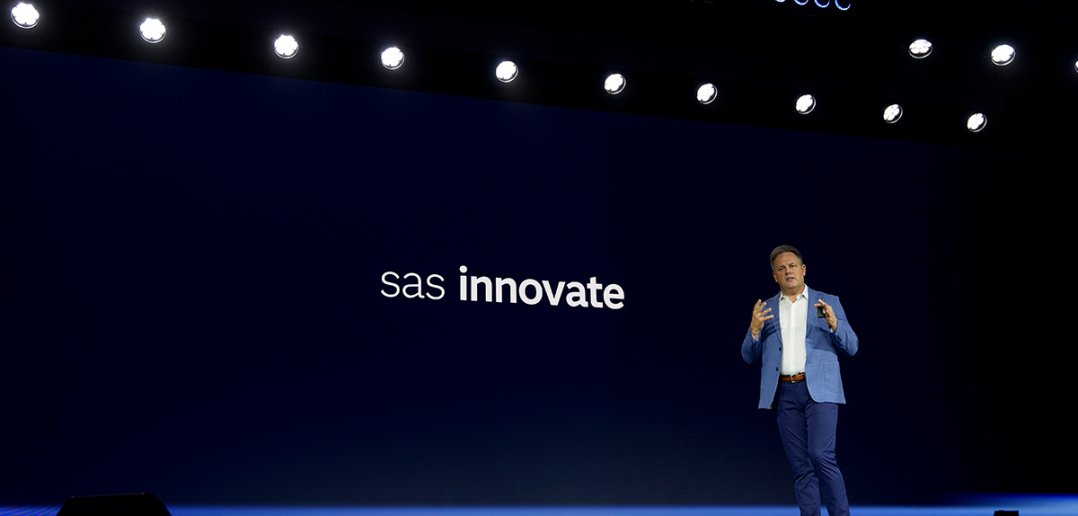
There’s a question floating around in many conversations, leadership meetings, hiring decisions, at home and in the way companies are quietly restructuring. Most people aren’t saying it directly, but it’s there.
SAS CTO Bryan Harris did say it directly at SAS Innovate 2026, which set the stage for this genuinely thought-provoking moment.
“Will people matter? Harris asked. “We are in a crisis ... a crisis of confidence in human ingenuity. It is not a collapse in the belief that AI will matter. It is a collapse in the belief that people will matter.”
That’s a heavy thing to say in a room full of people largely familiar with AI.
What’s happening out there
Companies are cutting people, sometimes under the banner of efficiency, sometimes under the banner of AI transformation, before they’ve even figured out what they’re transforming into. You see job postings for training AI models. You don’t see nearly as many for people who just want to bring real judgment, context and expertise to an organization. The human element is being treated like overhead rather than infrastructure.
Harris put it plainly. “No one knows your business better than you. And the way you show up right now with AI will determine your brand value to the next generation.” In other words, the decisions being made right now about people and technology, and what gets prioritized, will follow organizations for a long time.
And the truth is, most companies don’t yet fully know how to use AI. They’re adopting it faster than they’re understanding it. So, the people who could help navigate this gap are sometimes the same ones being shown the door.
His argument and SAS’ entire posture is that this was never supposed to be a people versus technology conversation. “The answer has always been we empower people with technology to scale human observation and decision-making,” Harris notes. Do not replace the human observation; scale it. SAS has been making that case for 50 years with its people-first culture.
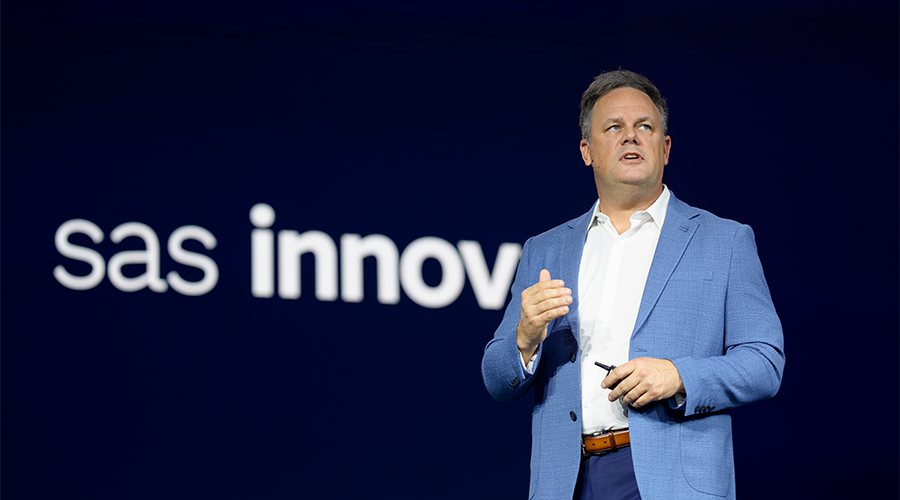
No one knows your business better than you. And the way you show up right now with AI will determine your brand value to the next generation. Bryan Harris
The trust problem that’s not discussed enough
Organizations are drowning in data, more than any workforce can reasonably process. AI genuinely helps with that. But the moment you start trusting it inside real workflows, the stakes change entirely.
Harris has said this before and alluded to it in this talk. There’s a temptation to hand over trust just because a system feels sophisticated. His response then was direct: “We need to get out of this mindset of giving something trust just because it’s sophisticated. These systems have to earn it.” That same thread ran through this talk when he added, “AI has the potential to significantly bend the curve and close the information gap.”
He broke it down into three things worth remembering:
- Compound error quietly increases risk.
- Trust scales differently between individual and enterprise use cases.
- AI-assisted processes need a repeatable blueprint to hold up.
Number two is what many organizations are walking past right now. What works when you’re the only person catching errors on your large language model (LLM) of choice looks completely different when thousands of decisions are running through a system before anyone notices something is off. Governance has to be part of the process, not something you add after the fact. Speed only helps if the foundation under it is solid.
We are in a crisis... a crisis of confidence in human ingenuity. Bryan Harris
What people-first looks like in action
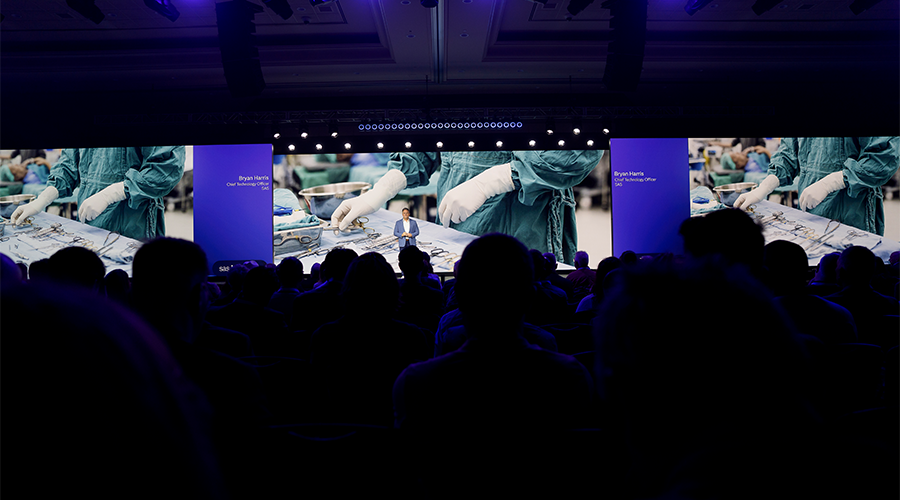
Picture a hospital operating room where a surgery gets delayed because instruments are missing or contaminated. That risk starts miles away in a sterilization facility, where thousands of instruments move through dozens of steps every single day. One bottleneck, one missed step and it ripples all the way to the patient on the table.
That’s the real-world problem Harris walked through with Sterilcentral, the largest medical sterilization provider in Denmark. Together with SAS, they built a digital twin of their Copenhagen facility, a living replica of every room, machine and workflow. When running scenarios, they can find what’s causing downstream bottlenecks. The digital twin shows them where to look and helps staff to decide what to do about it.
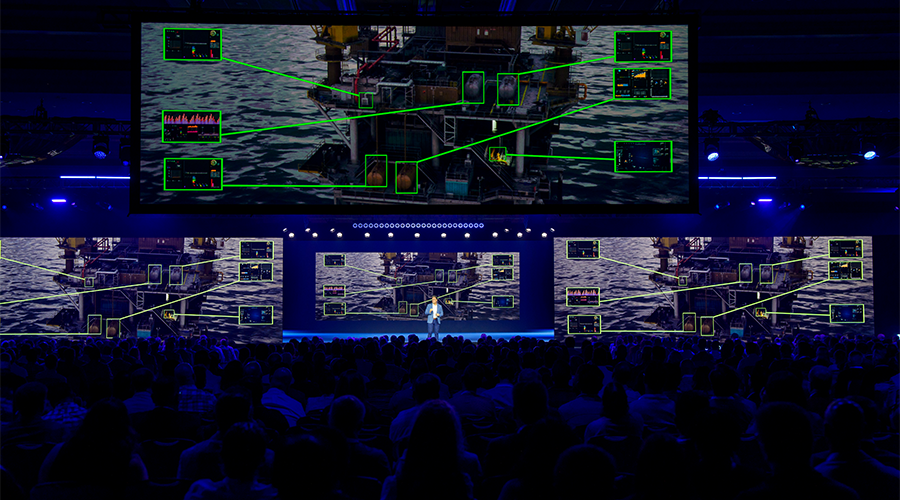
That same approach is what SAS built with Epic Games and Georgia-Pacific, simulating an entire manufacturing facility to optimize vehicle routes and fleet sizes. And it’s being scaled into energy, financial services, health care and beyond. What remains true across those examples is how much human judgment still does the heavy lifting. Someone has to know which questions to ask the simulation and how to interpret the data.
That’s the version of AI adoption that Harris believes works, and it’s also the version that requires organizations to keep investing in people rather than quietly moving them out.
The overview effect
 Harris closed with a nod to the overview effect, highlighting the shift in perspective astronauts describe when they see Earth from space, how the divisions that feel enormous from the ground suddenly look small.
Every major technology follows the same arc. It arrives, reshapes everything and eventually just becomes part of the background. The printing press, the internet, the cloud – none of them stayed novel forever. And through all of it, as Harris put it, “human ingenuity has been the engine behind every breakthrough that changed the world."
“In fact, we have never been more important than we are right now.” I agree with that. And I think most people should believe it too, if they’re being honest with themselves.
Saying people matter and using AI like they matter are two very different things. The organizations that close that gap may look back on this moment differently than those that didn’t.