All Posts


In today's digital age, marketing technology (MarTech) plays a crucial role in how businesses engage with their customers. However, the success of truly contextual customer engagement hinges on one fundamental principle: trust. Building and maintaining customer trust is essential for long-term business success, as it fosters loyalty and contributes to


AI and automation – often referred to as hyperautomation – are evolving rapidly with industry experts emphasizing their increasing ability to operate independently and make intelligent decisions. By combining powerful generative AI with business expertise, organizations can accelerate and streamline their processes like never before. I recently sat down with Mayank
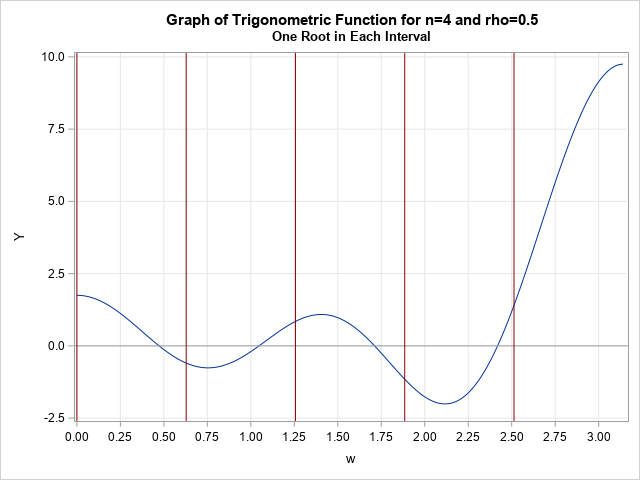

The first-order autoregressive (AR(1)) correlation structure is important for applications in time series modeling and for repeated measures analysis. The AR(1) model provides a simple situations where measurements (on the same subject) that are closer in time are correlated more strongly than measurements recorded far apart. The AR(1) model uses
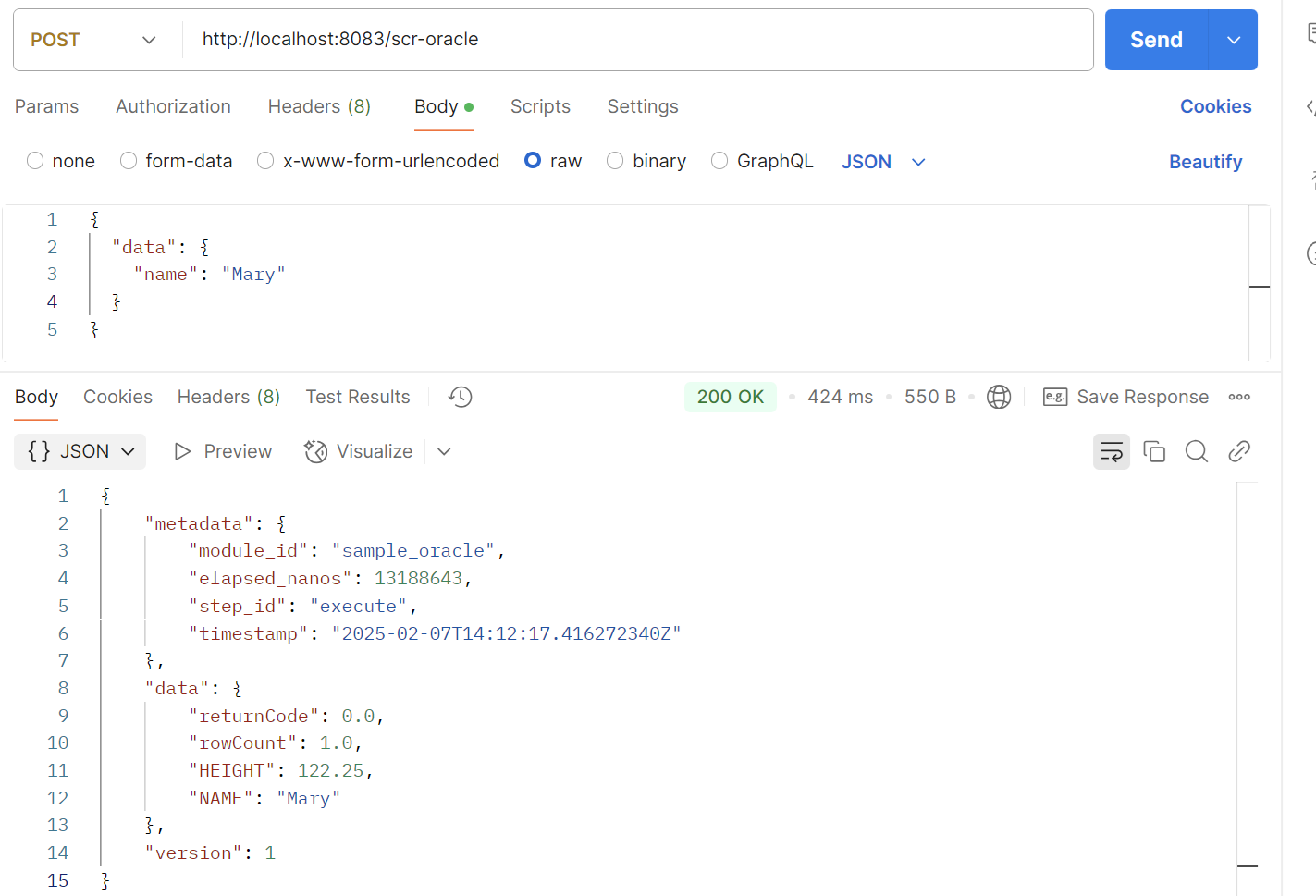

SAS' Simon Topp walks you through how to setup SAS Container Runtime Testbench to make operating and debugging your SAS Intelligent Decisioning decisions a breeze


O uso da inteligência artificial (IA) em marketing já é uma realidade em algumas empresas e uma das grandes promessas do futuro. Porém, profissionais da área terão uma tarefa importante em 2025 para colher os louros que a tecnologia pode trazer: sair do âmbito conceitual e alcançar a aplicação estratégica
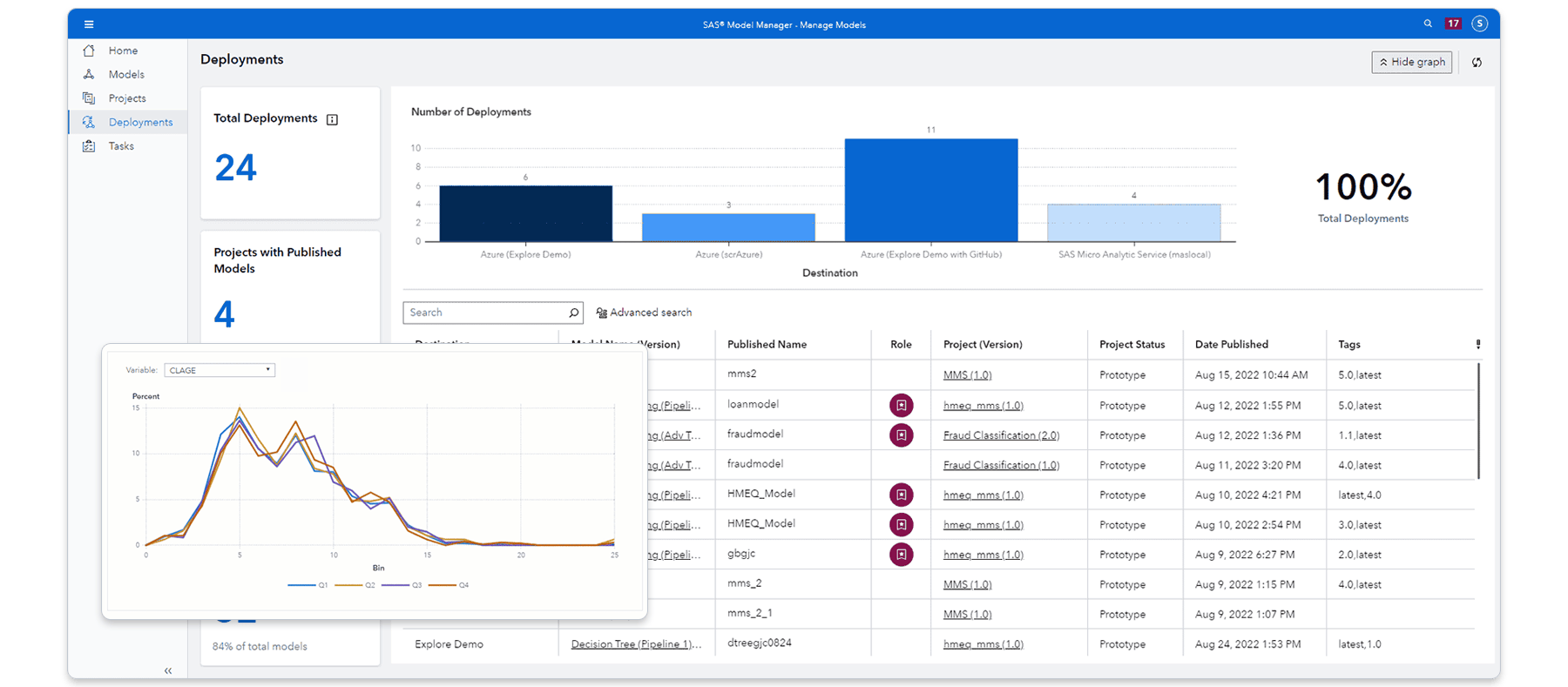
SAS Viya Workbench integrates seamlessly with SAS Model Manager for SAS model deployment and monitoring.


AI is pushing the boundaries of innovation. Understanding how it works isn’t just for tech experts; it’s for everyone. Whether you have a basic understanding or are looking to sharpen your expertise, SAS has developed AI and machine learning courses to help you understand why AI matters. By combining practical,


Wanneer je denkt aan levensreddende technologie, denk je dan aan een statistische computeromgeving? Statistische rekenomgevingen (SCE) zijn essentieel voor het bevorderen van wetenschappelijke ontdekkingen door onderzoekers de mogelijkheid te bieden om gegevens efficiënt en volgens de regels te beheren, verwerken en analyseren, waarbij de integriteit van de regelgeving zo goed


Par Yulia Paramonova, Sr Associate Systems Engineer, SAS Viya Experience : quand l'analytique devient un jeu d’enfant En 2024, nous avons eu le privilège d’animer 20 ateliers Viya Experience, rassemblant 108 participants venant de 36 entreprises différentes. Ces sessions interactives ont permis à des professionnels de tous horizons de tester


As AI agents gain autonomy, the ability to make informed, strategic decisions – at scale – becomes mission-critical. AI has evolved rapidly. We started with rule-based automation and then moved to machine learning models. Then 2023 was the year of ChatGPT, and 2024 was the year of multi-modal AI. We’re now


Our circadian rhythms, the natural cycles that govern our sleep-wake patterns, are crucial for overall health. Not only do we feel more energetic when we sleep and wake at the right times for our bodies, but living in alignment with our 24-hour cycles has a big impact on our metabolic


Find out how SAS Tax Compliance for Sales Tax addresses the tax gap and helps agencies overcome their resource constraints through SAS technology, robust analytics, and process automation.


국민건강보험공단, 장기요양보험 노인 돌봄 서비스의 투명성을 높이고, 부정 수급 탐지율을 높이는 RFID Tag Fraud Detection 시스템으로 2024년 ‘SAS 해커톤’ 대회 본선 진출! SAS는 전세계 데이터 사이언티스트와 개발자, 학생들, 그리고 SAS 고객 및 파트너를 대상으로 매년 데이터 분석 솔루션 경진대회인 ‘해커톤(Hackathon)’을 진행하고 있습니다. 2024년 대회에는 70여 개국 1,731명의 참가자가 등록했으며, 최종적으로
Cuando piensa en tecnología que salva vidas, ¿le viene a la mente un entorno informático estadístico? Los entornos de cálculo estadístico (SCE, por sus siglas en inglés) son fundamentales para acelerar los descubrimientos científicos, ya que permiten a los investigadores gestionar, procesar y analizar los datos de forma eficiente y
Ti viene in mente un ambiente di calcolo statistico, quando pensi alle tecnologie salvavita? Eppure gli ambienti di calcolo statistico (Statistical computing environment, SCE) sono determinanti per accelerare le scoperte scientifiche, in quanto consentono ai ricercatori di gestire, elaborare e analizzare i dati in modo efficiente e rigoroso, mantenendo la