All Posts
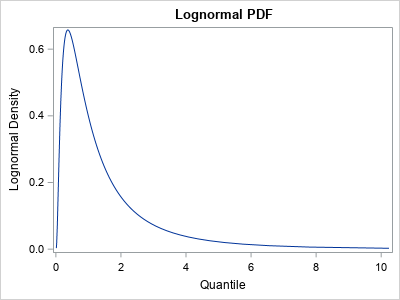

A colleague was struggling to compute a right-tail probability for a distribution. Recall that the cumulative distribution function (CDF) is defined as a left-tail probability. For a continuous random variable, X, with density function f, the CDF at the value x is F(x) = Pr(X ≤ x) = ∫


Fast 200 Todesopfer (davon 134 allein im Ahrtal), 33 Milliarden Euro an Sachschäden – das Hochwasser im Ahrtal 2021 war die teuerste Naturkatastrophe der europäischen Geschichte. Und weniger als ein Viertel der betroffenen Assets war versichert. Wer die Risiken von Überschwemmungen und anderen Naturereignissen früher erkennen und präziser einschätzen will,


High unemployment rates of the post-pandemic era in many recovering regions and increasing inflation rates are signaling an economic recession. With the pressure of increasing energy prices on consumer cash flow and households in many advanced economies facing a cost of living crisis, collections managers know it’s time to transform


Have you seen the Instagram Reel that jokes that replacing your morning coffee with green tea can decrease what little joy you have left in this world by 80% or something along those lines? As a coffee lover and former green tea not-so-enthusiast, that one cracks me up every time.
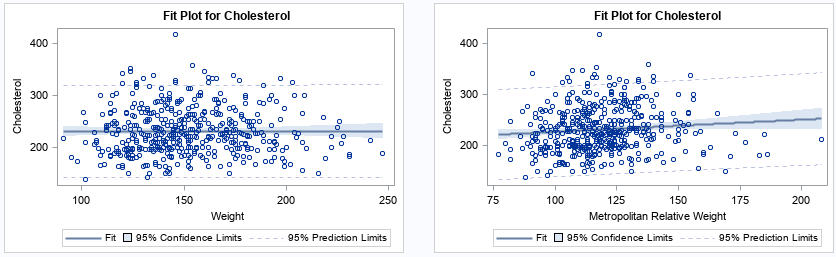
A SAS programmer wanted to create a panel that contained two of the graphs side-by-side. The graphs were created by using calls to two different SAS procedures. This article shows how to select the graphs and arrange them side-by-side by using the ODS LAYOUT GRIDDED statement. The end of the


AI has, for many years, been the stuff of fantasy. From the monster in Mary Shelley’s Frankenstein to the dystopian futures depicted in films such as Metropolis, the Matrix and Minority Report, the idea of intelligent machines has been capturing the imagination of writers for centuries. Our ability to store


Las compañías de seguros de todas las regiones coinciden en que el International Finance Reporting Standard 17 (IFRS 17) va a provocar cambios radicales en la manera en que han operado y generado reportes financieros por décadas. Ya que el estándar busca elevar la transparencia financiera del sector, cada aseguradora


Beginning July 16th, under FCC rules, those in the U.S. can call or text 988 to be connected to trained mental health crisis counselors. The 988 number connects to the already exisiting National Suicide Prevention Lifeline. The goal is to make it as easy as possible for someone who is


European agriculture is under enormous pressure to achieve the level of sustainability envisaged by EU initiatives such as the Green Deal and the Farm to Fork strategy. Meanwhile, the international crisis in Ukraine also reminds us that we need to make our food system more resilient to shocks. Data-driven policy


SQL (Structured Query Language) is the most widely used programming language for relational databases worldwide. No other programming language produces more hits for a web search than SQL and interest is growing rapidly. In June 2010, Google showed 135 million hits versus 586 million hits in June 2020. SQL is


Curious about what it’s like to work at SAS? You’re in the right place. Our people are always asking “What if?” and pushing the boundaries of innovation, and their curiosity is at the core of our company. Today, Vrushali Sawant, a Data Scientist in our Data Ethics Practice, is sharing
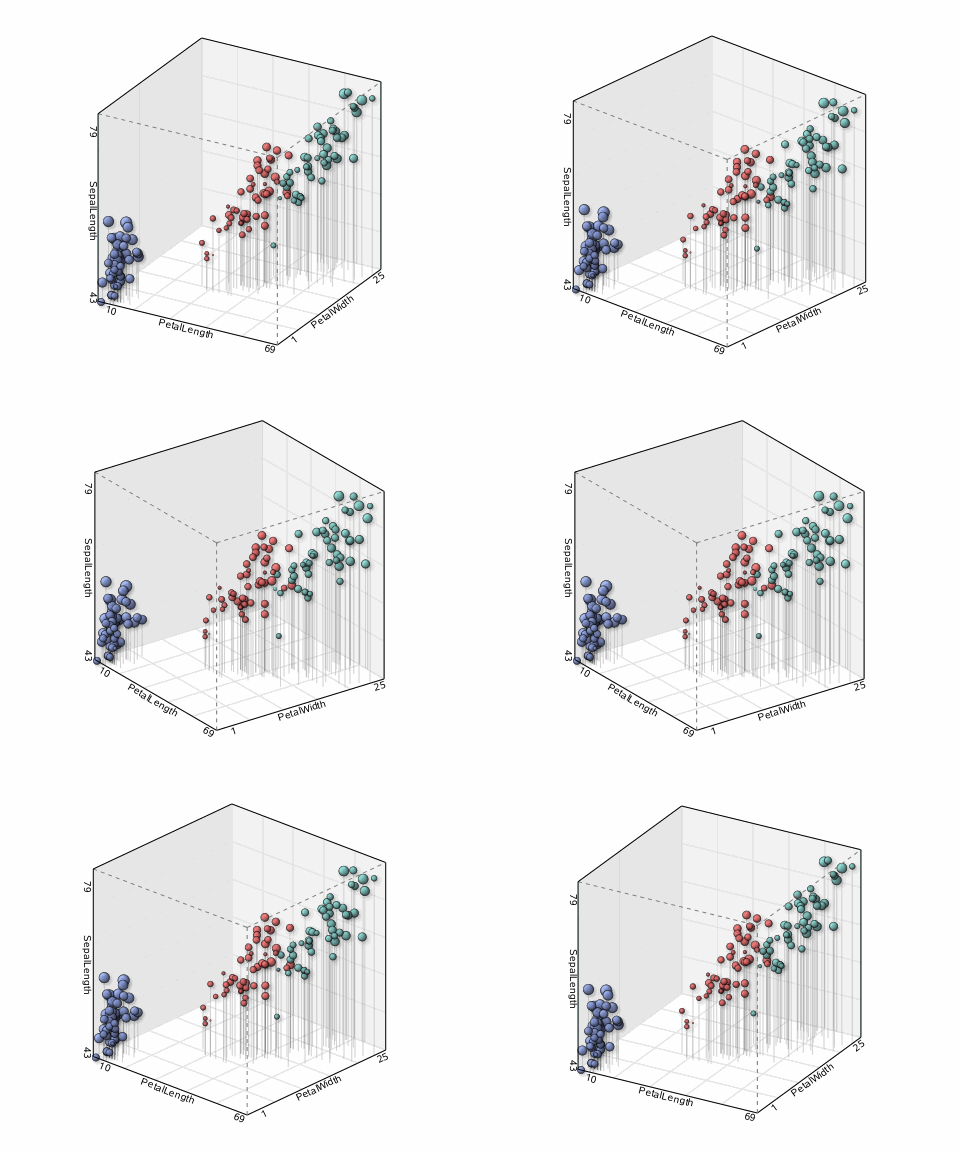

SAS SGPLOT already provides the necessary graphical elements for complex visualization. 3D or high-dimensional data can be easily visualized after being projected appropriately. With SAS' strong support for animation features, SAS users can create complicated 3D or high dimension visualizations quickly.

I previously wrote about partial leverage plots for regression diagnostics and why they are useful. You can generate a partial leverage plot in SAS by using the PLOTS=PARTIALPLOT option in PROC REG. One useful property of partial leverage plots is the ability to graphically represent the null hypothesis that a


For life sciences companies, effective commercial execution depends on delivering useful information to healthcare providers. How can your business manage engagement intelligently across all channels? The pace of pharmaceutical development is accelerating faster than ever before. During the pandemic, life sciences leaders proved that the industry can react to emerging


Data is crucial for the development of artificial intelligence (AI) applications. However, the rapid availability of data is a challenge due to increasingly strict privacy regulations. A possible solution is to use synthetic data. Gartner predicts by 2024 that 60% of the data used to develop AI and analytics applications