All Posts


現代社会では、あらゆる場面で膨大なデータが生み出されている。重要なのは、それを整理し、次の判断に活かすことである。そのために必要なのが分析である。分析とは、今の状況をもとに、事実やデータを整理・解釈し、何が起きているか、なぜそうなったかを考えて判断に活かすことである。つまり分析は、事実にもとづいて判断するための手段となる。 なぜ分析が必要なのか 分析が必要なのは、物事の原因や背景を正しく理解するためである。結果だけを見て判断すると、本当の原因を見落とすことがある。例えば売上が下がったときも、価格や売り方、客層など複数の要因が考えられる。分析をすると、見るべきポイントが整理され、思い込みに左右されにくくなる。 分析がないと何が問題になるのか すべての場面で分析が必要なわけではないが、事実を確認し、根拠を持って考える姿勢は重要である。分析をせずに判断すると、原因を見誤り、見当違いの対策や無駄につながりやすくなる。さらに、成功や失敗の理由も見えにくくなり、次に活かしにくくなる。その結果、判断の質が下がり、仕事の成果にも悪影響が及ぶことがある。 分析をするとどんな良いことがあるか 分析をすると、判断の質が上がる。数字や事実を根拠にできるため、説明しやすく、周囲の納得も得やすくなる。また、問題や機会に早く気づけるほか、限られた時間や人手、お金を必要なところに配分しやすくなる。さらに、成功や失敗を振り返り、次に活かしやすくなる点も利点である。 具体例として、小売店では販売データの分析が判断の精度を高める。例えば、小売店では、販売データを分析することで、商品がいついくらでどれだけ売れるかを把握できる。すると、必要な量だけ仕入れたり、売れやすい場所に置いたりでき、売り切れや在庫過多を防ぎやすくなる。反対に、経験や勘だけで判断すると、需要の変化に対応できず、売上低下やコスト増加につながることがある。 以上のように、分析は状況を正しく理解し、よりよい判断をするために欠かせない。分析を活用すれば、原因を把握しやすくなり、問題の発見や適切な対応にもつなげやすくなる。 分析を実務に活かすには、考え方や進め方を体系的に学ぶことも有効である。参考情報として、SASでは分析思考力や基礎知識を学べるトレーニングを提供している。(分析基礎トレーニング | 分析基礎トレーニング-製造業編) 2026年5月末 相吉


When I joined SAS in 1997, most analytics workflows still revolved around desktops, batch processing and highly technical users. Later that same year, SAS introduced SAS/IntrNet – a technology that helped bring SAS analytics into the growing world of web applications. At the time, it felt like a major shift


Every patent starts as a problem someone couldn't ignore. In 2025, SAS and JMP inventors earned 82 patents – spanning natural language processing, AI, fraud protection, IoT and more – each one rooted in the kind of friction that real organizations actually deal with. At SAS' annual Patent Dinner, the


The regulatory submission process in life sciences is becoming less about assembling documents and more about proving trust. For years, submission readiness was largely treated as an end-stage operational milestone: finalize the analysis, validate the outputs and package everything for regulators. But that model is beginning to break down under
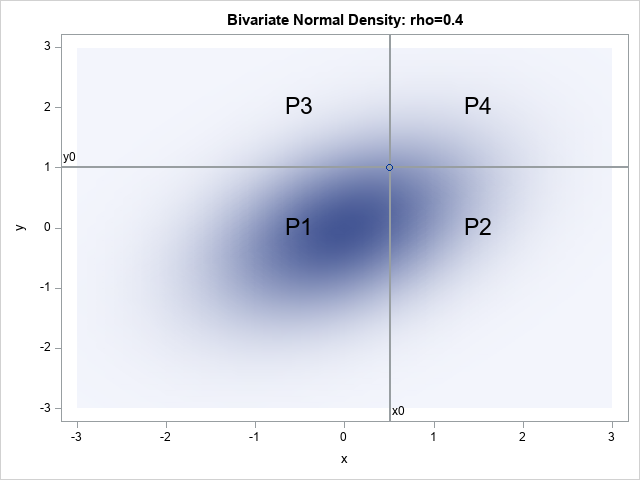

This is the last article in a series about computing probabilities for the multivariate normal distribution. A previous article shows how to compute the probability of a standardized multivariate normal (MVN) distribution in an orthant for dimensions k=1, 2, and 3 by using the Childs-Sun formulas. The formulas are exact


Recausticizing is the beating heart of pulp production. Sure, it’s chemistry, too, but it’s anything but boring science. For Georgia-Pacific, mastering this heartbeat’s rhythm has meant protecting profits, safeguarding quality and rewriting what’s possible on the mill floor. Georgia-Pacific, one of the world’s largest manufacturers of tissue, pulp, packaging and
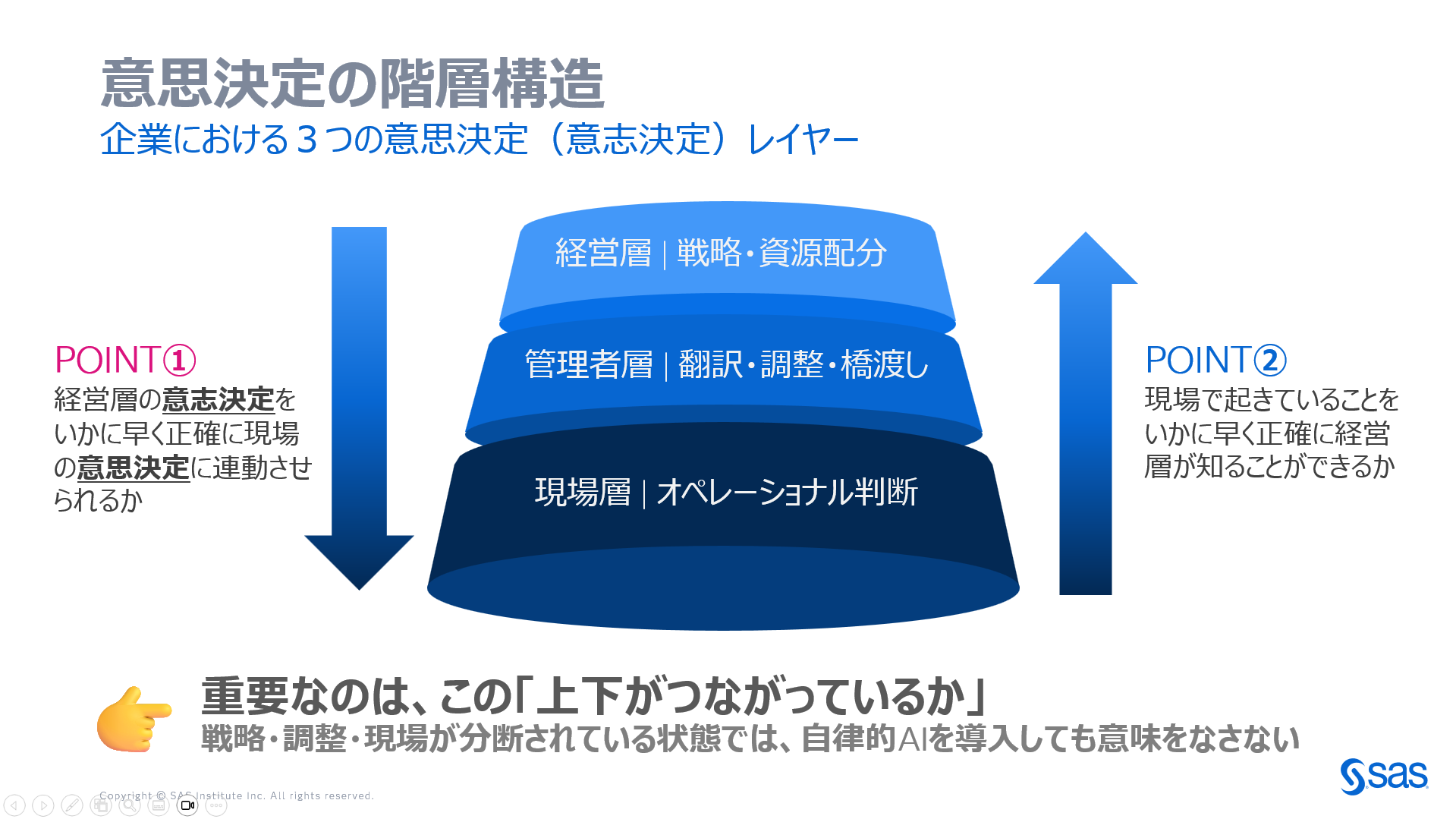

はじめに 2025以降、Agentic AIあるいはAI Agentという言葉を耳にする機会が増えてきています。また実際に導入を検討したり、POCフェーズに進む企業も登場していています。意思決定の自動化自体は、従来より「アナリティクス」と呼ばれ決して新しいものではありませんが、一方で、昨今のLLMを中心として機能するAgentic AIすなわち、自律型AIエージェントに期待されているものは、単なる自動化の延長ではありません。すなわち、意思決定がAgentic(エージェンティック:自律的)に実行され、かつそれが一部の成熟した企業だけではなく、より多くの人、企業や業務へ民主化されていくという期待です。 この状況の中で、多くの企業がすでに同じような違和感や課題に直面しています。データ基盤は構築した。AIツールも導入した。しかし経営指標の改善につながっていないあるいはROIを測定して改善した結果が得られていないという悩みです。IT技術は導入したが、それが事業成果につながっているかが説明できないのです。また、本質的な変革のために、自律化を進めたいが、何かあったとき誰が責任を取るのかが定義できていないため、怖くて踏み出せない。こうした状況は、特定の業種に限らず広く見られます。 ここで注意したいのは、この違和感や課題を「データの問題」「AIの問題」「分析ツールの問題」として捉えてしまうと、論点がずれていくという点です。問題は技術そのものではなく、意思決定がどのように設計され、どのように評価され、どのように責任が引き受けられるのかという構造が整理されていないことに起因します。 自律型AIエージェント(Agentic AI)で重要なのは、意思決定がどのように設計され、どのように評価され、どのように責任が引き受けられるのかを定義すること 本ブログでは、技術の話ではなく、意思決定という観点から、自律型AIエージェントで成功に向かうためにROI創出とリスク管理をどうとらるべきかを整理します。目的は、特定の技術や手法を論ずるのではなく、企業・組織内で、関係者が「同じ言語」で議論できる前提をお伝えします。 なぜ「自律型AI」で成果がでないのか:よくある誤解と真実 成果が出ない理由として、最も頻繁に見かける誤解や取り組みは、「Agentic AI = 業務自動化の延長」という捉え方をしていることに起因します。タスクの自動化、フローの高速化、人手作業の置きえ。これらはどれも正しい活動です。しかし、それらは多くの場合単なる「効率化」であり、「変革」ではありません。 本当の変革とは何でしょうか。筆者が考える変革は、「自律的意思決定の設計」です。要するに、状況を判断し、自ら行動できる意思決定の仕組みが、組織内で人間の能力を超えてスケールする状態を指します。単に作業を置き換えるのではなく、意思決定の質、速度・一貫性が向上し、その結果として事業成果が向上する。それを意識しないとAIへの投資が成果を生んでいるという説明が困難になります。 また特に日本では、「データドリブン経営」という言葉が邪魔をしてきました。 データはイネーブラーではありますが、経営をドライブすことはしません。つまり、筆者は「データドリブン経営」という言葉も本質を見極める邪魔をしており、少なくない企業の方向性を見誤らせる原因になっていると考えています。 Data doesn't drive organization. Decisions do. (組織を動かすのはデータではない。意思決定だ) ROIが向上する瞬間はいつでしょうか。AIが導入された時でも、データ基盤が整備された時でもありません。意思決定がよりよくなったときだけ、ROIが向上します。したがって、ROIを語るときには、「どの意思決定が、どう変わったのか」を語れる必要があります。 (参考:筆者ブログ)AI技術への投資価値判断~”何ができるか”ではなく”どんな価値を提供するか”で判断すべき 「意思決定」と「意志決定」の違い:日本企業が陥りやすい混同 ここで、少し言葉の整理をします。日本語ならではの話ですが、実務上は非常に重要です。 意思決定は、データと論理に基づいて選択肢を評価し判断することです。アナリティクスやAIが得意な領域です。一方で、意志決定は、腹をくくって引き受けること、責任を持ち結果にコミットする判断です。これはどこまでいっても人間の領域です。 多くの企業が、この区別を曖昧にしています。AIに意思決定をゆだねることはできますが、意志決定すなわち最終的な責任は必ず人間が持つ必要があります。この前提、定義、区別が曖昧なまま自律化を進めると、「怖くて踏み出せない」か、あるいは踏み出した結果として、「誰も責任をとらない」状況になるかどちらかになります。 意思決定の階層構造:上下が連動してないまま自律化すると混乱が加速する 企業には、意思決定と意志決定には階層構造があります。抽象化すると、経営層(戦略・資源配分)、管理者層(翻訳・調整・橋渡し)、現場層(オペレーショナル判断)という3階層になります。 重要なポイントが2つあります。第一に、経営層の意志決定が、どれだけ早く正確に現場の意思決定に連動しているか。第二に、現場で起きていることが、どれだけ早く正確に経営層へ届いているか、です。 この上下がつながっていない状態で自律型AIエージェントを導入しても、AIは何を最適化すればよいかがわかりません。むしろ、混乱とサイロ化を加速させます。つまり連動してない状態で自律化を進めると、誰も責任をとらない意思決定が生まれます。 この意思決定の経営と現場の連動に関して、製造業ではSAS社はNSW社と協業しソリューションとしてお客様をご支援している例があります。 (参考)NSW株式会社様との協業の発表について 本サービスは、製造現場のOperational Technology(OT)データと企業内のITデータを統合し、AIによるインサイトを通じて、現場から経営層までタイムリーな判断と行動を可能にするソリューションです。意志決定までのリードタイムを短縮し、日々のオペレーション改善を従来よりもスピーディかつ確実に実行に移す仕組みを提供します。 自律型AIエージェント導入のROIをどう測るか:意思決定の価値を測る6要素 ROIをどう測るかは、実務で最も難しい問いの一つですが、よりよい意思決定の視点から考えることができます。実は、意思決定の良し悪しは必ずしも売上金額の増減だけではなく、以下の6つの構成要素のそれぞれの向上として捉えることができます。 スピード(判断までの時間) 質(予測精度) 説明性(監査・説明責任) 再現性・一貫性(属人性の排除) 学習性(結果から改善するか) 目的整合性(経営目標とズレていないか) (参考:筆者ブログ)意思決定の構造をあらためて整理する 手段を目的化してしまうとROIが創出されない AI投資の多くがなぜROIを説明できないのでしょうか。そこには進め方の問題が大きく立ちはだかります。典型的な失敗パターンとしては、本来イネーブラーである、コストセンターが主導で、データ基盤を構築し、技術導入を先行させ、何の判断を改選するかが未定義で、成果指標がないために投資継続の判断すらできないという状態に陥っています。


En los últimos años, el país ha sido testigo de algunas intervenciones a entidades financieras, lo que ha causado incertidumbre no solo en los clientes y consumidores, sino también en el sistema financiero en general, impactando su credibilidad. Por esta razón, las empresas de este sector deben, ahora más que


Small and midsize businesses (SMBs) around the world are investing in AI, but most are still early in their AI maturity journey. That’s one of the key takeaways from a new global study commissioned by SAS and IDC. The report, AI for SMBs: Closing the Readiness–Reality Gap, explores how SMBs


Kidney stones are becoming more common around the world. In the U.S., one in 10 people will have a kidney stone, and the recurrence rate is high—about 50-80%, depending on the type of stone. Rates in children are rising too, increasing by about 10% over the last decade. If you’ve


Tax return registrations and filings continue to rise and fraud schemes are becoming more automated and sophisticated. At the same time, public expectations for fast, digital service are higher than ever. The intensity is real and the data tells a sobering story. In the United States alone, the Internal Revenue
In general, it is very difficult to compute a probability for a multivariate continuous distribution. For all continuous distributions, the probability requires solving a complicated multiple integral. For example, the probability for a bivariate normal distribution requires integrating the bivariate normal density over a two-dimensional (2-D) area. The probability for

For the past 13 years, NC State College of Design students have been tasked with exploring how technology and design can help tackle society’s biggest challenges. This year, students were asked to reconsider the role design plays in society. Rather than developing a traditional B2B interface, they explored how design,


Fraud targeting public sector programs has entered a new phase. Sophisticated fraudsters, armed with AI, are depleting public sector budgets and damaging trust in government – and that’s a reality governments must face. What was once largely opportunistic and fragmented has become organized, industrialized and increasingly cross-border. Fraudsters no longer


Medication non‑adherence remains one of health care’s most persistent and expensive challenges. Across chronic conditions, only about half of patients take medications as prescribed, even when effective treatments are available. The consequences are significant: disease progression, avoidable hospitalizations, increased mortality, and hundreds of billions of dollars in preventable health care