Yearly Archives: 2016

Data Visualization
Sanjay Matange 0
Diagrams with curved links

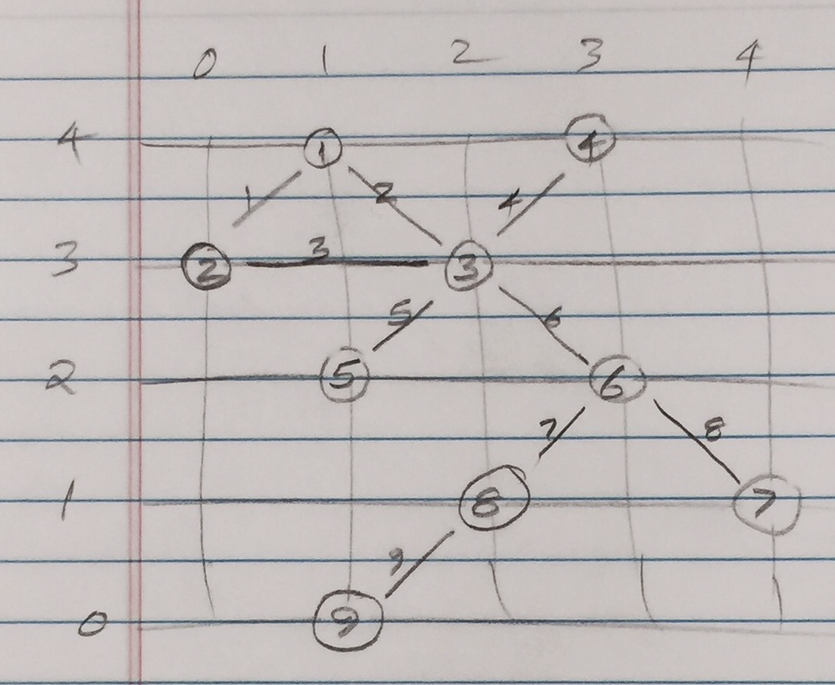
Let us continue with our journey beyond standard plots and charts.  Often we need to create some simple diagrams to visualize the connections between different entities such as patients and providers or even a social network. Many of you may not have a custom tool to create diagrams.  But you have Base SAS, so

Bob Davis 0
What do golf and supply chains have in common?

On a recent CBS Sunday Morning episode Dr. Phil McGraw of “Dr. Phil” fame was featured. During the segment he talked about shifting his focus from golf to tennis. To paraphrase, he said golf drove him crazy because he couldn’t bear down, run faster, sweat harder and be better. I

Gastbeitrag 0
Gastbeitrag von Accenture - Agilität bei Datenarchitekturen

In der Vergangenheit hat sich die Agilität von BI-, Big Data- und Analytics- Anwendungen (Datenarchitekturen) als Erfolgsfaktor für Unternehmen aus unterschiedlichsten Branchen erwiesen. Gerade die Integration neuer Datenquellen in bestehende DWH-Architekturen und die daraus resultierenden Anpassungen resultieren in langwierigen Entwicklungsprozessen.

Data Management
David Loshin 0
Big data quality with continuations

I've been doing some investigation into Apache Spark, and I'm particularly intrigued by the concept of the resilient distributed dataset, or RDD. According to the Apache Spark website, an RDD is “a fault-tolerant collection of elements that can be operated on in parallel.” Two aspects of the RDD are particularly

Rick Wicklin 0
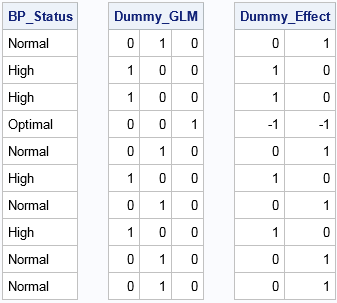
Dummy variables in SAS/IML

Last week I showed how to create dummy variables in SAS by using the GLMMOD procedure. The procedure enables you to create design matrices that encode continuous variables, categorical variables, and their interactions. You can use dummy variables to replace categorical variables in procedures that do not support a CLASS

Fernanda Benhami 0
La bola de cristal tecnológica

Según el psicólogo americano Frederic Skinner, las consecuencias de una acción influyen directamente en la probabilidad de que esta acción se repita. Llevando esta afirmación para el mundo de los negocios, podemos concluir que, cuando tenemos una experiencia negativa en un site de e-commerce, es poco probable que regresemos a

1 36 37 38 39 40 45