All Posts


I’m a credit card transactor – I pay off my balance in full each month and use credit purely as a payment method to avoid interest. Recently, a major payment processor experienced an outage that disrupted many money movement services. As a result, my scheduled electronic payment was converted into
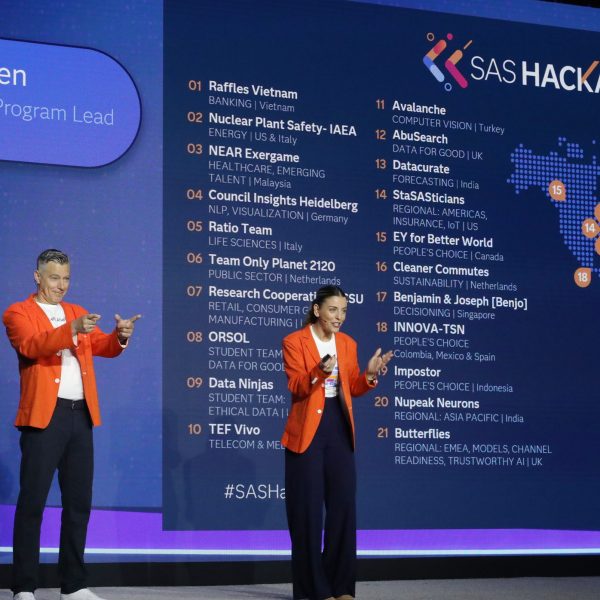

When creative minds come together to solve real-world problems using the power of analytics, great things happen. The SAS Hackathon is more than just a competition; it’s a global innovation experience that brings together coders, domain experts and big thinkers from across industries and backgrounds. What we’ve been up to


This article shows how to use SAS to implement the ISO algorithm to generate (and validate) a Universal Loan Identifier (ULI). A ULI is a long string of numbers and letters that serves as a unique identifier that is used for certain financial transactions. The ISO standard ensures that banks


Machine learning engineers are among the most sought-after professionals in the data analytics and AI space today. But behind the buzzwords and job titles lies a role that requires data literacy and a range of skills in statistics, software deployment, critical thinking and ethical judgement. If you're wondering what this

Sin duda, la inteligencia artificial generativa (GenAI) y la analítica de datos están revolucionando el mundo. Sus aplicaciones prácticas en diversos sectores industriales son tan amplias como los retos que las empresas enfrentan y buscan superar activamente. Sin embargo, a pesar de las ventajas de adoptar estas tecnologías como estrategia


Government productivity and transparency are hot topics, with trust in public institutions declining worldwide and global public debt levels nearing 100 percent of global gross domestic product. Managing fraud, waste and abuse (FWA) is key to public sector productivity. The British Government estimates that £39.8 billion to £58.5 billion of


Has your organization invested in a customer data platform (CDP) only to find that it's not living up to its promise? You're not alone. In fact, Digiday reports that only 10% of marketers who have a CDP believe it’s fit for purpose, while an even smaller amount (1%) feel certain
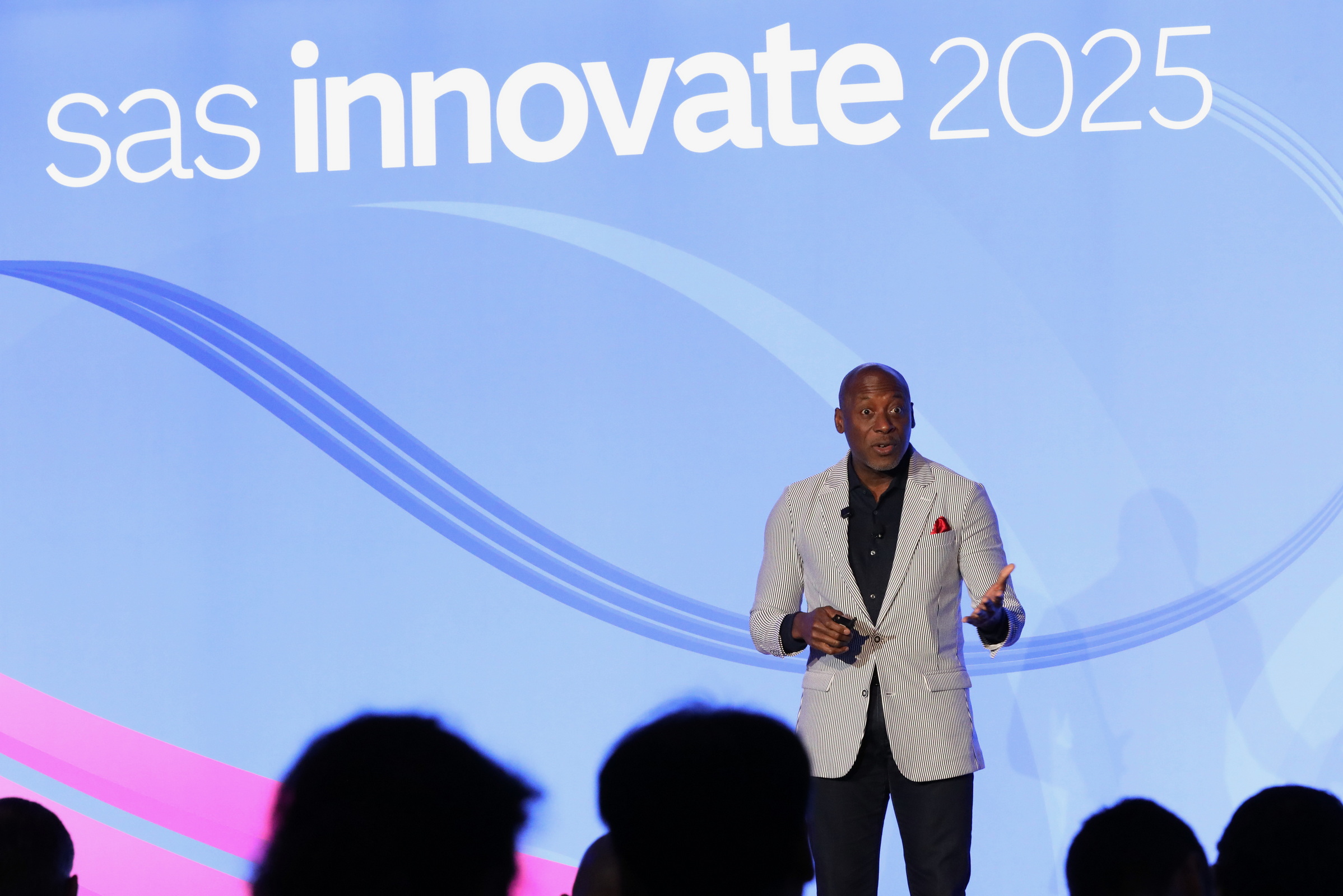

여러분이 생각하시는 데이터와 AI의 미래는 어떤 모습인가요? 생성형 AI에서 양자 컴퓨팅까지, 지금껏 상상해왔던 수많은 기술과 개념이 지금 이 순간 현실로 다가오고 있습니다. 불가능을 가능으로, 상상을 현실로 만들 데이터와 AI의 첨단 화두가 무엇인지 궁금하시다면 SAS Innovate 2025에서 확인해 보세요. 5월 6-9일까지 나흘간 미국 플로리다주 올랜도에서 개최된 ‘SAS 이노베이트 2025(SAS Innovate 2025)’는


Model governance has moved from "nice to have" to a "non-negotiable". As organizations deploy AI across industries like health care, banking and government, the demand for transparency, trust and accountability is louder than ever. SAS experts Briana Ullman, Product Marketing Manager and Vrushali Sawant, Data Scientist, discussed what that looks
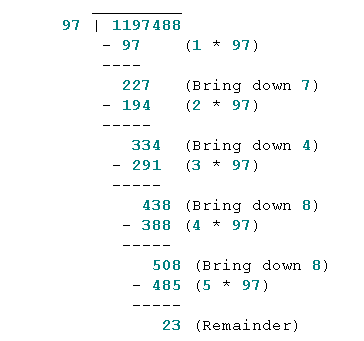
On social media, a SAS user reported that SAS could not compute the modulo of an extremely large integer. In SAS, the modulo operation is usually performed by using the MOD function, which computes the remainder of dividing an integer, N, by another integer, d. (In symbols, the remainder is


Enforce SAS code standards using SASjs and GitHub Actions to maintain secure, readable, and maintainable code. Automated linting blocks non-compliant code from merging into protected branches.
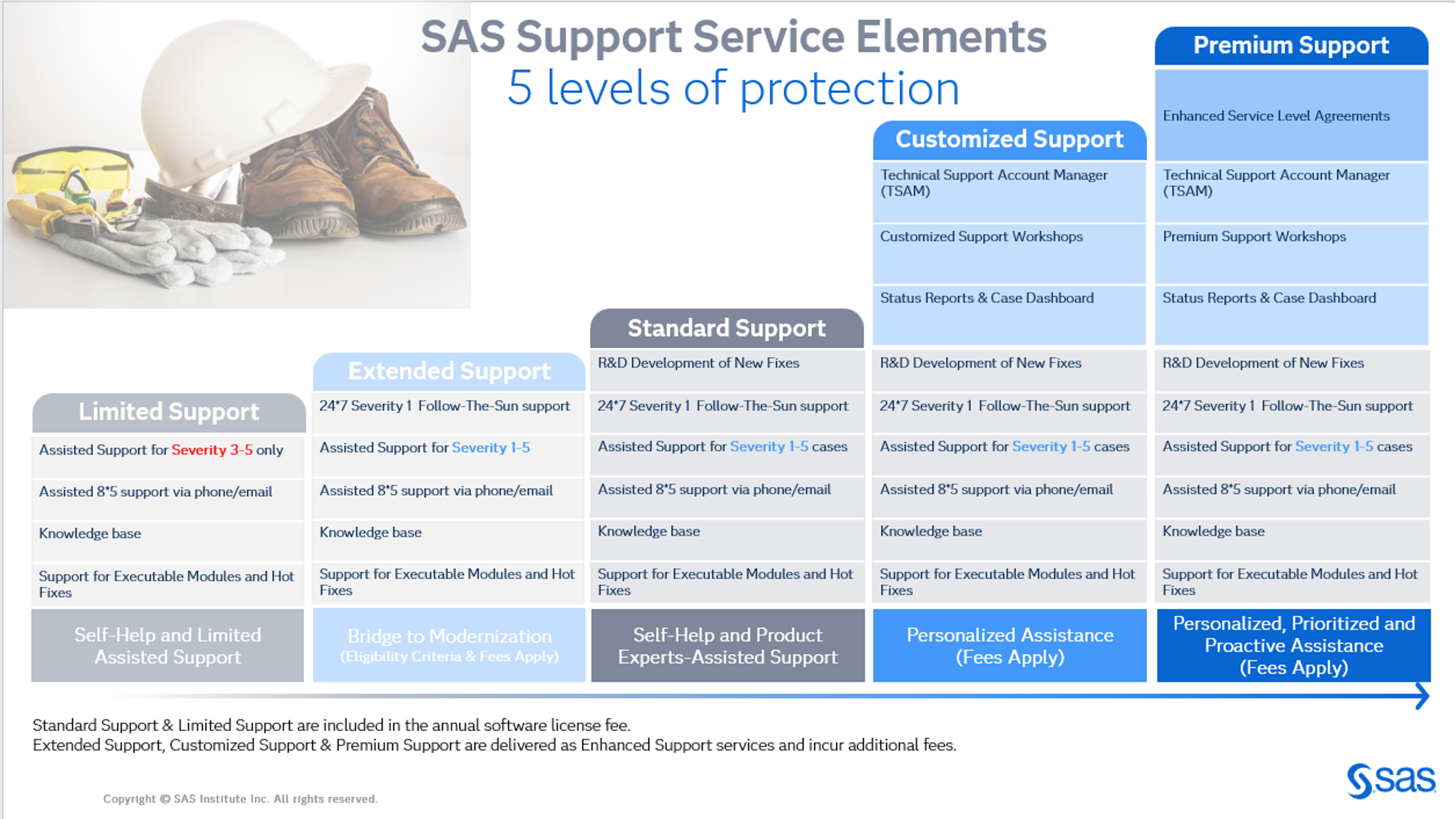

SAS' Enhanced Support model is structured into five progressive levels, ranging from Limited Support—designed for outdated software versions—to Premium Support, which offers the highest service standards, including enhanced SLAs, 24/7 assistance, and direct access to product experts. In particular, the combination of Extended Technical Support and Premium Support has proven to be a winning strategy for many companies undergoing modernization. This approach allows continued support for legacy environments during the migration to newer versions, minimizing operational risks and ensuring service continuity.
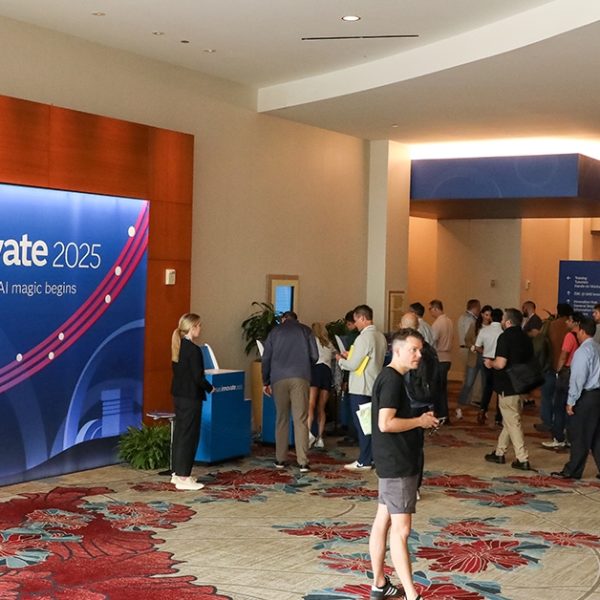

There’s nothing like the energy of a first-time experience – especially at SAS Innovate. Whether it was the keynotes, the tech demos, the chance to connect with peers, or just soaking it all in, first-time attendees had plenty to say about what made the event stand out. We caught up with


In the last post, we explored fundamental nutritional habits to manage inflammation, insulin resistance, gut health and stress resilience which can all impact perimenopause symptoms. Now, let’s build on that foundation with advanced strategies to further tackle the effects of fluctuating and fading hormones.
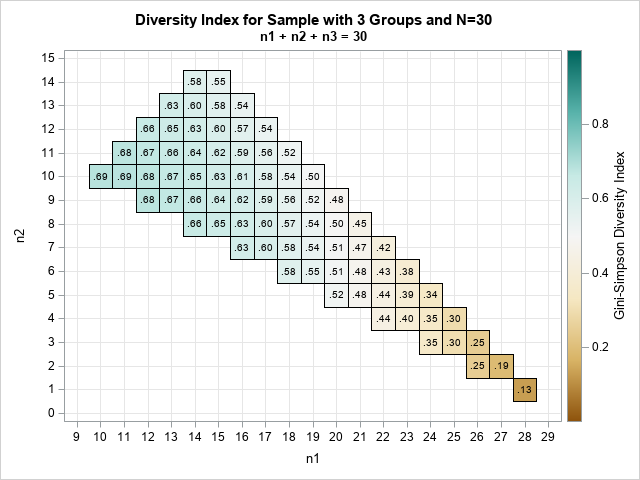
A previous article discusses the Gini-Simpson diversity index and how to compute it in SAS. Suppose you have a sample that contains R classes. (Classes are also called groups or categories.) Intuitively, the sample exhibits "high diversity" if the class sizes are approximately equal. The sample shows "low diversity" if