All Posts
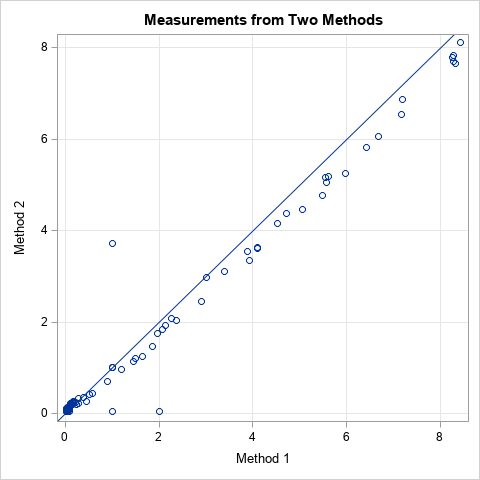

This article implements Passing-Bablok regression in SAS. Passing-Bablok regression is a one-variable regression technique that is used to compare measurements from different instruments or medical devices. The measurements of the two variables (X and Y) are both measured with errors. Consequently, you cannot use ordinary linear regression, which assumes that


SAS' Mark Jordan shows you how to modify data using PROC SQL, PROC DATASETS and SAS macros.


Sports leagues face a difficult task in creating a fair game schedule for their teams. Scheduling dates for sporting events is one of the first things that can go wrong in a season. By using optimization strategies, leagues can maximize their potential and fans can reap the benefits. Sports fans


팬데믹이 장기화되며 시작된 2022년, 도약을 위한 발판을 마련하기 위해 무엇에 집중해야 할까요? 의료, 소매 산업, 정부기관, 금융 사기, 데이터 윤리 등 각 분야의 SAS 전문가들과 인터뷰를 진행했습니다. 2022년 주목해야 할 분석 동향 및 전망 10가지를 소개합니다. 호기심, 미래를 만들어 가다 "호기심은 기업에게 있어 직업 만족도 향상뿐만 아니라 보다 혁신적인 산업직군


The waves of disruption just keep coming. Retailers have learned to make rapid pivots to catch and surf the big ones – but how are they doing with AI? NRF this year explored what it means to ride the AI wave in retail. We invited experts from Microsoft, Sitoo and


Tanto la ciencia como la igualdad de género juegan un papel clave para conseguir los Objetivos de Desarrollo Sostenible (ODS) fijados para 2030. Por eso, en 2016 la Asamblea General de la ONU declaró el 11 de febrero como Día Internacional de la Mujer y la Niña en la Ciencia.


On 14 January, we held a SAS chat on the business value and importance of modern analytics platforms. Participants from SAS and partners, including Intel, joined us from across the globe. We checked in from London, Oxfordshire, Johannesburg and Istanbul, as well as Knoxville, Atlanta, Cary and Florida in the


If you think the only redeeming quality of mushrooms is that they housed your favorite childhood tiny blue Saturday morning cartoon characters, think again, and give these tasty and nutrition-packed toadstools another try! When I came across this 2021 study that mushroom consumption is associated with a lower risk of

For some reason, SAS programmers like to express their love by writing SAS programs. Since Valentine's Day is next week, I thought I would add another SAS graphic to the collection of ways to use SAS to express your love. Last week, I showed how to use vector operation and


2022 será un año especial y sui géneris en muchos sentidos. Llega en medio de una realidad muy distinta a la que vivíamos al inicio de 2020, en la que la gente y las empresas han tenido que aprender a ser resilientes y adaptarse rápidamente a nuevos escenarios. En el


With containers, you can build once, run anywhere – no worries about underlying dependencies.


Corpus analysis is a technique widely used by data scientists because it provides an understanding of a document collection and provides insights into the text.
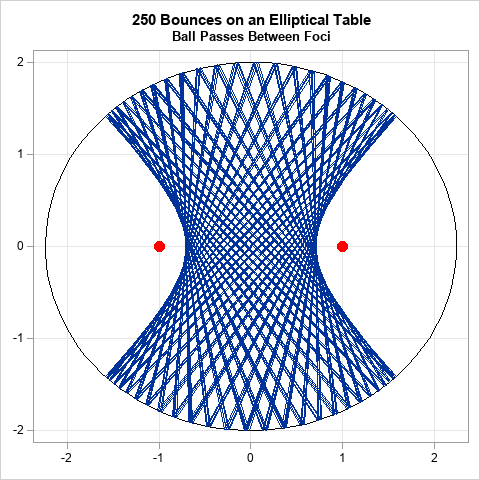
I recently showed how to find the intersection between a line and a circle. While working on the problem, I was reminded of a fun mathematical game. Suppose you make a billiard table in the shape of a circle or an ellipse. What is the path for a ball at


Before the outbreak of COVID-19, demand planning hardly ever matched actual sales. But since the virus reached Europe, the level of sales in different product categories became even more difficult to predict. How could the garden centers have imagined that consumers would invest their money in a roof, pavement or

前回の記事では、学生であれば無料で利用可能なオンライン学習コース「Skill Builder for Students」のProgrammingコースについての概要を紹介しました。今回は引き続きまして、Visual Analytics and Visual Statisticsコースについて紹介していきます。 データアナリティクスへの興味・関心は近年急激に増加しています。ただ特に学習を始めた学生では、データアナリティクスと聞くと、どうしても複雑なモデルを組むことや機械学習を実施することだけに意識が向いている印象を受けます。しかしデータアナリティクスの本質はそこではありません。根幹にあるのは意思決定や業績の改善にどれほど貢献できるかです。データの可視化、見える化は学生ですとしばしば軽視されがちな部分ではありますが、意思決定や現状の把握においては非常に有用な有用な方法の一つです。 今回紹介するコースではSAS Viyaプラットフォーム上でSAS Visual AnalyticsとSAS Visual Statisticsを使用し、様々な可視化方法、予測モデルについて学習を行います。これらを学習することによってデータに潜む傾向やパターンを把握し、そしていかにその後のリスク管理や傾向の予測などへとつなげていくかといった実践的なデータアナリティクスを学ぶことが可能です。またSAS ViyaはSASによるプログラミング以外にもRやPythonといった他のプログラミング言語をサポートしているため、SASのコーディングができない方であっても不自由なく利用することが可能となっています。 Visual Analytics and Visual Statisticsコースへのアクセスは以下の手順です。 Skill Builder for Studentsへログイン 「Learn SAS」というタブをクリック 画面中央の「Start Learning」をクリック 「Visual Analytics and Visual Statistics」をクリック 展開される各種e-learningコースをクリック 画面下部にある「enroll」をクリック Visual Analytics and Visual Statisticsコースの概要 本コースは SAS Visual Analytics 1 for SAS