All Posts


Durante las diversas fases de la pandemia de COVID-19 hemos sido testigos de cambios radicales en el consumo respecto al tipo y cantidad de productos que prefieren los consumidores, y también de los canales a través de los que están comprando. Hoy, la personas dan prioridad a proteger su salud


You’ve chosen the right class, added-to-cart, and hit submit. You’re committed – now what? Once you book a class with us, no matter the format, you can expect an email confirming your request within 24 hours. For instructor-led training courses, a reminder email is sent 3-5 days before the course


In recent years, we have seen huge changes in the areas of logistics and supply chain management. And it is no exaggeration to say that those are only the tip of the iceberg. These changes are the result of a number of factors coming together. Arguably the biggest trigger for


Wir haben die Chance, eine echte Datenkultur wachsen zu lassen. Mglw. wollen wir gar nicht mehr der Hase, sondern der Igel sein.
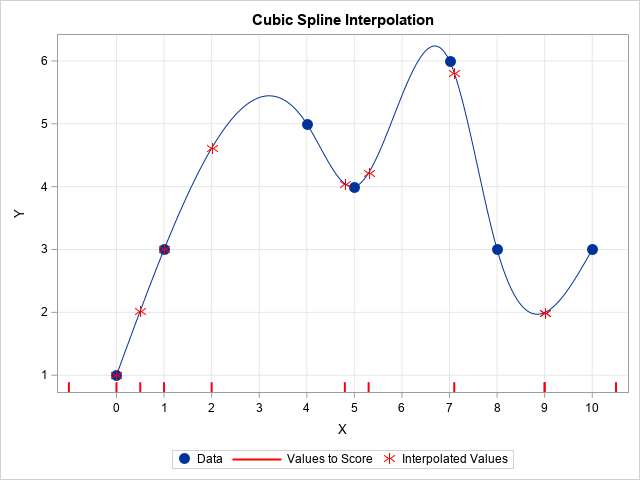

I recently showed how to use linear interpolation in SAS. Linear interpolation is a common way to interpolate between a set of planar points, but the interpolating function (the interpolant) is not smooth. If you want a smoother interpolant, you can use cubic spline interpolation. This article describes how to
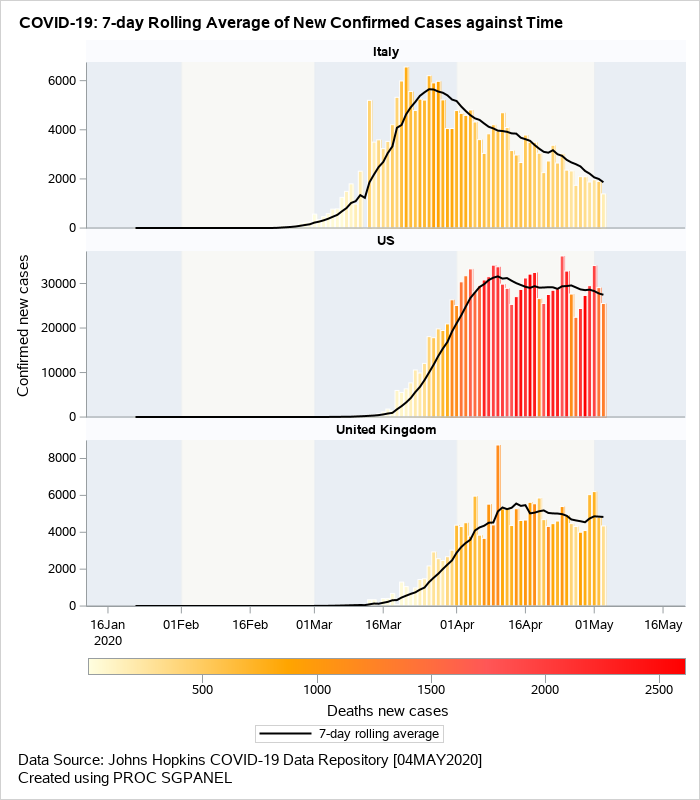

As we continue to process and understand the ongoing effects of the novel coronavirus, many of us have grown used to viewing COVID-19 dashboards and visualizations, including this popular coronavirus dashboard from SAS. If you are more accustomed to building graphs and visualizations using the SGPLOT and SGPANEL procedures, this


Adoption of the Artificial Intelligence of Things has never been more relevant for both industry and governments. A recent study by IDC and SAS found that a significant predictor of organizational ability to deliver value from the IoT is the use of AI. This is likely to become even more


In the first of a three-part series of posts, SAS' Funda Gunes and her colleague Ricky Tharrington summarize model-agnostic model interpretability in SAS Viya.


Work/Life's guest blogger, Katie Griswold Kaye with Kaye College Consulting, advises students in their college admissions process. Prior to relocating to the Raleigh-Durham area, Katie was a guidance counselor at Boston College High School, an all-boys Jesuit school. In that role, she provided intensive college counseling to hundreds of high


The CEO's themselves sponsor transformation projects, especially in the telecom branch because of the costs and level of influence required.


La pandemia de COVID-19 es, además de un problema de salud pública, uno que ha trascendido a los ámbitos económico, financiero y operativo. En cuestión de semanas, transformó drásticamente la manera de trabajar y hacer negocios “as usual” de personas y empresas. Ante este escenario, las organizaciones en sectores como


At SAS, we use the term “Intelligent Decisioning” to describe the type of technology needed to fill this gap. Read more about it.
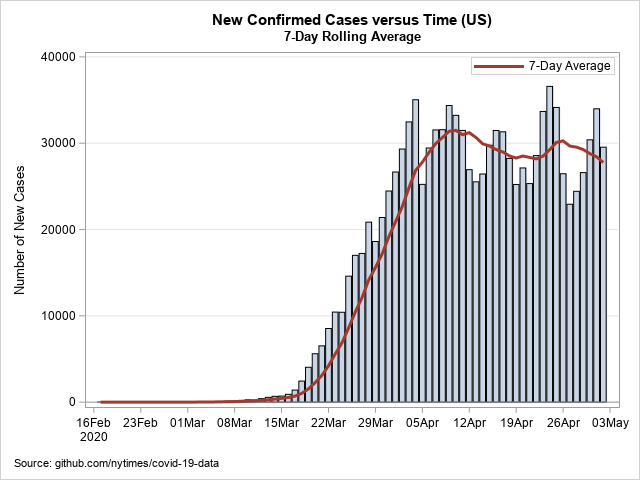
During this coronavirus pandemic, there are many COVID-related graphs and curves in the news and on social media. The public, politicians, and pundits scrutinize each day's graphs to determine which communities are winning the fight against coronavirus. Interspersed among these many graphs is the oft-repeated mantra, "Flatten the curve!" As

La coyuntura provocada en las empresas por el COVID-19 lleva a replantear muchos escenarios y el financiero es quizá uno de los más importantes. SAS, la empresa de software de analítica avanzada con Inteligencia Artificial número 1 en el mundo, y KPMG, compañía líder en servicios de consultoría en la


Does your bank manager know who you are? Unless your net worth is unusually high, the answer is probably no, and that’s been the case for many years. Banks have been using statistical models to inform credit-related decisions since at least the 1970s, and today almost every aspect of operational