All Posts


Whatever you choose to call it – learning loss, learning disruption, or unfinished learning – there is widespread agreement among educators, parents, and other caregivers focused on the needs of K-12 learners that COVID-19-related disruptions had a serious impact on their education. But dig a little deeper and the story
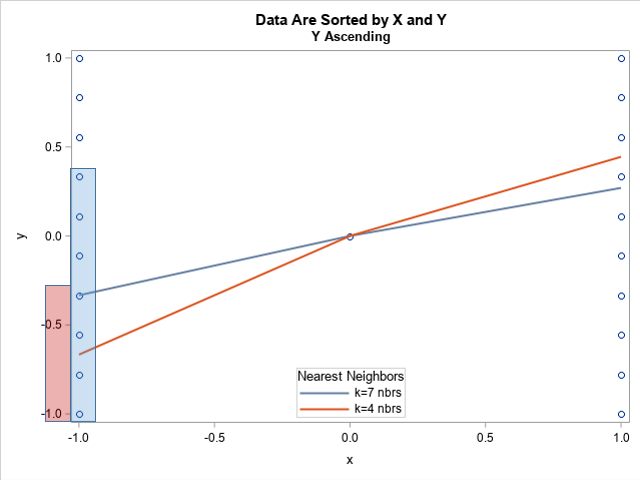

Did you know that the loess regression algorithm is not well-defined when you have repeated values among the explanatory variables, and you request a very small smoothing parameter? This is because loess regression at the point x0 is based on using the k nearest neighbors to x0. If x0 has


Recientemente el mundo empezó a hablar con mayor frecuencia de los metaversos, una nueva experiencia en materia de conectividad que llevará a los usuarios a vivir asombrosas experiencias inmersivas y multisensoriales a través de novedosos dispositivos y plataformas tecnológicas. Aún cuando todavía hay muchos interrogantes y alternativas de cómo es


SAS Visual Forecasting is a powerful and flexible tool that can cover all the forecasting needs of an organisation. Users can automatically produce large-scale time series analyses and hierarchical forecasts – without human involvement. Having both a friendly user interface and a programmatic interface allows everyone to take part in


The COVID-19 pandemic is triggering a debt collection crisis for the energy and utilities sector. How can collections teams control an explosion in delinquent accounts? The collections process is a vital component of any provider's business model, but it’s often an area that doesn’t receive the attention or investment it


Según explica el sitio especializado Marketing4ecommerce, “el término phygital hace referencia a la conexión de dos entornos: el online y el offline (physical o físico + digital: phygital). En concreto, habla de integrar lo mejor del mundo físico y del digital para así crear un ecosistema de comunicación dinámico entre


In the first part of this blog series, we explored a peculiar phenomenon. A recent Gartner survey indicates that over 50% of marketing leaders are “unimpressed by the results they receive from marketing analytics investments”, yet 85% predicted “significantly more” use of analytics by 2022. If the current approach isn’t


In a Q&A with SAS' Udo Sglavo, Xilong Chen of SAS parses the work of 2021 Nobel Prize winners for Economics.
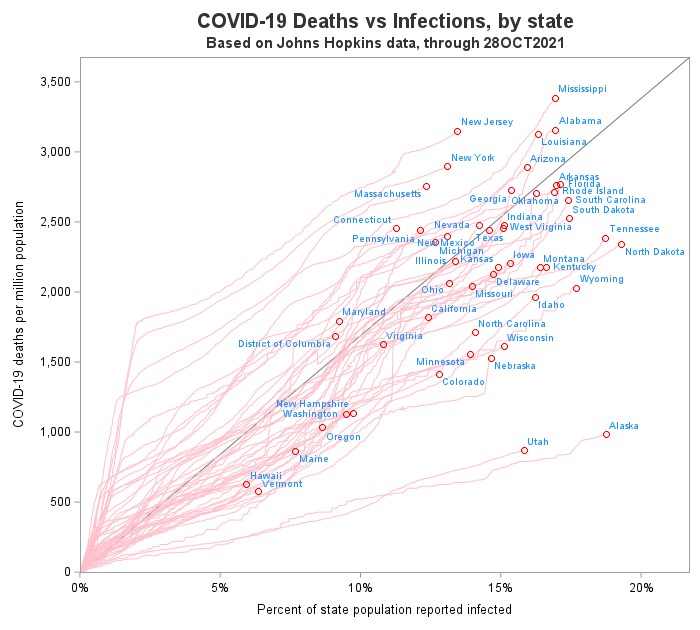

A scatter plot is my go-to graph! It's what I often start with to get a feel for the data ... and I often end up using just a scatter plot. But some scatter plots are better than others ... In this blog post, I create a scatter plot of

When SAS 9 programmers transition to SAS Viya, there are inevitably questions about how new concepts in Cloud Analytic Services (CAS) relate to similar concepts in SAS. This article discusses the question, "What is the difference between a libref and a caslib?" Both are used to access data, but they


Growing up in Zimbabwe, Prisca’s parents instilled in her the importance of education and modeled what it looked like to extend a helping hand to people who needed it. “They would take in kids from the streets, and some would stay at our house,” Prisca explains. “My parents would pay
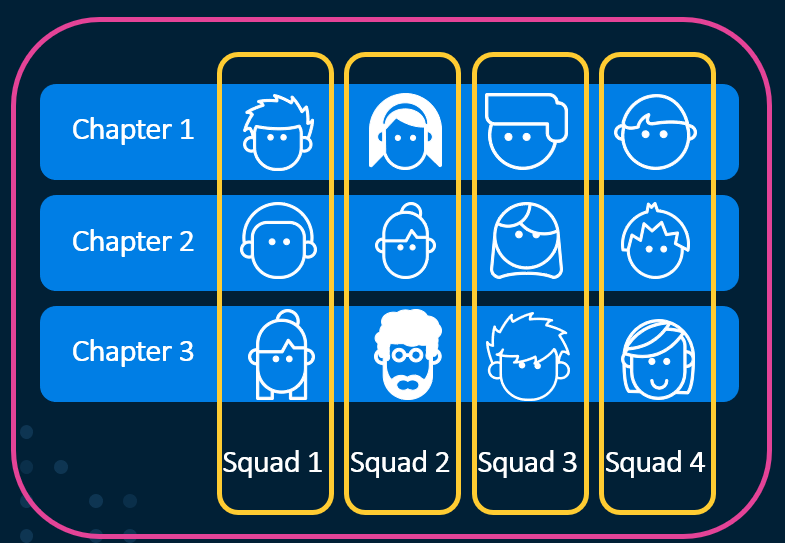

Die agile Arbeitsweise wird von vielen in Zusammenhang mit Softwareentwicklung gebracht. Wie im vorherigen Blogbeitrag zur agilen Transformation bereits erwähnt, hat SAS Ende 2020 die agile Transformation im Bereich Pipelineentwicklung / Demand-Generation vorangetrieben und durch die Vorteile des agilen Arbeitens auf den Bedarf an effizienterer Zusammenarbeit und mehr Fokus in
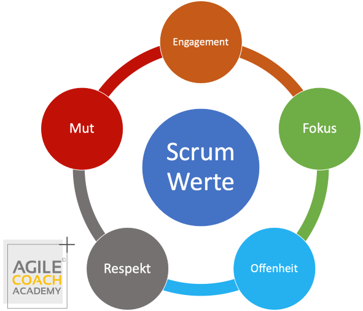

In den vorangegangenen Artikeln von Stefan Herzog und Julia Maurer wurde bereits dargestellt, wie agile Methoden in einer Vertriebsorganisation erfolgreich angewendet werden können und welche Rollen es gibt. In diesem Beitrag geht es darum, wie die agile Arbeitsweise bestmöglich durch Prozesse und Tools unterstützt werden kann. Auch agiles Arbeiten benötigt ein strukturiertes


„Agile“ ist heutzutage in aller Munde. Es findet sich kaum ein Unternehmen, das nicht von sich behauptet, agile Herangehensweisen (zumindest in Teilbereichen des Unternehmens) zu verfolgen und agile Methoden einzusetzen. Die „agile Transformation“ ist in vollem Gange. Seinen Ursprung hat der Einsatz agiler Methodologien in der Software-Entwicklung. Mittlerweile beschränkt sich


As artificial intelligence (AI) becomes more ubiquitous, organisations are starting to encounter a big issue: explainability. European law requires that organisations need to be able to explain decisions about individuals, such as whether to grant a loan, extend a line of credit, or even to start a fraud investigation. This