All Posts


I wish I had a nickel for every time I heard this question at SAS Global Forum: "So, does this SAS Studio thing replace SAS Enterprise Guide?" SAS Studio is a pretty big deal. It's groundbreaking in several ways: It's a web-based programming interface to SAS. It runs in your


Frequently you may want to modify the default colors, line patterns and symbols that are displayed on the graphics output produced by the Statistical Graphics, or SG procedures, and the Graph Template Language, GTL. Enhancements in SAS 9.4 have made that task much easier! In the examples below, we will look


Whether you’re counting carbs for glucose management, crunching calories for weight loss or beefing up your protein intake to build muscle mass, food tracking apps can be an invaluable resource for your health and fitness goals. A novelty a few years ago, these apps are now in abundance giving us


A little-known but useful feature of SAS/IML 12.3 (which was released with SAS 9.4) is the ability to generate a vector of lowercase or uppercase letters by using the colon operator (:). Many SAS/IML programmers use the colon operator to generate a vector of sequential integers: proc iml; x =


So far in our Ask the Statistician blog and video series, we have heard responses from statisticians at the Analytics 2013 conference about: The many ways statistics benefit their organizations. The types of statistical analyses used to solve business issues. Best practices for explaining results. How they put statistical
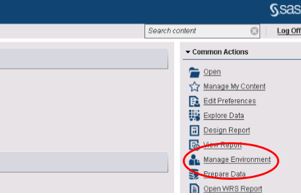

I’ve recently had the opportunity to learn a little more about administering SAS Visual Analytics. The sessions introduced me to two new GUI interfaces that simplify the work for SAS administrators. In my last post, I shared how to load data into memory using the SAS Visual Data Builder. After

Do you ever look at a chart or graph and think about what it’s really trying to reveal? All the time, right? Visualizations are useful because they allow us to analyze information much quicker than if we were to look at the raw data by itself. I say this with
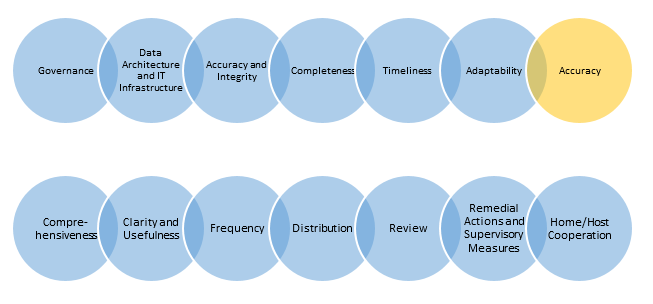

Principle 7: Accuracy - Risk management reports should accurately and precisely convey aggregated risk data and reflect risk in an exact manner. Reports should be reconciled and validated. Successful demonstration of Principle 7 requires senior management to rely upon the information presented in risk reporting. Since forward-looking strategic decisions are
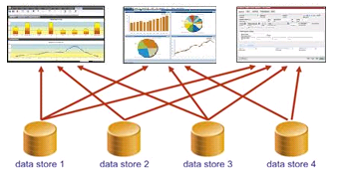

Data federation is a relatively new term used to describe a form of data virtualization. Data virtualization, however, is not new. It has been around since at least the 1960's when virtual memory was introduced to simulate additional memory beyond what was physically available on a machine. While data federation is a


Imagine this scenario: Every device we encounter in our day-to-day routine – from our refrigerators and automobiles to our water and gas meters – has embedded sensors that read real-time information and generate unfathomable amounts of data. Now take this scenario one step further. Imagine what kinds of insights we’d


A recent Charlotte Observer article provided a thoughtful investigation of growth and achievement in North Carolina’s Charlotte Mecklenburg Schools). The article juxtaposed two very different, yet highly effective, schools. The first, Ranson Middle School, is a low-achieving school with 84% poverty that demonstrated the highest academic growth of any similar
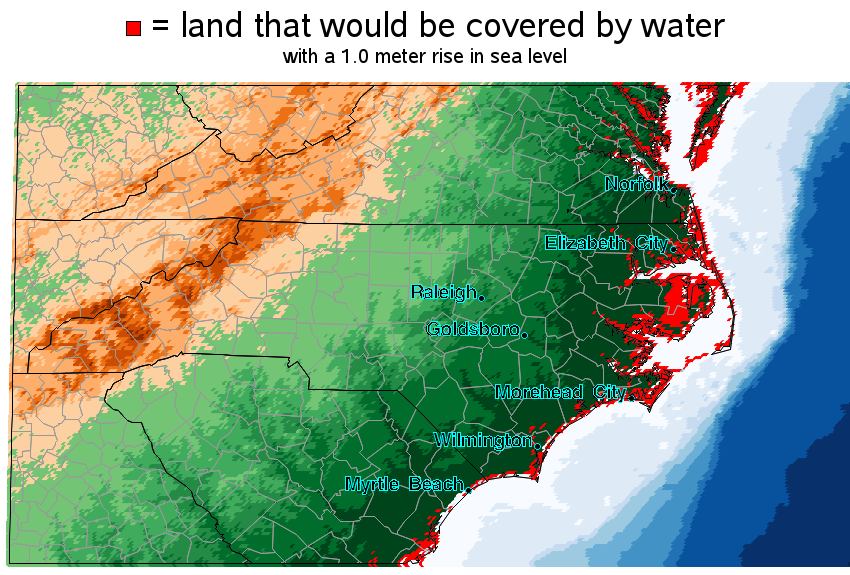

In light of the recent reports that glaciers in Antarctica are melting, what SAS graphs might be useful in analyzing the data?... When floating sea ice melts (such as at the North Pole), it doesn't raise the sea level - but when ice on land melts (such as glaciers at


SAS administrators often ask for a utility that can detect orphaned SAS WORK and SAS Utility directories on their back-end SAS compute systems. These orphaned directories result when a SAS Enterprise Guide or any other SAS GUI application is terminated incorrectly, and the SAS session does not terminate properly. SAS

There has been lots of awareness-raising lately about the safety of our food supply including the tools we use to cook and store our food. Many nutritionists, health care providers and scientists agree that reducing exposure to toxins whenever possible makes good sense. The Environmental Working Group (EWG), an environmental
Last week, as part of an article on how spammers generate comments for blogs, I showed how to generate random messages by using the CATX function in the DATA step. In that example, the strings were scalar quantities, but you can also concatenate vectors of strings in the SAS/IML language.