All Posts
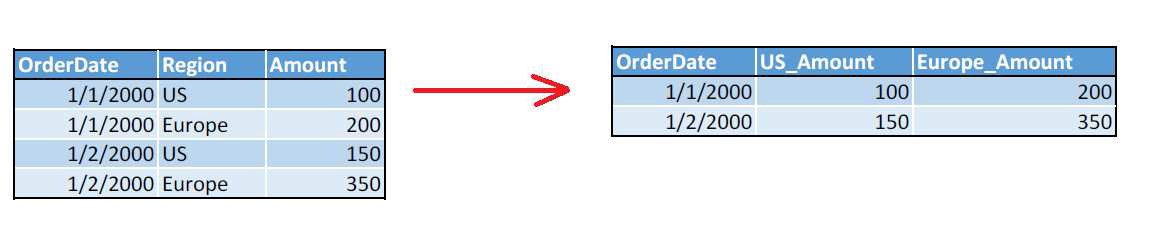

Is your LASR implementation running short on memory? Since LASR tables are stored in memory, it can become scarce. So what can we do to minimize LASR table size and still get LASR’s legendary performance? Here are a few strategies on how to shrink LASR tables: Compression: When compression was


Population movement is higher than ever. Buoyed by freedom of movement and critical events such as armed conflict and the European migrant issue, large groups of people are migrating across borders. In fact, population movement has now reached record levels. There are currently more displaced people globally than during the whole


Choosing the perfect Halloween costume can be a tough decision ... especially when it comes to choosing between two awesome favorites like Superman & Batman!?! I think we're gonna need a bigger boat! (and by 'boat' I mean analytical software, of course!) Let's start with Superman. This character has been around since

I recently met SAS user "CSC" at the Analytics 2015 conference. It might be generous to say that he's an avid user of SAS Enterprise Guide; it's probably more accurate to say that he's now accustomed to the tool and he's once again productive. But he still misses some features


Every new piece of technology today can be rooted back to the creation of the iPhone, and it’s what David Pogue, Author, Host of NOVA ScienceNow and Yahoo Tech Columnist, calls the singular invention that caused the greatest gap between generations. While its touchscreen, audio, video, Wi-Fi, GPS, wireless antenna

El insumo principal para ganar la confianza de una persona es a través de la reputación. Es una regla universal. Y la base de ese insumo es el conocimiento que se tiene de la otra persona, de sus gustos particulares- e incluso su temperamento- para generar una conexión que permita


.@philsimon on the soft skills that Big Data requires.

As I continue to apply analytics to various aspects of Halloween, I turn my attention to planning my trick-or-treat route ... Random picture: Here's a shot of my friend Sara's trick-or-treat crew. With tiny legs, and huge loads of candy, having an efficient route is very important! :) I started by


SAS 9.4 M3, introduces a new procedure named PROC SQOOP. This procedure enables users to access an Apache Sqoop utility from a SAS session to transfer data between a database and HDFS. Using SAS PROC SQOOP lets you submit Sqoop commands from within your SAS application to your Hadoop cluster. PROC


There's a sense of foreboding and uncertainty. You look around, but you're uncertain where to go next. What to do. Or who to turn to. Ultimately, it feels like an eerie calm before the storm. And you get that creepy feeling that something awful is just around the corner. I might be
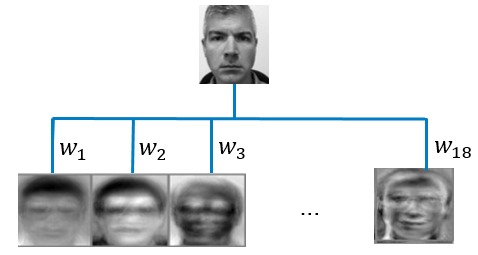

When you work with big data, you often deal with both a large number of observations and a large number of features. When the number of features is large, they can be highly correlated, resulting in significant amount of redundancy in the data. Principal component analysis can be a very
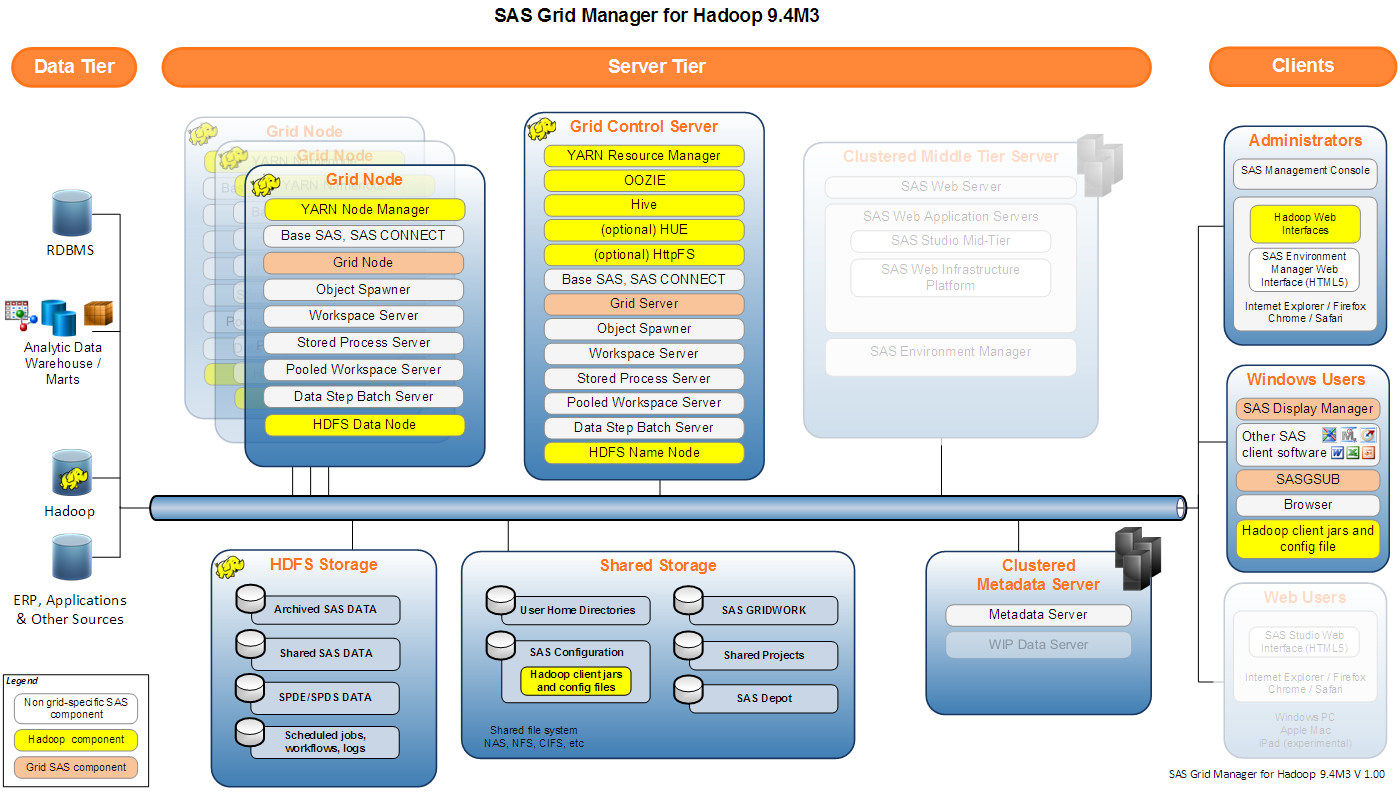

SAS Grid Manager for Hadoop is a brand new product released with SAS 9.4M3 this summer. It gives you the ability to co-locate your SAS Grid jobs on your Hadoop data nodes to let you further leverage your investment in your Hadoop infrastructure. This is possible because SAS Grid Manager

Do you have fun being a computer geek, and programmatically creating holiday images? If so, then this blog's for you! In this example, I demonstrate how to take simple x/y coordinates, and create map polygons shaped like holiday images, that can be plotted using SAS/Graph's Proc GMap. Once you learn the


Did you know that the FREQ procedure in SAS can compute exact p-values for more than 20 statistical tests and statistics that are associated with contingency table? Mamma mia! That's a veritable smorgasbord of options! Some of the tests are specifically for one-way tables or 2 x 2 tables, but many apply


SAS experts, users and decision makers are taking over Las Vegas this week while attending Analytics 2015 and The Premier Business Leadership Series. Whether you are in Vegas or need to participate from afar, read on for help to stay in tuned and be a part of it all. Watch