All Posts


I recently read the book "Die Zahl die aus der Kälte kam" (which would be The Number That Came in from the Cold in English) written by the Austrian mathematician Rudolf Taschner. He is ingenious at presenting complex mathematical relationships to a broader audience. One of his examples deals with


The Analytics conference series is getting a modern makeover. And it’s not just a new name. The Analytics Experience, Sept. 12-14 at the Bellagio in Las Vegas, is bringing thought leaders and analytics gurus together for one big event. So whether you’re a geek or a suit you can create


While the growth of big data is an issue that preoccupies both the public and private sector, it’s also high on the UK government’s legislative agenda. All eyes are currently on the authorities, as we wait with bated breath to see what’s next in the quest to manage data escalation.


Does it upset you when you log onto your healthcare insurance portal and find that they spelled your name wrong, have your dependents listed incorrectly or your address is not correct? Well, it's definitely not a warm fuzzy feeling for me! After working for many years in the healthcare, pharmaceutical and


The SAS Environment Manager Report Center is a set of SAS stored processes and SAS macros which leverage the SAS Data Mart for the purpose of monitoring and auditing a SAS installation. Full documentation on the structure and functioning of the Data Mart can be found in the SAS Environment Manager
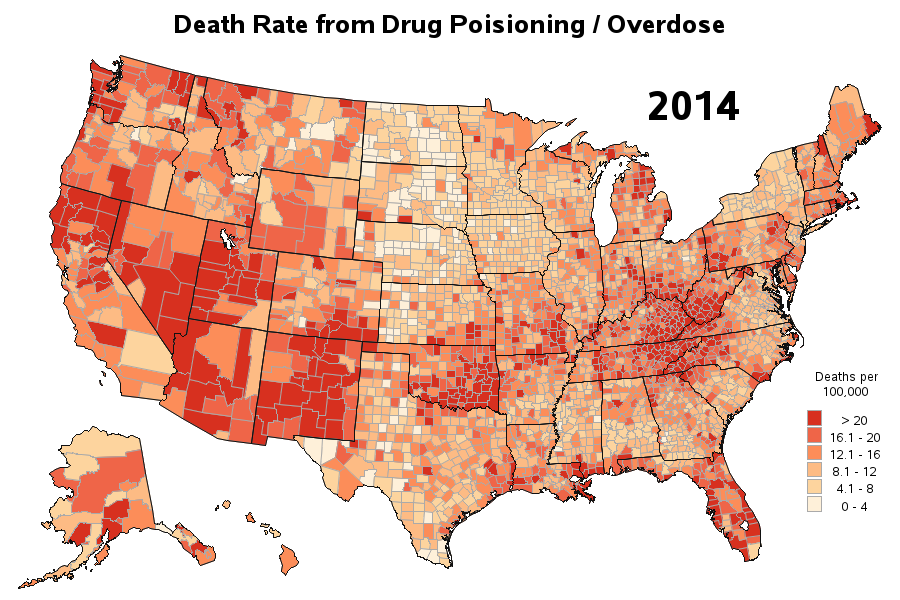

Lately I've seen several articles about drug overdose deaths being on the increase. But I didn't really like the graphs in those articles, so I tried to create some better ones using SAS ... For example, here's a map from the National Center for Health Statistics website (see the 3rd dashboard/tab


The journey continues as we hear from instructors for each of the courses being offered on Thursday and Friday, April 21 and 22 after SAS Global Forum. Our next stop is with instructor David Ghan who is teaching the Using SAS® Programs to Execute Pig and HiveQL in Hadoop and


Hace un par de semanas se impartió el webinar en Innovación Gubernamental: Soluciones Analíticas para el Sector Salud, en donde nos platica acerca de la importancia de la Analítica en el cuidado de la Salud. “Se predice que las computadoras electrónicas digitales asumirán un importante papel en la medicina…" William R.


In 2012, the value of big data equity in the UK was estimated at £12 billion a year or 0.7 percent of the annual Gross Domestic Product (GDP). Four years flew by and the second report by the Centre for Economics and Business Research (Cebr) puts the opportunity at £46


In a couple of my previous blogs I discussed how to audit who made changes to data in a SAS environment. In the last couple of weeks I have been asked how to do the same thing for SAS Visual Analytics reports and explorations. The Visual Analytics administrator overview report


I'm frequently asked: "What causes poor data quality?" There are, of course, many culprits: Lack of a data culture. Poor management attitude. Insufficient training. Incorrect reward structure. But there is one reason that is common to all organizations – poor data architecture.


Analistas y expertos en Big Data de todo el mundo coinciden en la importancia de potenciar el capital humano y desarrollar profesionales más preparados. Cada persona tiene aptitudes para realizar diversas actividades como natación, equitación, tenis o, incluso, destacar en el ámbito profesional ofreciendo mejores resultados en tareas determinadas. Ahora


Machine learning is not new. SAS has been doing it for over 20 years and some early machine learning papers date back to the 50’s. So why is it one of the hottest topics at the Strata Hadoop World conference later this week? Clearly, Hadoop is playing a major role
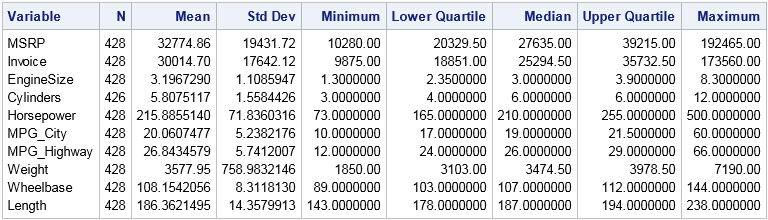

Descriptive univariate statistics are the foundation of data analysis. Before you create a statistical model for new data, you should examine descriptive univariate statistics such as the mean, standard deviation, quantiles, and the number of nonmissing observations. In SAS, there is an easy way to create a data set that
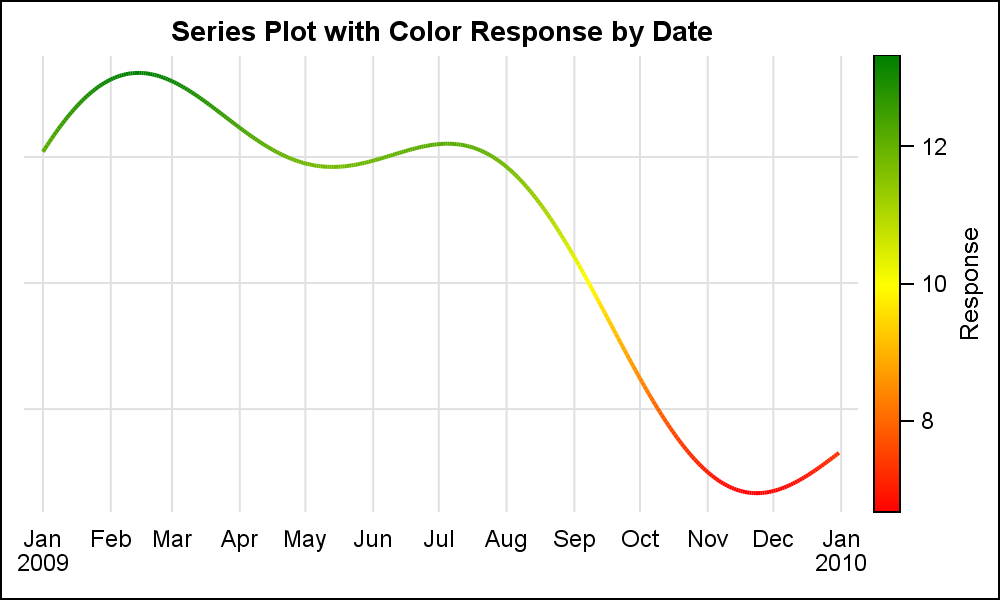

Returning from my recent visit to India, I was reading an article that included a graph with a series plot where the color of the series itself changed based on the Y response. Now, for sure, the SAS 9.40M3 SERIES plot in the SGPLOT procedure supports color response, but that applies