All Posts
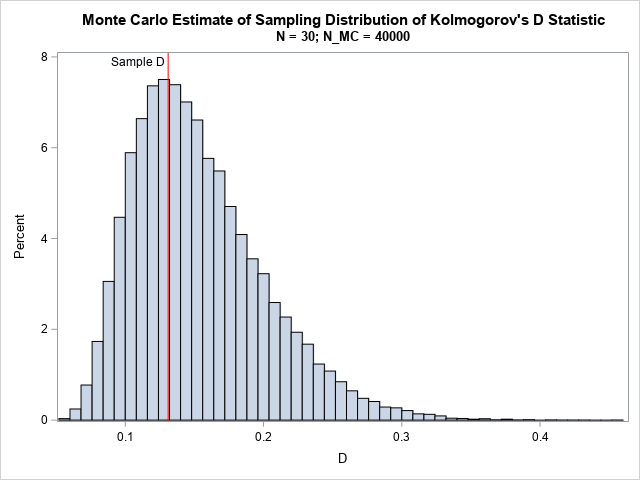

Recently I wrote about how to compute the Kolmogorov D statistic, which is used to determine whether a sample has a particular distribution. One of the beautiful facts about modern computational statistics is that if you can compute a statistic, you can use simulation to estimate the sampling distribution of


As a publishing house inside of SAS, we often hear: “Does anyone want to read books anymore?” Especially technical programmers who are “too busy” to read. About a quarter of American adults (24%) say they haven’t read a book in whole or in part in the past year, whether in


Did you know that you can run Lua code within Base SAS? Learn more about what PROC LUA can do through some examples.
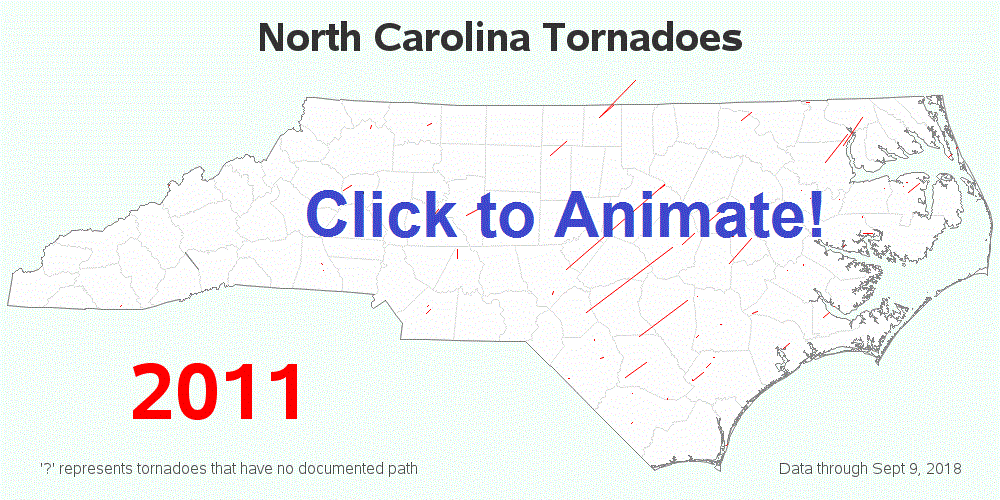

We recently had some severe storms come through North Carolina, which even spawned a tornado in Wake county (the county where I live and work). This got me wondering when and where we've had tornadoes in NC in the past ... and, of course, I had to create a map!


A long time ago, I was working on analytics in a bank, primarily in the area of risk. One project I worked on was about working out which products were profitable to help clean up the product portfolio. The project involved people from both risk and finance. As we worked


In the article Serverless functions and SAS Viya - a good match I discussed using serverless functions to deliver SAS Viya applications. Ignoring all the buzz words, a serverless function boils down to a set of REST APIs. So, if you tried the example you are now a REST API


Customer risk rating models play a crucial role in complying with the Know Your Customer (KYC) and Customer Due Diligence (CDD) requirements, which are designed to assess customer risk and prevent fraud. Today, the most common form of the Customer Risk Rating model is a score-based risk rating model. This


Profundizar en las expectativas de los clientes se ha convertido en el interés y, de paso, en el mayor desafío para los responsables de las iniciativas de marketing en todo el mundo. Gartner, la reconocida empresa consultora y de análisis de mercados, dice que aquellos líderes de mercadeo que son capaces de incorporar tecnologías exponenciales en el


The year was 1987. I was getting ready to enter my freshman year at the University of North Carolina at Chapel Hill – go ahead, do the math. My mom and I received a letter asking us to participate in some research. Would we participate in a mother-daughter bone density
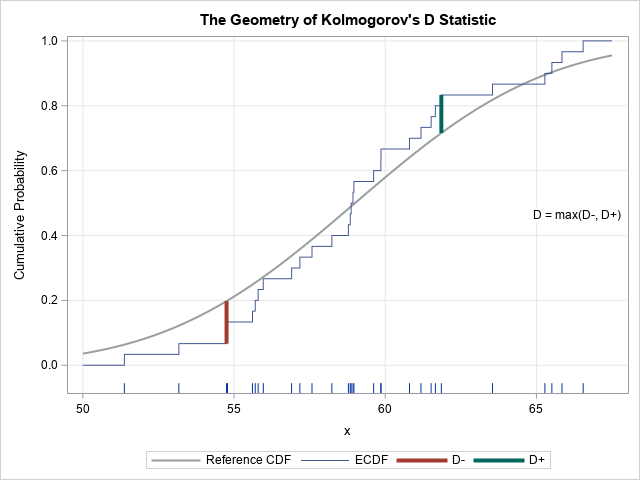
Have you ever run a statistical test to determine whether data are normally distributed? If so, you have probably used Kolmogorov's D statistic. Kolmogorov's D statistic (also called the Kolmogorov-Smirnov statistic) enables you to test whether the empirical distribution of data is different than a reference distribution. The reference distribution


I met many SAS programmers at the 2019 SAS Global Forum who geocode addresses using ArcGIS. Did you know that street address locations and other things can be found using the SAS GEOCODE procedure? PROC GEOCODE gives you coordinates for address, ZIP codes, ZIP+4 codes and cities. You can even
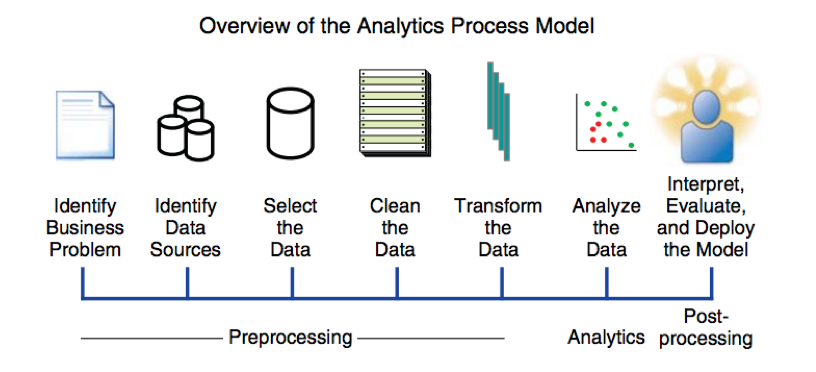
Interested in making business decisions with big data analytics? Our Wiley SAS Business Series book Profit Driven Business Analytics: A Practitioner’s Guide to Transforming Big Data into Added Value by Bart Baesens, Wouter Verbeke, and Cristian Danilo Bravo Roman has just the information you need to learn how to use

In SAS/IML programs, a common task is to write values in a matrix to a SAS data set. For some programs, the values you want to write are in a matrix and you use the CREATE FROM/APPEND FROM syntax to create the data set, as follows: proc iml; X =

May 12th is #NationalLimerickDay! If you saw our Valentine’s Day poem, you know we at SAS Press love creating poems and fun rhymes, so check out our limericks below! So, what’s a limerick? National Limerick Day is observed each year on May 12th and honors the birthday of the famed
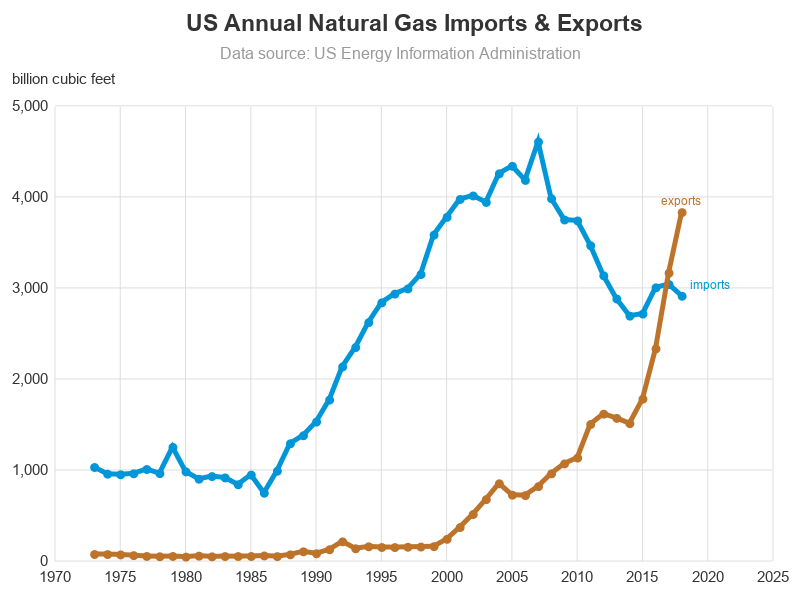
You might have seen in the news that US exports of natural gas to Europe are up 300%. And we recently crossed the threshold where we export more natural gas than we import. This seems like a momentous occasion, and worthy of a graph! But first, let me make sure