All Posts


Christina Harvey recently forwarded this question from SAS user Bob Wasicak to several administrators here at SAS: “Does the metadata layer capture the number of login's per user? And how can I get at it? I have been using the metadata browser but would like to write a query to extract
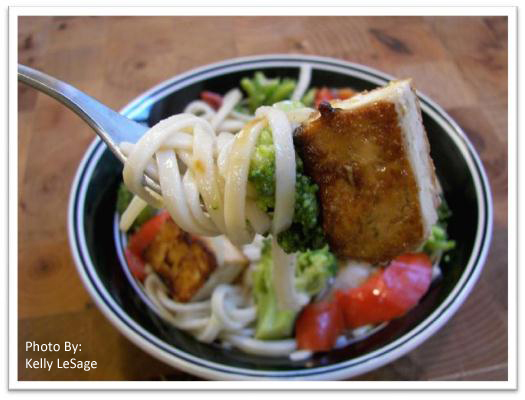

Tofu can be a great addition to your protein rotation. I love tofu! I've been eating it for almost 20 years and have tried it almost any way you could think of. I am always amazed when people turn up their nose at tofu, and they’ve never even tried it!


Professional development, popularity, untold fame: the benefits of submitting a paper to a SAS conference are certainly varied and widespread! In a recent SAS Users LinkedIn discussion started by David Corliss, avid SAS users and former presenters discussed their motivations for writing, researching and presenting papers. From the many wonderful
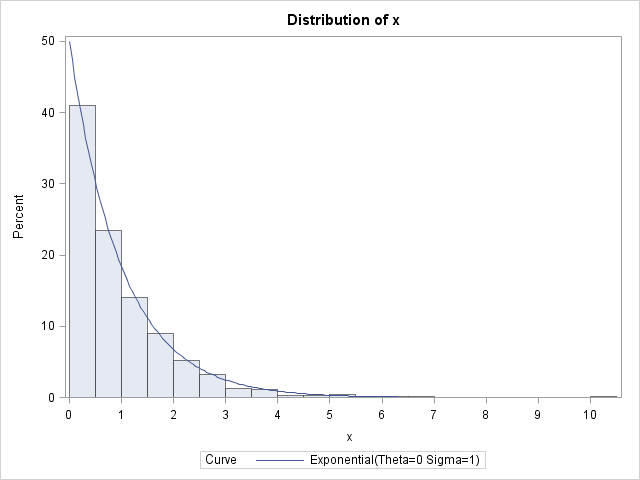

There are many techniques for generating random variates from a specified probability distribution such as the normal, exponential, or gamma distribution. However, one technique stands out because of its generality and simplicity: the inverse CDF sampling technique. If you know the cumulative distribution function (CDF) of a probability distribution, then


SAS Global Forum is a three-day, education-focused and energy-packed conference – created by SAS users, for SAS users. Next year’s event will be in Washington D.C., March 23-26. Featuring the best and brightest SAS users and experts from all over the globe, SAS Global Forum 2014 offers the SAS community the chance
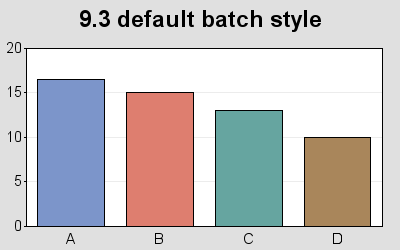

ODS graph styles provide users with an easy way to control things such as the colors and fonts used in a graph, freeing the user from having to specify these properties in their code. A lot of thought was given to picking colors that work well together, and look good. The

I love tables. As a writer, there's nothing more satisfying to me than distilling complicated information into neat rows and columns. That's one of the features that caught my eye in SAS User ID and Password Usage Rules. The other is its potential usefulness for SAS administrators who manage SAS
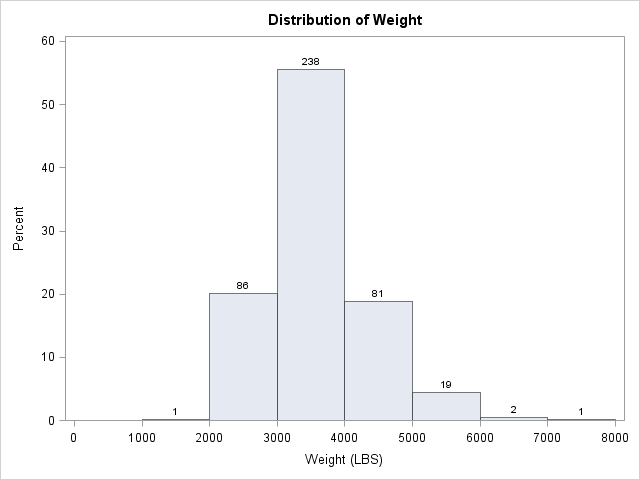
It is often useful to partition observations for a continuous variable into a small number of intervals, called bins. This familiar process occurs every time that you create a histogram, such as the one on the left. In SAS you can create this histogram by calling the UNIVARIATE procedure. Optionally,

Last week, I presented some highlights of the new features for SG Procedures and GTL in SAS 9.4. Now, let us dig in a bit deeper. For a plot without a GROUP role, setting an attributes was always easy with SG procedures. All you need to do to set bar color
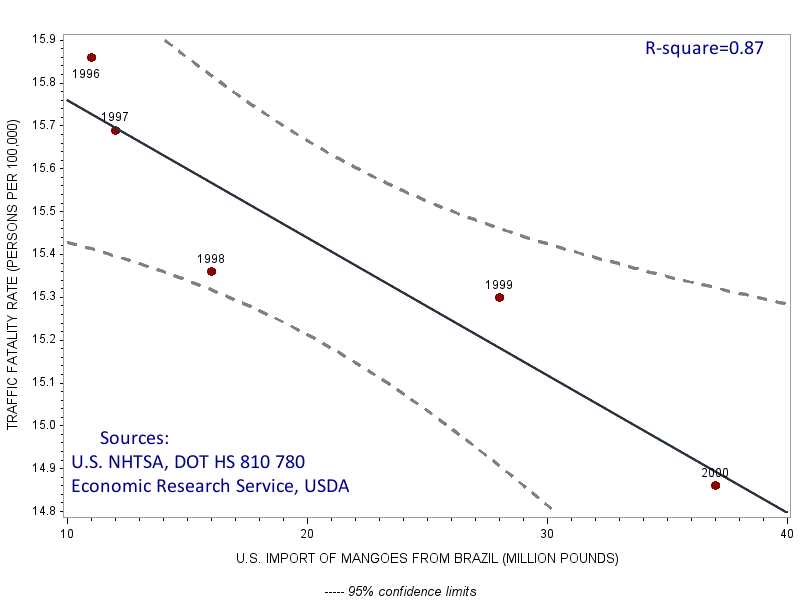

Did you know that more than 30,000 Americans die in traffic accidents every year? Interestingly, the U.S. import of mangoes from Brazil is found to be highly correlated with this fatality rate, as shown in the graph below. But are mango imports a good indicator of the future traffic fatality
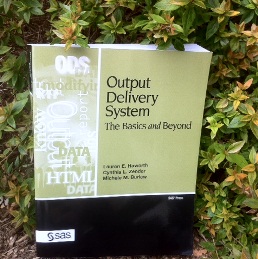

This week's SAS tip is from Lauren Haworth, Cynthia L. Zender, and Michele Burlew's book Output Delivery System: The Basics and Beyond. This example-driven book includes broad coverage of some of the best features of ODS. To learn more about the book and the authors, visit our Web catalog to read
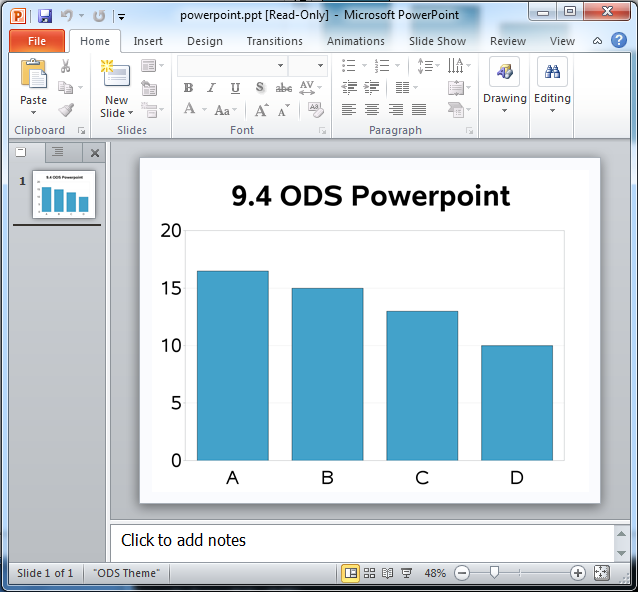
To say that I'm excited about the SAS 9.4 release is an understatement! For example, did you know that in SAS 9.4, you can write SAS/Graph output directly to a Powerpoint slide?!? This is definitely an item that was on my "wish list," and will no doubt make life a
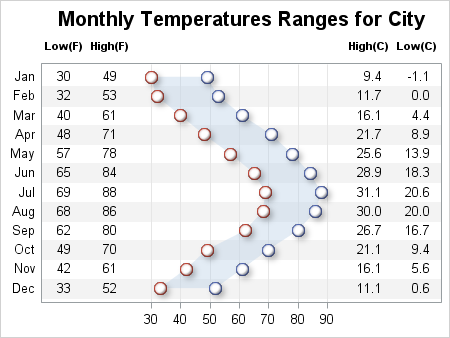
SAS 9.4 releases today with a ton of new features. As eloquently stated by Craig Rubendall, the driving themes are "Enable. Simplify. Innovate". The same sentiment applies to the ODS Graphics, with a ton of new features for the SG Procedures, GTL and ODS Graphics Designer. In the next few articles,

I don’t think people typically think of administration as a fun thing, but it really was fun talking to SAS administrators at SAS Global Forum this year. There seemed to always be a crowd around the administration demo station. We had quite a few super demos and papers, and we
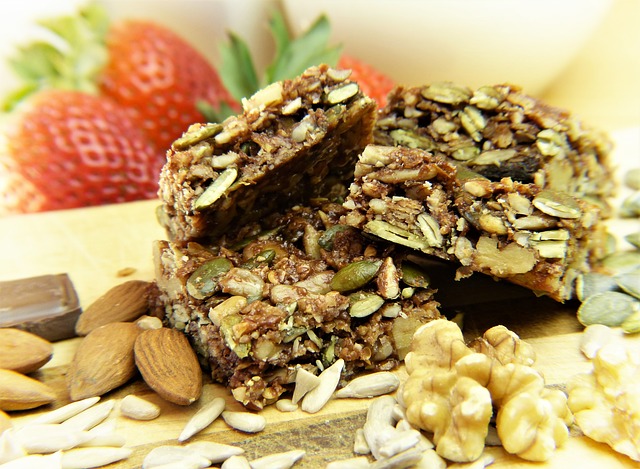
Most of us will have at least a few road trips this summer (some longer than others). Traveling in the car doesn’t mean you have to give up your healthy habits. It just takes a little planning.