All Posts


Perhaps nowhere is the saying “time is money” more true than in the construction industry. There is no better indicator of project cost and budget over/underrun than the number of days on-site. Reducing that number has a near 1:1 relationship with cost cutting, so it’s no wonder that days on-site


Is fraud like a snowflake, and every one is unique? Not really. There is, however, an increasing number of methods and schemes that show up and expand the range of issues we need to look for every day. To celebrate International Fraud Awareness Week this year, I'm going to spend


Recently, I spoke with Sally Carson about the Junior Professional Award, a SAS Global Forum 2015 program for people who have used SAS three years or less. The award offers free registration, free training and lots of opportunity to learn and become involved. This is the third year that Junior
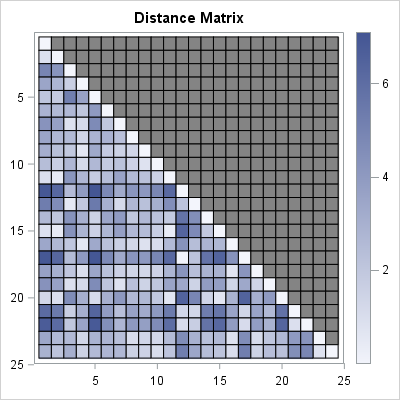

Have you ever noticed that some SAS/IML programmers use the CALL statement to call a subroutine, whereas others use the RUN statement? Have you ever wondered why the SAS/IML language has two statements that do the same thing? It turns out that the CALL statement and the RUN statement do
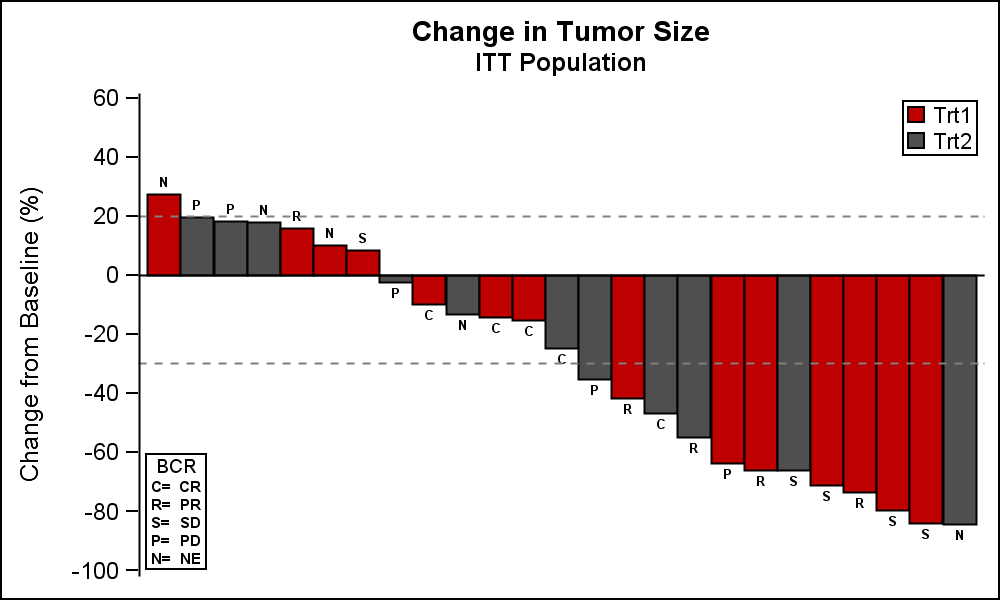

This week I had the opportunity to present a 1/2 day seminar on creating clinical graphs using the SG procedures during an In-House SAS Users' group meeting. I have presented this seminar quite a few times now, and I always learn something. The audience was very receptive, with some people


Perhaps forecasting is a little of both, crystal ball and competitive edge. It’s a crystal ball of sorts because it helps leaders get answers to questions like, “How many? Or, “How much?” to decide what actions best help the business. And it’s definitely a competitive edge when it results in


Are you a legitimate hard-working company that has been threatened with a lawsuit, by a patent troll? If so, the graphs in this blog should make you happy! Speaking of 'happy' and 'troll' - here's a picture of a happy Troll Doll from my friend Hannah. Don't you just hate


Have you ever received an error or warning in SAS macro and did not know what to do next or even where to look? Now there is an answer! And debugging your SAS macros just got easier. All macro errors and warnings are now documented in the SAS 9.4 Macro


For most people, this time of year means celebrating cherished, personal traditions… helping those less fortunate…flocking to stores in droves…the company holiday party… For the SAS Security Intelligence team, it means identity theft…benefits fraud…unemployment insurance fraud...insider threats. Why? Because next week is International Fraud Awareness Week! And we’re celebrating by


As the team of nearly 50 peer-reviewers finalize their review and recommendations, I want to reflect on the amazing accomplishments of the SAS Global Forum 2015 teams: Nearly 700 sessions were submitted by the SAS user community and SAS experts! More than 150 selections are online and available for preview!


When we think of acne, we typically think of teenagers and raging hormones. However, there has been an upsurge of adult acne over the last 50 years. Why, you ask? Well, one probable cause is changes to our food supply and dietary habits. Nutritional voids and dietary excess can have

There are times when I harken back to the classic television show M.A.S.H. For those of you too young to remember, the story centered around a mobile Army surgical hospital in the midst of the conflict in the Korean peninsula. While they weren't the first people to see the patient, the unit

My Mum could have been a doctor – most can’t read her handwriting. It’s only because I’ve been trained to read it, I can. The analysis of unstructured data is similar. Text analysts can be quickly overwhelmed to learn that you have to manually develop a training corpus. Reading a
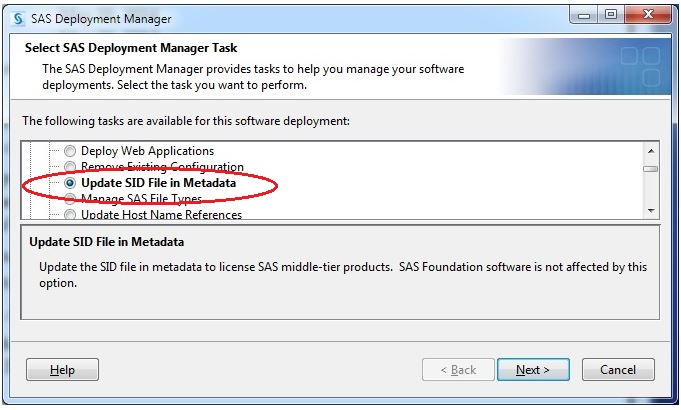

Did you know that applying a new SAS license file for many SAS solutions is a two step process? Because many of SAS’ most of popular solutions (including SAS® Visual Analytics, SAS® Enterprise MinerTM and SAS® Customer Intelligence) depend on the middle-tier architecture for primary user access, information about licensed


Going Beyond Regulatory-Mandated Tests to Achieve True Risk Management I regularly hear banking customers talk about ‘sweating their assets’ - leveraging their substantial investments in expanded teams of risk analysts, re-engineered processes and new risk systems for Basel II and III compliance – to gain better insights into their business.