All Posts


Discovery Channel's Shark Week starts July 5, 2015 - and I've created a special SAS map & graph of shark attacks in North Carolina to get you in the mood for their week of shark education! But first, to get you in the mood for my blog, here's a picture

.@philsimon on the new challenges of data governance.


Hello, I’m Jennifer Waller, your SAS Global Forum 2016 conference chair. This is the first of several blogs I’ll be writing to help keep you informed about the conference and ways you can get involved. Because of my background in education, I’m especially excited about a new initiative at this
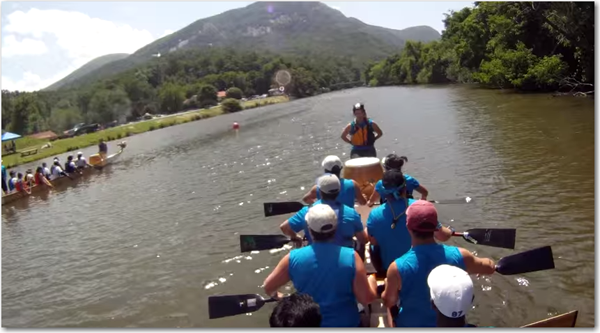
One of my earlier blogs on handling percent (%) values in SAS was very popular (it's been viewed over 34,000 times!), so I thought I'd write a similar blog on handling time (mm:ss.ss) values in SAS ... This past weekend I was in a dragonboat race (that's me in the


Love them or hate them, value-added models (VAMs) have changed the way we look at education today. VAMs have reshaped our thinking about the effectiveness of programs, schools, educators and colleges that prepare them. While VAMs have been used in the social sciences for decades, we can credit a few


Within the SAS DATA step, the LAG function is provided to return a variable’s value from a previous data set observation. With certain data criteria, sometimes there is a need to look ahead at the next observation and you would expect to use a LEAD function, but this does not

As a proud father of three young children, Father’s Day is very special to me. I pulled together some data about the holiday for a fun blog post, but with three kids it’s difficult to find time to write. Evenings end with me and my wife collapsed on the couch


Jim Harris says event stream processing determines if big data is eventful and relevant enough to process and store.


It was 3:00 am one week day morning this April. The whole house had long been asleep when we were startled by the sound of a fire alarm. My husband and I jumped out of bed disoriented…. is there a fire? We didn’t smell any smoke... Our youngest daughter was


Have you ever waited a bit for SAS Enterprise Guide to display the Output Data tab when submitting a SAS program that generates multiple output tables? Or, perhaps your program only generates one big output table but it takes a little while for it to surface on the Output Data

Recent updates to SAS 9.4 have introduced some nice improvements in support of automated migration using the SAS Migration Utility and SAS Deployment Wizard. SAS has been working hard to make the migration experience more user friendly and less error prone. Changes have focused on making errors easier to identify


One of the fundamental principles of computer programming is to break a task into smaller subtasks and to modularize the program by encapsulating each subtask into its own function. I have written many blog posts over the years about how to define and use functions in the SAS/IML language. I


Recently, I had an opportunity to participate in an analyst briefing around the Internet of Things (IoT). During the review, a chart was shown to summarize the status of IoT projects in the manufacturing sector. I wasn’t surprised by the varying degree of “completeness” of IoT projects across this industry, but


The metaphors we choose to describe our data are important, for they can either open up the potential for understanding and insight, or they can limit our ability to effectively extract all the value our data may hold. Consisting as it does of nothing but electric potentials, or variations in


Hadoop has been called a game changer technology. Here’s why: - DATA IS DIFFERENT: We now have to deal with both structured and unstructured data. - NO LIMITS: We now deal with Terabyte or Petabyte data size and not just with old Megabyte. - COMPLEXITY: We work with complex multi-server