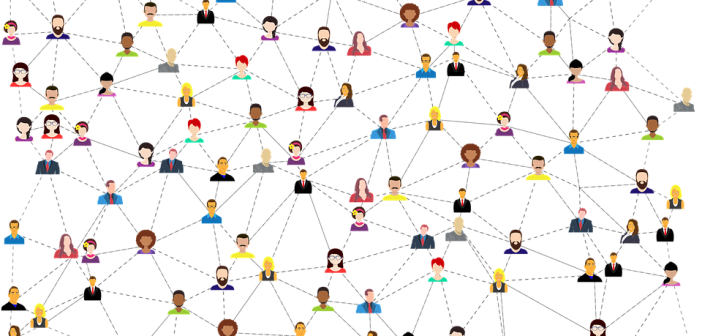
SAS' Damian Herrick chronicles the refresh of a 2002 social-network analysis aimed at identifying influential peer educators among former drug users.
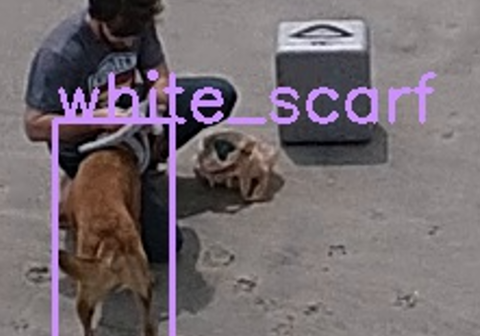

Let's create a Multi-stage Computer Vision model to detect objects on high-resolution imagery taken from an aerial view. The goal is to locate a dog and determine if he is wearing a scarf or not and what color the scarf is.
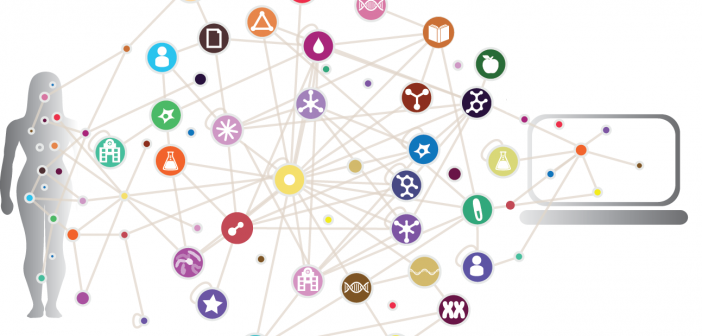
In this introduction to powerful knowledge graph tools, SAS' Brandon Reese shows you how they can predict disease similarity and compound similarity using an unsupervised approach.
SAS' Bahar Biller reveals how simulations enable KPI generation, risk quantification, risk management and more.
Wouldn’t it be cool if we establish a mechanism that provides more data scientists easy access to SAS Reinforcement Learning capabilities, from a centralized location and using a standardized approach?
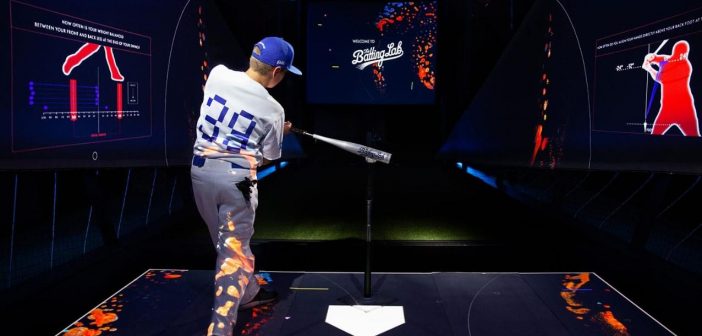
SAS research statistician Ji Shen reveals how to train a machine to be a batting coach.
SAS' Michael Lamm gives an overview of Bayesian Additive Regression Trees (BART) and demonstrates training and scoring BART models in SAS Visual Statistics.
Robert Blanchard's role as a data scientist at SAS has afforded him the flexibility to live where he wants, in his case, on a beach in San Diego.
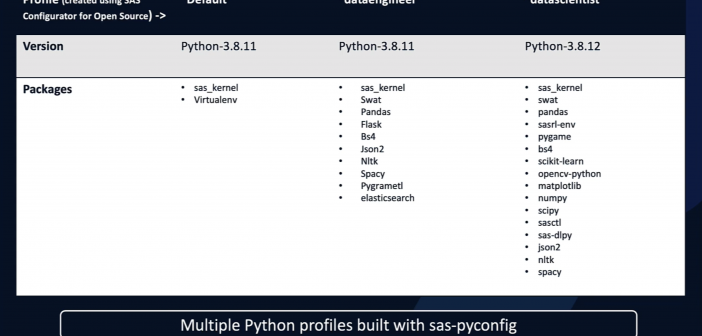
The Proc Python procedure, Python code editor & Python code step facilitate low-code analytics calling Python and SAS from a common interface. Data scientists also appreciate the connection to Python & R through the Model Studio Open-source Code node. Older methods of interaction include the swat and sas_kernel packages running on Python clients.
SAS' Ricky Tharrington and Jagruti Kanjia explain two ways bias shows up in model predictions.