Calculating circle areas and sphere volumes without π

For Pi Day, veteran SAS user Leonid Batkhan reveals a pi paradox.
For Pi Day, veteran SAS user Leonid Batkhan reveals a pi paradox.

This blog serves two purposes: the main purpose is to show you some useful SAS coding techniques, and the second is to show you an interesting method of creating a Beale cipher. TJ Beale is famous in Virginia for leaving behind three ciphers, supposedly describing the location of hidden gold

Veteran SAS user Leonid Batkhan introduces you to open-source SASjs framework.

The Missionaries and Cannibals Problem (MCP) is a classic river-crossing logic puzzle. With SAS, we can solve this problem, visualize the solutions with SAS NETDRAW procedure and generate steps for any MCP problems.
SAS' Bari Lawhorn shows you how to access files you've stored with SAS® Studio.

SAS' Mark Jordan shows you how to modify data using PROC SQL, PROC DATASETS and SAS macros.

When we moved out to the country with our two dogs, our oldest dog Todd suddenly decided he liked to howl…. And he would do so every time we left the house. Maybe it was the country air? Maybe it was a time-lapse gene? Maybe he just wanted to learn

This article introduces how to solve the pirate game with a recursive solving algorithm in SAS, and how to analyze and visualize the law behind the complex logic of the pirate game. If you join in a pirate game next time, you can know your destiny ahead of time to reap the benefits and avoid getting killed.
Many SAS programmers use macros. I have seen students in my SAS classes use several methods to activate their macros. One way is to load the macro in the Display manager or editor in SAS OnDemand for Academics and submit it. Another technique is to use the statement %Include macro-name.
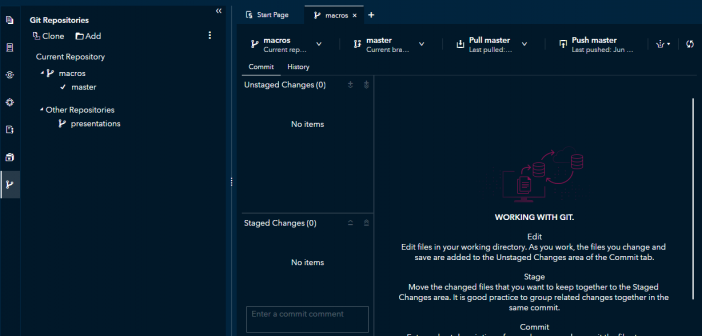
I use macros extensively in my SAS programs, and over the years have accumulated a few that I find quite useful. The integration of GIT and SAS Studio has made it easy to build a re-usable macro library, so I've put some of the more polished macros I've written in