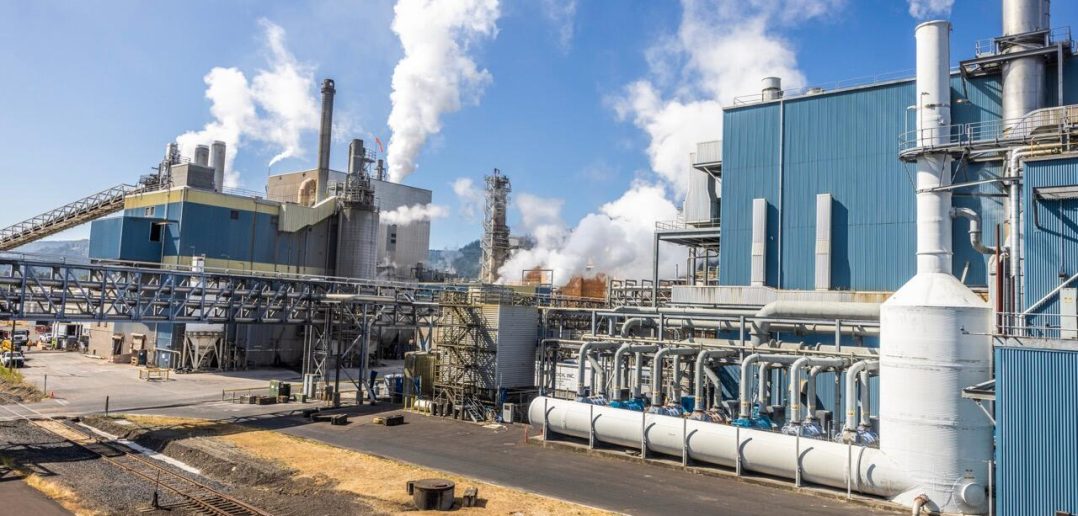
Recausticizing is the beating heart of pulp production. Sure, it’s chemistry, too, but it’s anything but boring science.
For Georgia-Pacific, mastering this heartbeat’s rhythm has meant protecting profits, safeguarding quality and rewriting what’s possible on the mill floor.
Georgia-Pacific, one of the world’s largest manufacturers of tissue, pulp, packaging and building materials, runs more than 150 facilities around the world. They make everything from Brawny® paper towels and boxes to cellulose and lumber.
On such a global scale, even small inefficiencies can snowball fast – especially in a process as volatile as the one responsible for pulp production.
The process: A century in the making, a shift every eight hours
The liquor cycle, which enables the chemical breakdown of wood chips into pulp, has been part of the papermaking process since the late 1800s. It’s a closed loop that transforms white liquor into black liquor, then to green and back to white again through a process called recausticizing. The whole process can take four or five days, with multiple employee shift changes, which makes it hard to course-correct quickly.
Historically, operators relied on intuition developed over decades to manage delicate chemical balances. But as experienced workers retire, legacy knowledge is disappearing. And each shift change introduces another variable. You might have an operator on one shift make a change. But if the change isn’t clearly communicated to future operators – or those operators don’t understand why the change was made – you get inconsistencies. AI provides a constant recommender, helping understand what will happen to the process six, eight, ten and twelve hours down the road.”
AI as apprentice and advisor
At the heart of Georgia-Pacific’s solution is SAS® Intelligent Decisioning, running on SAS® Viya®. Together, they allow the company to automate decision flows, run champion/challenger models, and deliver streaming analytics that guide operators.
"With these tools and insights, an employee who’s been here a year can operate as though they've been here for five to ten years," says Samuel Coyne, Senior Director of AI. "That’s critical in an industry where turnover is high and precision is non-negotiable."

“With these tools and insights, an employee who’s been here a year can operate as though they've been here for five to ten years.”
— Samuel Coyne
These aren’t hypothetical gains. As Steve Bakalar, Vice President of IT and digital transformation, puts it: "We’ve seen great results in productivity, efficiency, yield and reduced downtime. There’s no way we could’ve achieved this without these AI capabilities."
Related: Optimizing the supply chain with analytics and IoTForecasting the future, one caustic tank at a time
What makes this AI deployment so impactful is its ability to forecast chemical inventories. Operators get real-time insights that allow for small, proactive adjustments – rather than massive, reactive overhauls.
"Another issue we have across all liquor cycles is that operators tend to wait too late and then have to make large moves. Small incremental moves are always better,” explains Paul Frederickson, Senior Vice President of Georgia-Pacific’s Technology Group. Seeing the reading in real time and having a forecast of where it will be in 8 hours gives operators confidence to make smaller moves more often.
This smooths out the entire system. Reducing liquor variability reduces digester variability, leading to better pulp.
That might sound simple. But consider this: A poorly timed adjustment today might not show consequences until three shifts later. The model’s ability to predict outcomes and recommend immediate actions affects product quality, morale and revenue.

“We’ve seen great results in productivity, efficiency, yield and reduced downtime. There’s no way we could’ve achieved this without these AI capabilities.”
— Steve Bakalar
Scaling across the enterprise
Georgia-Pacific’s Wauna mill in Oregon served as the case study for this AI deployment. It was ambitious: Could AI stabilize a process spanning acres of equipment, with effects unfolding over several days and do so with fewer than 10 years of combined operator experience in the control room?
"When we started this project, we were already running tens of thousands of discrete models looking for anomalous behavior," admits Frederickson. "The game changed to fewer, more sophisticated models with broader looks across more sets of data. Wauna has been so successful that we’re getting calls from other mills asking, ‘How long will it take to get that here?’"
The momentum is real. Other mills are lining up to adopt the same model. Why? Because it works.
The real innovation: Intelligence that travels
SAS Intelligent Decisioning is the linchpin. Its drag-and-drop interface lets business users configure decision flows. It supports code in Python and open source. And it delivers ultra-low latency responses (5-10 milliseconds), enabling decisions at the edge of production.
It integrates forecasting, streaming, and optimization to predict and act on quality metrics in pulp production. As Coyne says, “It’s one of the first projects to bring trouble, cause and corrective action into one place.”
That trifecta doesn’t just give visibility; it builds confidence. It’s the difference between reacting and preparing.
-
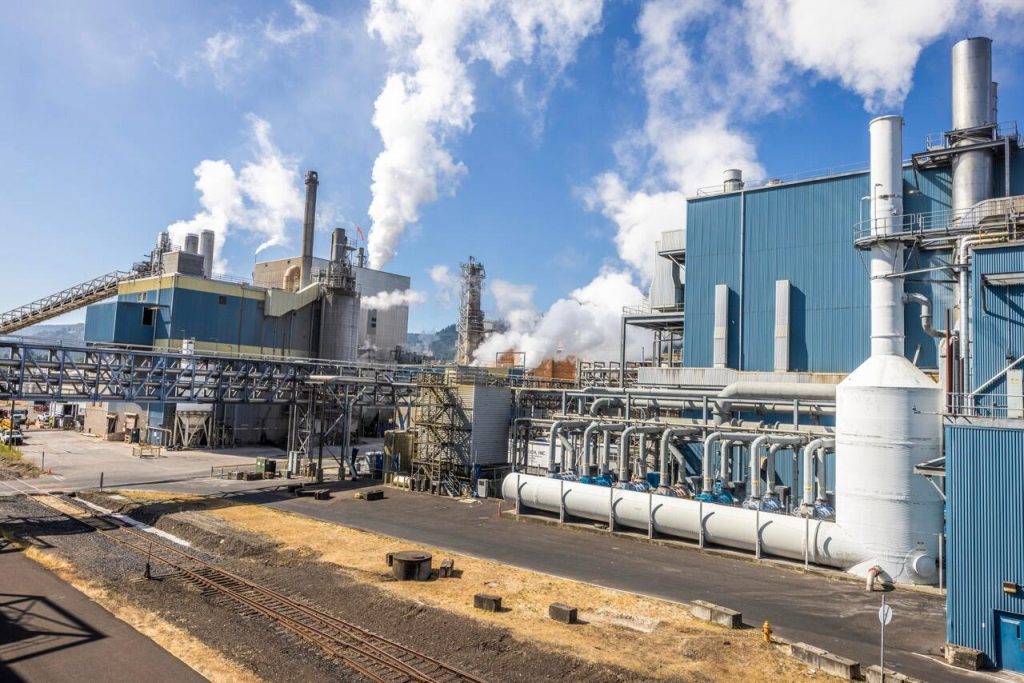
- Georgia-Pacific Wuana Plant full exterior shot
-
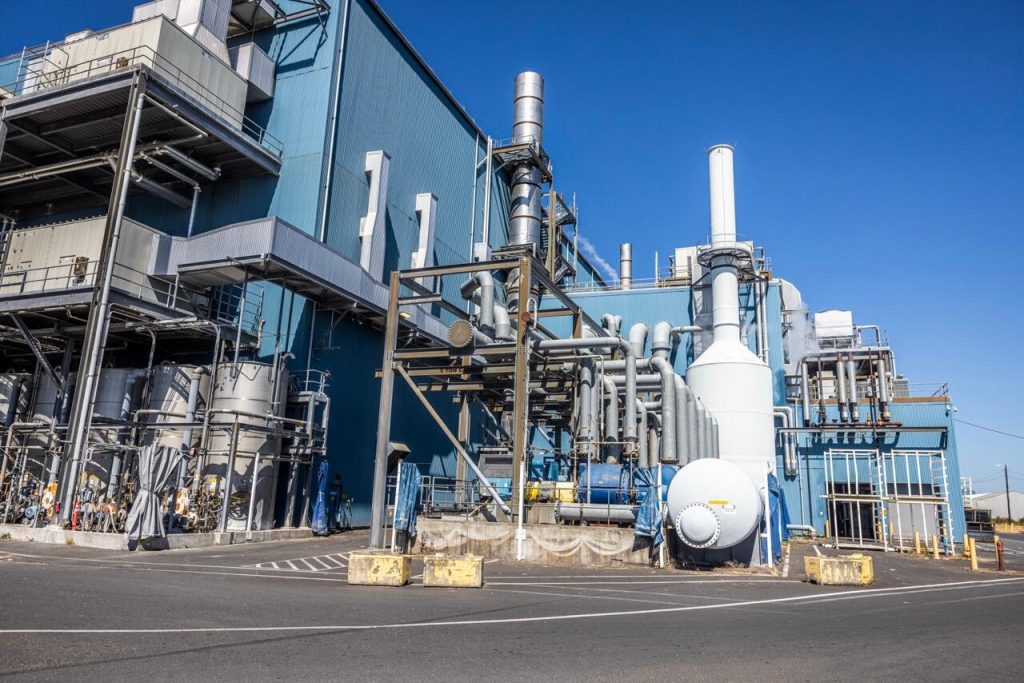
- The outside of Georgia-Pacific’s Wuana manufacturing plant in front of clear blue sky
-
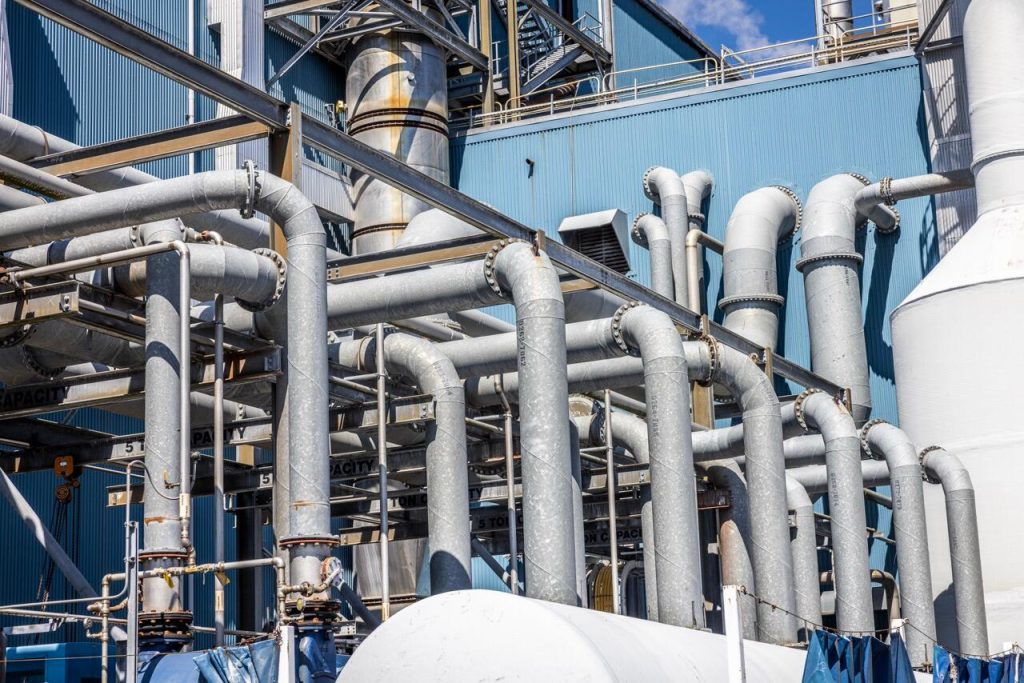
- Georgia-Pacific Wuana Plant exterior pipes
A blueprint for the future of manufacturing
This isn’t just a success story about automation. It’s about intelligence that adapts, scales and trains the next generation of operators in real time. Georgia-Pacific’s white liquor project demonstrates what’s possible when AI is woven into the process logic.
“We are focused on empowering the 'connected worker' with the tools they need to be as safe, efficient and effective as possible. These tools provide AI-driven insights and enhanced user experiences to help our employees excel,” says Bakalar.
From digesters to decisioning, Georgia-Pacific is proving that data, when paired with the right technology, is a superpower.