All Posts
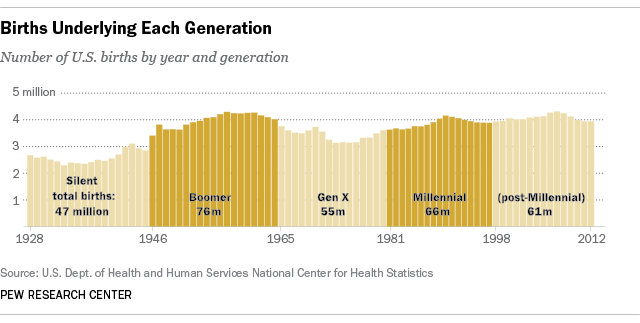

To get into the mood for this blog post, you should first listen to the music video of The Who singing My Generation... I guess everybody has 'their generation' and here in the U.S. the most famous generation has been the Baby Boomers. Many companies have tried to design products they
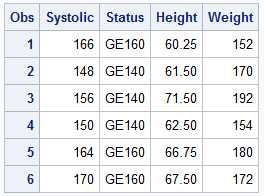

Including special Unicode symbols into the graph is getting more popular. In general, SG procedures support Unicode strings in places where these strings are coded into the syntax such as TITLE, FOOTNOTE. These support Unicode characters and also the special {SUP} and {SUB} commands. This is because these statements are rendered
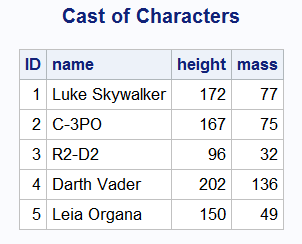

While perusing the SAS 9.4 DS2 documentation, I ran across the section on the HTTP package. This intrigued me because, as DS2 has no text file handling statements I assumed all hope of leveraging Internet-based APIs was lost. But even a Jedi is wrong now and then! And what better


This is the last of my series of posts on the NIST definition of cloud computing. As you can see from this Wikipedia definition, calling anything a “cloud” is likely to be the fuzziest way of describing it. In meteorology, a cloud is a visible mass of liquid droplets or frozen


Outside, the Cary, NC sky is gray and winds are blowing freezing rain, but a group of statisticians at SAS are channeling warm green hills and the soft, gold light of a California evening. Team conversations alternate between distributed processing, PROC IMSTAT and how many pairs of shorts to pack.

After working in the data quality industry for a number of years, I have realized that most practitioners tend to have a rather rigid perception of the assertions about the quality of data. Either a data set conforms to the set of data quality criteria and is deemed to be acceptable
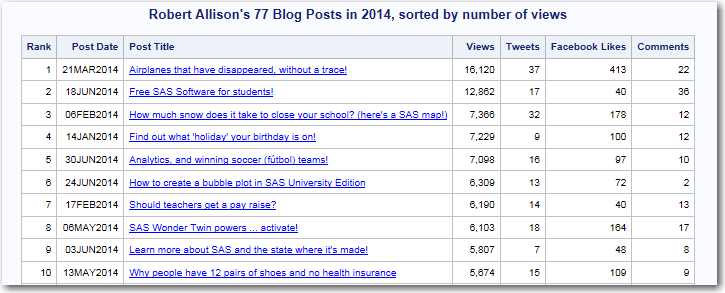
As a blogger, I often wonder whether my blog posts are 'successful' - and being a graph guy, I like to visually analyze the data, to try to answer that question. The most common measure of a blog post is probably the number of times it was viewed, so I guess

This isn't Kansas anymore. Oz has become a sprawling, smart metropolis filled with sensor data. How do we make sense of, clean, govern and glean value from this big data so we can get Dorothy home? The answer is SAS Data Management. With the latest portfolio updates, customers will be


No es un secreto que las empresas están aplicando cada vez más soluciones de Big Data para tomar las decisiones de negocio adecuadas. Sin embargo, corren el riesgo de caer en prácticas monótonas por desconocimiento y por no atreverse a usar nuevas estrategias que, en muchos casos, podrían evitarles riesgos

Over the past decade in insurance, the rise of the aggregators (organisations that compare quotes between different insurers) and direct channels has had a profound impact on personal lines distribution in the UK. However, personal lines brokers remain a critical route to market, especially at a time when many insurers


Here’s a great way to kill a conversation at the next cocktail party you attend. Start talking about the US budget deficit. You remember the deficit, right? It’s the difference between what the government collects and what it spends. In 2014, the US federal government spent $488 billion more than

Is this blog post about techniques to use on difficult graph legends, or is it about goats? The answer is both! But first, to get you into the proper mood, here is a picture my friend, Mark, took of some cute goats. And some links to YouTube videos about goats
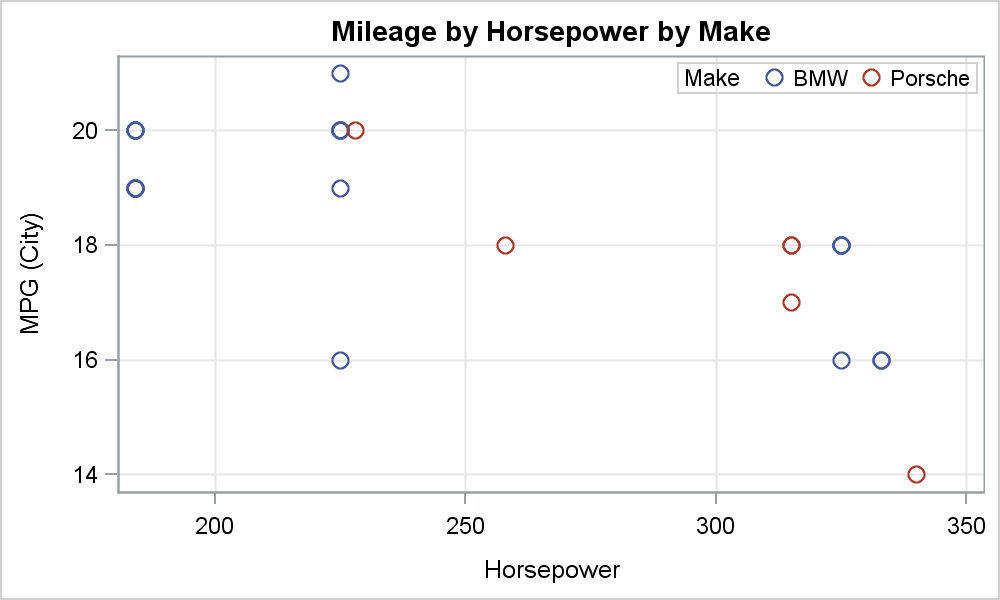
There has been much discussion on the SAS Communities page on usage of different symbols in a graph. The solutioin can vary based on the SAS release. New features have been added at SAS 9.4 releases to SG Procedures and GTL that make this very easy. With SAS 9.4M1, almost any combination is


When designing a SAS Grid Manager architecture, there is a requirement that has always been a critical component: a clustered file system. Over the years, vendors have released versions of these systems that are more robust and SAS has increased the minimum IO requirements, but the basic design has never changed—until now.


Healthier Alternatives to Quench Your Thirst With research linking sugar to heart disease, diabetes and GI imbalances, many of us are trying to reduce or eliminate sugar. And to add salt (or sugar) to the wound, new studies are suggesting that some artificial sweeteners ALSO have negative health consequences. When