Is there programmatic way to reduce memory requirements of a CAS table in SAS® Viya®? Yes! SAS' Steven Sober shows you how.
In my new book, End-to-End Data Science with SAS: A Hands-On Programming Guide, I use the 1.5 IQR rule to adjust multiple variables. This program utilizes a macro that loops through a list of variables to make the necessary adjustments and creates an output data set. One of the most
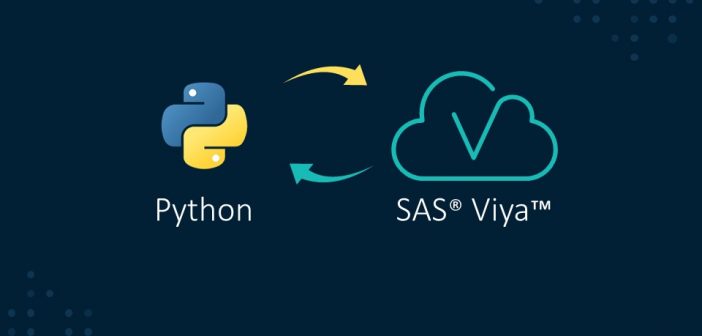
Are you looking for a specific CAS action to use in your project? Maybe you need to create a linear or logistic regression and can't seem to find the CAS action? In this post in the Getting Started with Python Integration to SAS® Viya® series, we are going to look
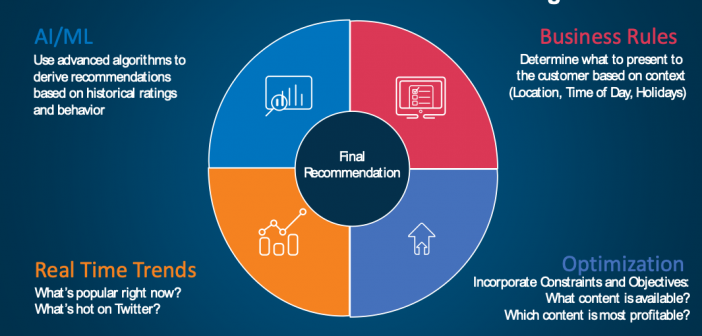
Nowadays, recommendation engines can be found just about everywhere from news websites to e-commerce sites to online streaming services. However, customers frequently encounter recommendations that are inappropriate or repetitive.
A lookup table is a programming technique where one or more values can be used to retrieve another value. For example, many years ago, I had benzene exposure estimates for 10 years (1940 to 1949) for each of five locations in a factory. Given a year and a job location,
Kevin Russell of SAS Technical Support shows you how partitioning CAS tables speeds processing.
In the second post of the Getting Started with Python Integration to SAS® Viya® series we will learn about Working with CAS Actions and CASResults Objects. CAS actions are commands sent to the CAS server to run a task, and CASResults objects contain information returned from the CAS server. This
CAS Actions and Action Sets - a brief intro - A quick introduction about the distributed CAS server in SAS® Viya®. Index of articles on Getting Started with Python Integration to SAS Viya. Making a Connection - An introduction to SAS Viya and the massively parallel processing CAS engine, and
SAS Public Sector's Elena Shtern is your guide as you extract data from the Federal Reserve Economic Data site using the SASEFRED interface engine, part of SAS/ETS® software.
Whether you enjoy debugging or hate it, for programmers, debugging is a fact of life. It’s easy to misspell a keyword, scramble your array subscripts, or (heaven forbid!) forget a semicolon. That’s why we include a chapter on debugging in The Little SAS® Book and its companion book, Exercises and