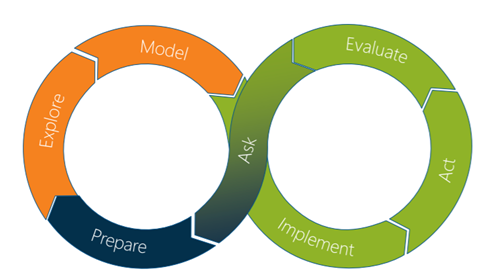
I believe the most important part of the analytics lifecycle is defining the business question being asked.
“It doesn’t stop being magic just because you know how it works.” Terry Pratchett, The Discworld Series Welcome to the third, and final, installment of Data Science in the Wild. In Part 1 we were lost in the woods thinking about how to start a data science project. In Part
Machine learning and visualisation help - 250 students enrolled in the program across all years. Now the program started its third year ...
Today’s customer really expects a truly extraordinary customer experience. That means that your company, your brand and the experiences you provide are not just in competition with people in your category. They’re in competition with people like Amazon, Uber and Starbucks, who have managed to make the mobile device a
SAS, uqudo and iLabs Technologies started a collaboration in OpenGate for touchless and safe travel. OpenGate, based on open source technology and open standards, offers a seamless, automated travel solution based on a reliable platform and technical solution. It enables sharing personal, health and location information between border control, air
Where do your data scientists sit? Perhaps they occupy a typically gloomy, computer-filled basement. Or maybe they have a glassy building all to themselves. Either way, you’ll not always see business decision makers walking the same corridors. After all, analytics is best left to the experts, isn’t it? Yet back
The coronavirus pandemic has changed many things in many industries – and not always in the most obvious way. Insurance companies have seen both fewer claims and fewer sales. As a result, many have realised that the process of digitisation, often started slowly before lockdown, must now be accelerated. More,
In my last blog post, I talked about the importance of establishing the right team for data science projects. Here, I’m going to talk about some of the barriers that can prevent successful adoption of data science. You can read my whole "data science in the wild" blog series here.
Detecting malpractice and crime – whether it is fraud, people smuggling, avoiding customs or organised crime – is a complex process. Detection is all very well and a necessary step. But what are the outcomes that your organisation needs? And what workflows and triggers do you need in place to
You’ve finally done it. You managed to stay awake through the endless series of MOOC videos, and you’ve mastered the IRIS data set. You've learned that lm() will build you a pretty nifty model in R, and you can fit a Classifier with SciKit Learn. You know your Neural Net