We know eating in a way that decreases harmful chemicals in our environment and our bodies is a worthy cause, but trying to eat to support both your health and the Earth’s can feel overwhelming — especially when you also have a budget, a busy schedule, and a brain that’s already juggling enough decisions. If you’ve ever stood in the grocery store torn between organic, conventional, packaged, and local options, trying to decide if it really matters in the long run, you’re not alone. So how do you go about prioritizing choices that have the biggest return on investment?
Reduce decision fatigue: you don’t have to do everything.
When we try to optimize every purchase, we burn out—and burned out people don’t meal plan, don’t cook, and end up spending more on takeout. One of the most sustainable things you can do is to start with one small habit you can repeat for the long term and add more only when you’re ready. Over time your low-tox choices will equate to big returns for health, resilience, and environmental impact.
Eat healthy, help the planet, and save money—3 high-impact nutrition behaviors that respect the planet and your budget. #EcoFriendly #HealthyEating #SustainableChoices Share on X3 High-Impact Actions
These are practical, repeatable steps that save time, reduce waste, and make it easier to choose foods that support your health and the planet. Tackle just one change at a time, and don’t feel rushed to move on to the next to-do.
1. Plan a few meals each week and make use of leftovers.
This reduces food waste, takeout to-go containers/cutlery, and vehicle emissions – and saves money.
- Write a short “use-first” list based on what’s already in your fridge/pantry before you shop.
- Cook once, eat twice (or three times). Choose 2–3 anchor recipes for the week and plan for leftovers for lunches or a remix night (chili, lentil curry, stir-fry, omelet). Include staples that will help you stretch your food funds.
- Repurpose ingredients. If you buy a sauce, spice blend, or herb for a recipe, plan a second recipe that uses it so it doesn’t get forgotten. Need ideas for reusing obscure ingredients? Ask AI!
- Use everything that’s edible. Bones can turn into a nutrient-dense homemade bone broth. Leaves and stems of root vegetables can be used in creative ways like soups, smoothies, stir-fries and pesto. Trimmed fat, fish skin, and some odds and ends from produce can supplement your pet’s meal.
2. Implement a low-waste kitchen system.
- Choose filtered tap water and a reusable bottle instead of cases of water for one of the simplest ways to cut plastic and cost.
- Buy “family size” staples you know you’ll use (oats, yogurt, olive oil, frozen veg). Less packaging per serving usually means better value.
- Make produce last. Familiarize yourself with how to store your fruits and vegetables to make them last the longest. If you are running out of time, consider freezing produce to add to future smoothies, soups, casseroles, or baked goods.
- Schedule at least one leftover/clean-out meal each week (fried rice, soup, omelet, stir-fry, bowl) to use what you already have.
- Consider composting if it’s easy. Compost if it’s convenient. If composting adds stress, skip it and focus on preventing waste upstream (planning + storage).
3. Incorporate more legumes, a whole food source of plant-based protein.
- In general, legumes improve soil health and produce significantly lower greenhouse gas emissions and use less water than livestock.
- Legumes are also packed full of fiber, which is one of the simplest ways to support your body’s natural detox pathways by binding to some toxins and keeping things moving through the digestive tract. Check out these ideas to increase your dietary fiber.
- Plant-based proteins are often cheaper than meat, possibly freeing up some of your budget for grass-fed or pasture-raised animal proteins.
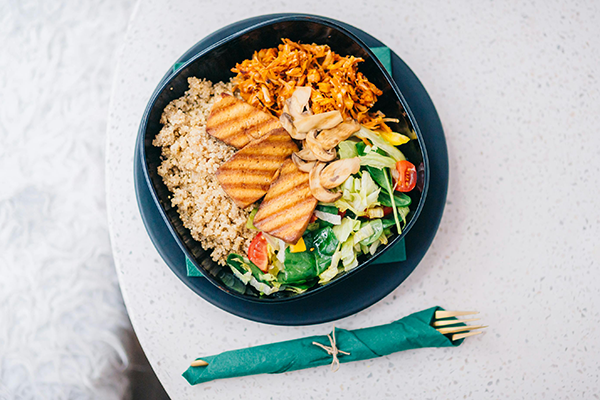
- Aim for 1–2 dinners per week that feature tofu, tempeh, beans, or lentils as the primary protein source.
- Learn more about plant-based eating.
For more context and tips related to the global impact of our food choices, check out these blogs:
Remember, repeatable systems beat perfect intentions, so start with just one change you feel ready to take on and know that your action can make a difference over time.
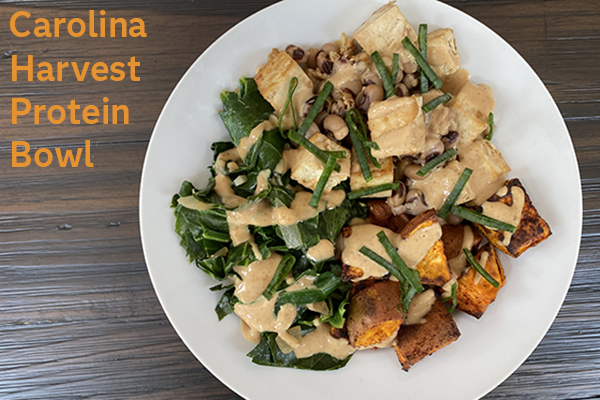
Carolina Harvest Protein Bowl
Serves: 4
PRINT RECIPE
This affordable, high fiber plant-based bowl features about 30 g of protein per serving. It’s filling, flavorful, and designed to be both budget‑friendly and environmentally smart—without being fussy.
Ingredients
3 medium sweet potatoes, scrubbed and cut into 1‑inch cubes
1 Tbsp avocado oil
1 tsp smoked paprika
½ tsp salt
2 cups cooked black‑eyed peas
1 (14‑oz) block extra‑firm tofu, pressed and cubed
3 Tbsp soy sauce or tamari
1 Tbsp avocado oil
1 small onion, sliced
1 bunch collard greens, stems removed and leaves chopped
2 cloves garlic, minced
¼ cup natural peanut butter
2 Tbsp tahini
2 Tbsp lemon juice or apple cider vinegar
1–3 Tbsp warm water
Green onions or cilantro (optional)
Instructions
- Roast the Sweet Potatoes. Preheat oven to 425°F. Toss sweet potato cubes with avocado oil, smoked paprika, and salt. Spread on a baking sheet and roast for 25–30 minutes, flipping once, until tender and lightly caramelized.
- Cook the Tofu & Warm the Black‑Eyed Peas. While the sweet potatoes roast, heat 1 tablespoon avocado oil in a large skillet over medium‑high heat. Toss the cubed tofu in 1 Tbsp soy sauce or tamari. Then cook 8–10 minutes, turning occasionally, until golden on most sides. Add canned or cooked dried black‑eyed peas and soy sauce; cook 3–4 minutes until heated through. Remove from pan and set aside.
- Sauté the Collards. In the same skillet, add onion and garlic. Cook 2–3 minutes until fragrant. Add collards with a splash of water, cover, and cook 5–7 minutes until tender but still bright green.
- Make the Peanut Sauce. Whisk peanut butter, tahini, remaining 2 Tbsp soy sauce or tamari, and lemon juice or apple cider vinegar until smooth. Add warm water gradually until it reaches a drizzle‑able consistency.
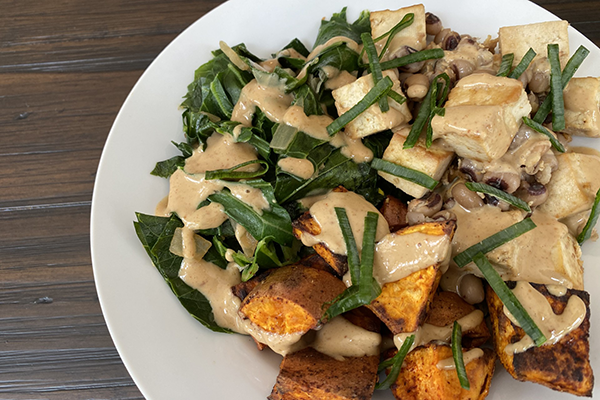
- Assemble. Divide roasted sweet potatoes, tofu‑pea mixture, and collards among four bowls. Drizzle generously with peanut sauce. Top with optional herbs.
Notes:
- Beans, tofu, and peanut butter provide protein at a low cost and lower greenhouse gas footprint per serving than animal proteins.
- Sweet potatoes, onions, and collards are among the most affordable vegetables per pound—especially when bought in season and locally.
- Keeps well in the fridge for 3–5 days; store sauce separately.
- No tahini? Use extra peanut butter and a bit more water.