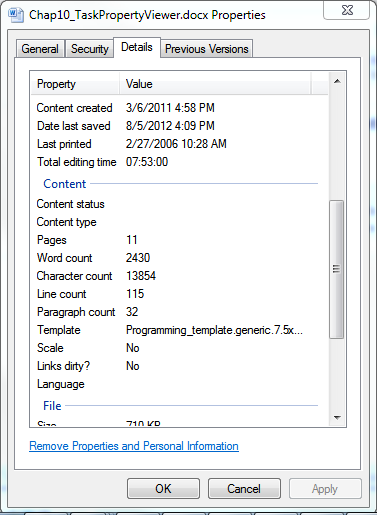
I've been finishing up just a bit of the "boilerplate" content for my forthcoming book about custom tasks. One of the final tasks is to write the introduction, also known as the "About this Book" section. SAS Press offers a template with examples of a few essential topics to address

Uncategorized
You might know about the many automatic macro variables that are available in SAS. They provide plenty of information about the SAS environment, such as the current user (SYSUSERID), the SAS version (SYSVER and SASVLONG), and the operating system where SAS is running (SYSCP and SYSCPL). That information is often
Milestone achieved: I've completed the final chapter of Creating Custom Tasks for SAS Enterprise Guide using Microsoft .NET and turned it over to SAS Press for editing and production. It's scheduled to be available in early 2013. I committed to writing this book nearly 5 years ago. I'll engage in
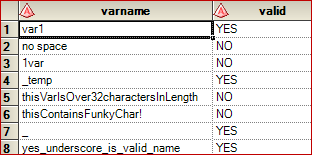
The following is an excerpt from my forthcoming book: Creating Custom Tasks for SAS Enterprise Guide using Microsoft .NET. If your custom task generates a SAS program, the chances are pretty high that your program will reference one or more variables within a SAS data set. Despite our best efforts,
Last week I attended a meeting of the Toronto Area SAS Society. (Okay, I didn't just attend; I was a presenter as well.) This user group meeting contained a feature that I had never seen before: "Solutions to the Posed Problem". Weeks before the meeting, an "open problem" was posted
One of the often-cited side effects of moving from "Base SAS" (SAS on your PC, or Display Manager) to SAS Enterprise Guide is the loss of "X" command privileges -- that is, the ability for your SAS programs to invoke other programs via the operating system shell. We call this
Regular expressions provide a powerful method to find patterns in a string of text. However, the syntax for regular expressions is somewhat cryptic and difficult to devise. This is why, by my reckoning, approximately 97% of the regular expressions used in code today were copied and pasted from somewhere else.
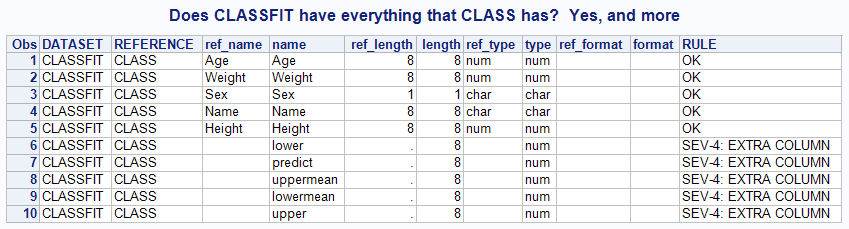
The project that I'm currently working on requires several input data tables, and those tables must have a specific schema. That is, each input table must contain columns of a specific name, type, and length in order for the rest of the system to function correctly. The schema requirements aren't
I'm working on a SAS programming project with a large team. Each team member is responsible for a piece of the overall system, and the "contract" for how it all fits together is The Data. For example, I've got a piece that performs some data manipulation and produces several output
When the Western Users of SAS Software gather in Long Beach, CA this September, I'll be proud to be counted among the WUSSers. (You can learn more about WUSS here; don't look here.) The WUSS organizers must have some serious clout, because the line-up of presenters reads like a "Who's