The DO Loop
Statistical programming in SAS with an emphasis on SAS/IML programs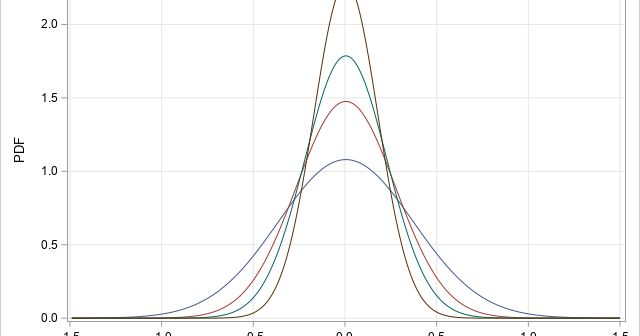

A previous article shows how to use Monte Carlo simulation to approximate the sampling distribution of the sample mean and sample median. When x ~ N(0,1) are normal data, the sample mean is also normal, and there are simple formulas for the expected value and the standard error of the
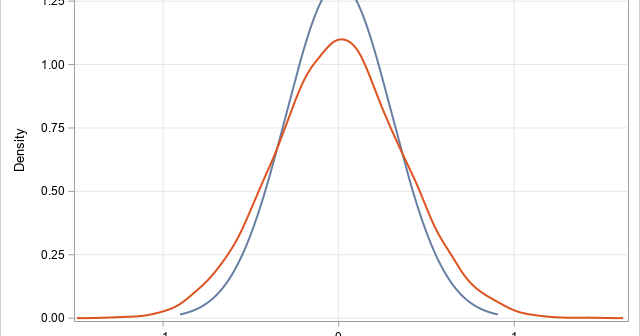
An elementary course in statistics often includes a discussion of the sampling distribution of a statistic. The canonical example is the sampling distribution of the sample mean. For samples of size n that are drawn from a normally distribution (X ~ N(μ, σ)), the sample mean is normally distributed as
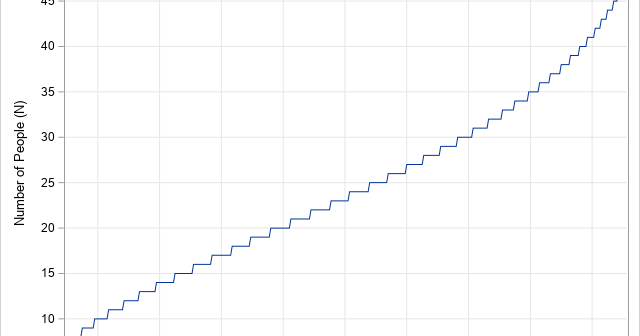
A previous article discusses the birthday problem and its generalizations. The classic birthday problem asks, "In a room that contains N people, what is the probability that two or more people share a birthday?" The probability is much higher than you might think. For example, in a room that contains