The DO Loop
Statistical programming in SAS with an emphasis on SAS/IML programs

SAS software supports two kinds of procedures: interactive and non-interactive. Most SAS procedures are non-interactive. They begin with a PROC statement, include one or more additional statements, and end with a RUN statement. When SAS encounters the RUN statement, the procedure executes all statements, then exits. On the other hand,
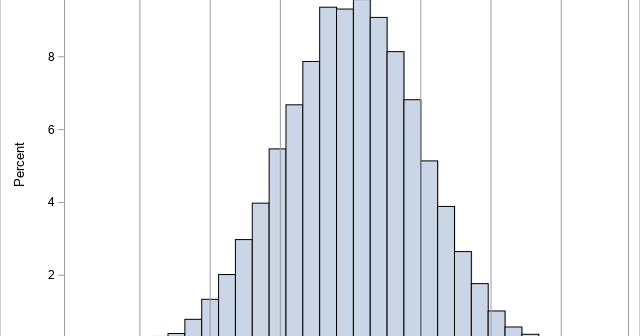
A remarkable result in probability theory is the "three-sigma rule," which is a generic name for theorems that bound the probability that a univariate random variable will appear near the center of its distribution. This article discusses the familiar three-sigma rule for the normal distribution, a less-familiar rule for unimodal
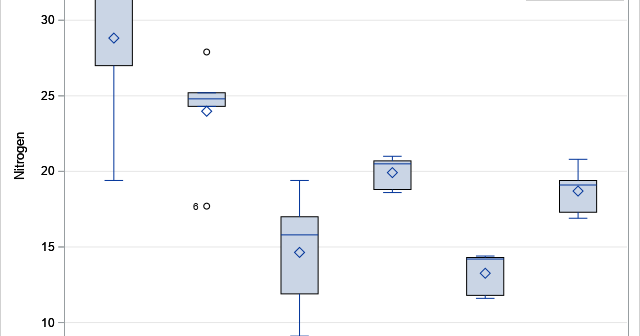
In practice, there is no need to remember textbook formulas for the ANOVA test because all modern statistical software will perform the test for you. In SAS, the ANOVA procedure is designed to handle balanced designs (the same number of observations in each group) whereas the GLM procedure can handle