From skin to muscle to bone to brain, vitamin D affects nearly every cell in the human body and impacts both short-term and long-term health. Unfortunately, indoor lifestyles, wintertime low-angle sunlight, and other factors make it challenging for many people to maintain sufficient levels of vitamin D. In fact, recent research indicates that over half of healthy adults worldwide (and over one third in the U.S) are deficient in vitamin D.
Let’s take a closer look at why vitamin D matters, what factors affect your levels, and what you can do to optimize your vitamin D status.
Acting as both a vitamin and a hormone, vitamin D:
- Influences cell growth and development
- Is crucial for maintaining strong bones and teeth with its regulation of calcium and phosphorus absorption
- Supports healthy immune system function
- Plays an integral role in gut health
- Protects against inflammation in the body
Why the Recommended Intake May Not Be Enough
The original recommended intake for vitamin D in the U.S. was established in 1941 to prevent deficiency (e.g., rickets) and has changed relatively little since that time. Meeting the dietary reference intake of 400 IUs (10 mcg) for infants up to 800 IUs (20 mcg) for adults over age 70 is a safe baseline recommendation but won’t necessarily result in optimal blood levels in all individuals throughout the whole year.
The standard recommendations may fall short for people who:
- Live at extreme northern or southern latitudes (especially over the winter/darker months)
- Spend most of their time indoors
- Have darker skin
- Wear sunscreen consistently
- Have digestion issues resulting in malabsorption
- Have vitamin D-related gene variants associated with synthesis (DHCR7), activation (CYP2R1), and/or transport (GC)
Vitamin D’s widespread effect in the body and the association of deficiency with a range of health disorders has led to more studies investigating the potential therapeutic role of this vitamin on skin conditions, autoimmune diseases, metabolic conditions (including high blood pressure, cardiovascular disease and diabetes), cancer, polycystic ovarian syndrome, depression, and more. Though moderate daily vitamin D supplementation has very low risk, the mixed results of the studies have led to some uncertainty as to the best general recommendation for supplementation, with clinical experts suggesting guidelines that exceed the dietary reference intake for those aged 1 to 18 years, adults over 75 years of age, those who are pregnant, and those with high-risk prediabetes.
While there is some disagreement in the medical community as to whether regular vitamin D testing should be recommended, everyone seems to agree that severe deficiency (<10 ng/ml) absolutely requires supplementation and follow-up. When testing is done, most clinicians also agree that levels should be at or above 30 ng/mL. Further, some experts in the field recommend testing as needed to aim for optimal levels of 40-70 ng/mL to provide increased protection against many adverse health outcomes. (I’ve also heard 50-80 ng/mL recommended by several functional medicine providers.) Be aware that blood tests over 100 ng/mL are generally considered too high with an increased risk of toxicity.
Why Winter Sunlight Isn’t Enough
Vitamin D deficiencies are more common in winter due to reduced sunlight exposure. Even if you manage to get outside and expose your arms and legs to sun from October to March in the northern hemisphere (especially above 37° latitude) or March to October in the southern hemisphere, this may not be effective. During winter months, the sun sits lower in the sky, reducing the amount of UVB radiation that reaches your skin. UVB is essential for your body to make vitamin D, so the sun’s low angle in winter makes it difficult for the body to produce vitamin D naturally. This is especially true at higher latitudes, where UVB exposure can be insufficient for months at a time.

Food Sources of Vitamin D
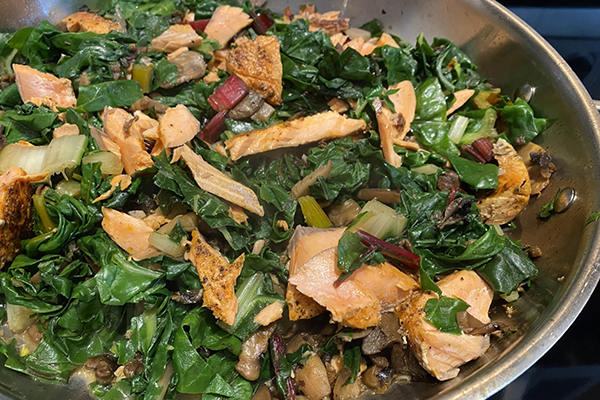
Food alone rarely provides enough vitamin D for most people, but it can help support your levels. The top natural sources include fatty fish such as salmon, sardines, and mackerel, and egg yolks (40 IUs/egg). Though mushrooms are sometimes found on the high vitamin D food list, they are only a significant source of Vitamin D2 when exposed to natural sunlight or ultraviolet light.
Because natural sources are limited, many foods in the U.S. are fortified with vitamin D, including some cow’s milk and plant-based milks, yogurt, nutritional shakes, cereal, and certain juices.
Since adequate sunlight exposure and consistent intake of high vitamin D foods is often hard to achieve, supplementation is often necessary to reach and maintain optimal levels, especially in winter.
When Supplementing Vitamin D…
- Test, don’t guess, your blood levels and work with a nutrition or health care professional who can help you choose the right dose to optimize your levels.
- Avoid high doses without medical supervision. Too much vitamin D can be toxic.
- Understand that when you stop supplementation, your vitamin D blood levels will drop. Some people are able to decrease supplementation in the summer, but you may need to take a D supplement forever unless something changes substantially related to your regular sun exposure or an underlying medical.
- Choose vitamin D3, which seems to be superior to D2 at raising 25(OH)D, the gold standard measure for vitamin D.
- Take it with food to optimize absorption. Vitamin D3 gets absorbed better when some fat is consumed with it, but it isn’t necessary if your vitamin D supplement already includes some fat to aid with absorption.
- Choose the timing that works for you. Though daily supplementation at lower doses has benefits, if you have trouble remembering to take a supplement daily, weekly higher dose options are available.
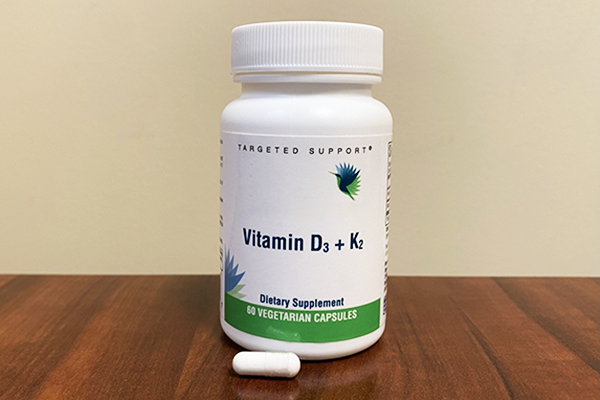
- Include Vitamin K2. Find a vitamin D3 supplement that includes vitamin K2 to support healthy calcium metabolism. Vitamin K2 helps direct calcium to bones and away from forming plaque inside arteries.
- Consider adding a magnesium supplement. Magnesium is required for the activation of vitamin D in the body, so taking a magnesium supplement with your vitamin D may increase the benefits.
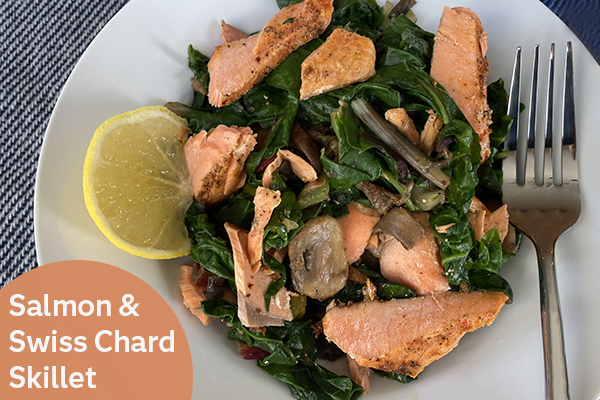
Salmon & Swiss Chard Skillet
Makes 3-4 servings
PRINT RECIPE
Ingredients
1 lb salmon fillets
1 Tbsp butter or ghee, grass fed preferred
2 cups mushrooms, sliced
8-10 cups Swiss chard (about 2 bunches), chopped, leaves + stems separated
2 cloves garlic, minced
1 tsp smoked paprika
½ tsp salt
½ tsp black pepper
zest and juice of ½ lemon
Instructions
- Heat a large skillet over medium high heat. Add butter.
- Season salmon with salt, pepper, and smoked paprika, and add it to hot skillet. Cook 4–5 minutes per side until flaky. Then transfer to a plate.
- Add mushrooms to the same skillet and cook them for 5–7 minutes until browned and softened. Add a splash of water or oil if needed to prevent burning. Add garlic and cook 30-60 seconds before adding chard stems. After a minute, add the chard leaves and cook for an additional 2–3 minutes until wilted and tender.
- Turn off heat. Flake the salmon into large pieces and return it to the skillet. Add lemon zest and lemon juice.
- Gently fold everything together and serve with cracked pepper and extra lemon.
Note: Frozen mushrooms work well in this recipe as a shortcut and to reduce the need for adding additional water or oil to the skillet.