Coffee fuels mornings around the world, with more than 60% of American adults reaching for a cup (or three) each day. Yet as coffee culture thrives, more people are rethinking their caffeine intake and turning to decaf as an alternative. But decaf often raises questions: How is it made? Is it healthy? Does it taste as good? Let’s pull back the curtain on decaf coffee and explore its process, health impact and the cleanest options available.
What is Decaf Coffee?
Decaffeinated coffee isn’t a different coffee bean, it’s the same coffee, with most of the caffeine removed. Many people assume decaf means zero caffeine, but that’s not quite true. On average, the decaffeination process removes about 97% of caffeine, leaving just 2-15mg per cup (compared to 70-140mg in regular coffee).
Decaf coffee isn’t a downgrade - it’s a mindful choice. ☕ Discover the truth behind your buzz‑free brew. #coffee #saslife Share on XWhy Choose Decaf?
Decaf coffee may not deliver the buzz, but it is a gentler way to enjoy your coffee rituals – especially for those who are pregnant, sensitive to caffeine, or managing conditions like insomnia, anxiety, high blood pressure or heart concerns.
Research shows that moderate coffee intake (3-5 cups/day) is associated with reduced overall mortality and lower risk of major diseases like diabetes, cognitive decline, certain cancers and heart disease. The good news? Whether you choose regular or decaf, both deliver these health benefits. Cutting caffeine doesn’t mean cutting health perks – just be mindful that sugar and cream can cancel out some of those gains.
How is Decaf Coffee Made?
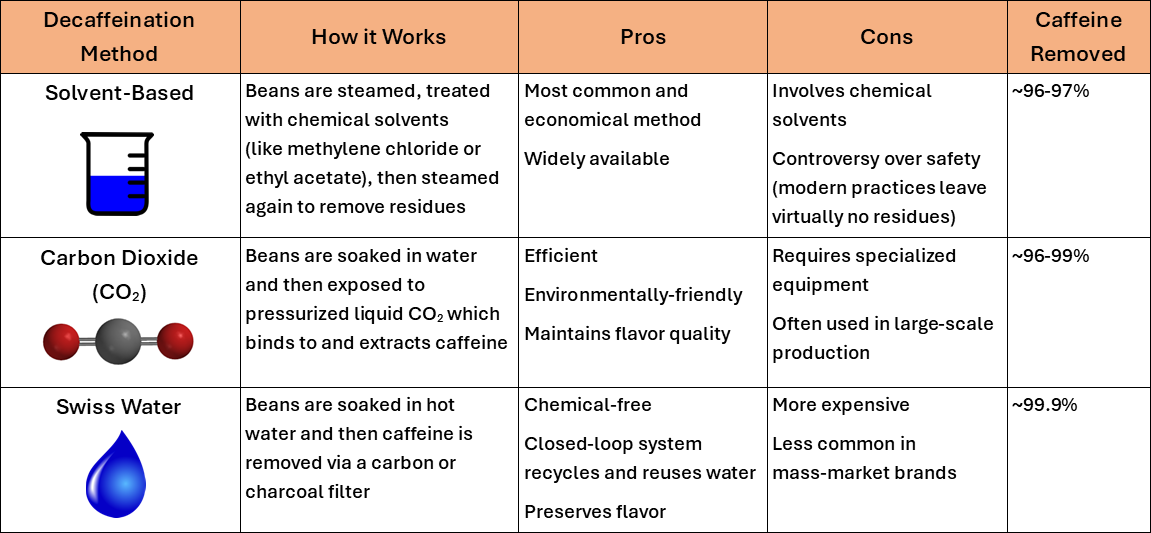
All coffee begins with unroasted green beans – the raw starting point. To make it decaf, the caffeine is carefully removed through a mix of chemistry and technique. There are several methods, but all rely on the fact that caffeine dissolves in water.
Solvent-Based Method
As the name implies, this method uses chemical solvents – typically methylene chloride or ethyl acetate – to strip caffeine from coffee beans. It’s the most common and economical approach.
Here’s how it works:
- Coffee beans are steamed to open their pores, drawing caffeine from the inner bean to the outer surface.
- Methylene chloride or another solvent is directly applied to beans, removing the caffeine.
- Beans are steamed again to remove any remaining traces of solvent.
- Beans are dried and roasted for consumption.
Result: Coffee with 96-97% of caffeine removed.
Note: In the past, harmful chemicals like benzene were used, but these have been banned because of carcinogenic effects. Today’s solvents are also used in products like paint strippers, nail polish removers and degreasers, and in high doses methylene chloride can be toxic, but their use is tightly regulated, and modern decaffeination practices should ensure that virtually none remains in the finished beans.
Carbon Dioxide Method
Carbon dioxide (CO2) is a powerful natural solvent that can separate chemical compounds, including caffeine. In decaffeination, pressurized CO2 is used to extract caffeine from coffee beans. This method is efficient and environmentally friendly, though it requires specialized equipment and is most often used in large-scale, commercial production.
Here’s how it works:
- Beans are soaked in water to soften and open their pores.
- Liquid CO2 is pumped into a high-pressure chamber with the beans.
- Over several hours, CO2 molecules bind to caffeine molecules and draw it out of the beans.
- The caffeine-rich CO2 is transferred to another chamber, where pressure is released and caffeine is removed.
- Beans are dried and roasted for consumption.
Result: A high-quality coffee that retains much of its flavor with 96-99% of caffeine removed.
Swiss Water Method
Using pure water and osmosis, this method relies on the principle that caffeine is water soluble. It’s patented closed-loop system recycles and reuses water and green coffee extract, making it a more environmentally friendly option.
Here’s how it works (or check out this video and infographic):
- Green coffee beans are soaked in hot water to dissolve caffeine.
- The caffeine-rich water (called green coffee extract) is passed through a carbon or activated charcoal filter, trapping caffeine but allowing flavor compounds to remain.
- The flavor-rich water is reused to soak new batches of beans, removing caffeine while preserving taste.
- Beans are dried and roasted for consumption.
Result: A high-quality coffee that retains much of its flavor with 99.9% of caffeine removed.
Which Decaf Brews Best?
Among decaffeination methods, Swiss Water is considered the cleanest option since it is chemical-free and preserves both flavors and antioxidants. Look for the Swiss Water name and/or logo when choosing decaf coffee. The carbon dioxide method comes in a close second, offering efficiency and high flavor retention.
Beyond the decaf process, it’s important to consider how coffee beans are grown and harvested. Issues like heavy pesticide/herbicide use and unfair labor practices remain challenges in the coffee industry. Luckily, more companies are committed to sustainable and ethical practices.
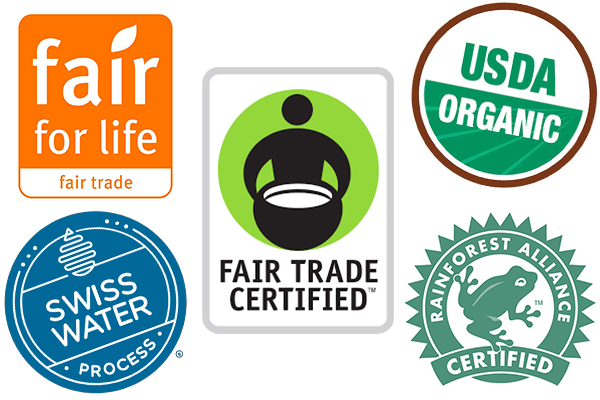
To ensure your decaf is both high-quality and reasonably sourced, look for certifications such as:
Pro Tip: Pair Swiss Water decaf with organic and fair trade certified for the cleanest cup of joe.
The Decaf Verdict
Decaf coffee is not a downgrade – it is a conscious choice. Experiment with different brands, roasts and methods until you discover your perfect cup. And remember, the better the beans, the better the brew!
Cold Brew Coffee
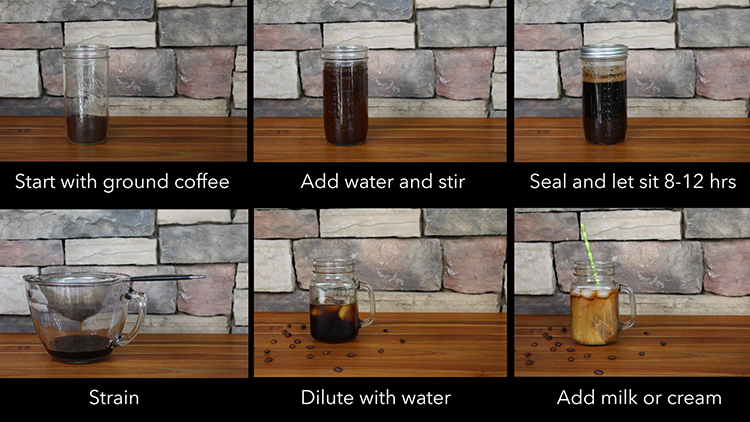
This slowed-down, relaxed version of coffee yields a smooth, less bitter and well-rounded tasting coffee. For more details and video guide, check out A Cold Front is Brewin'.

Ingredients
1 cup coarsely ground coffee
4 cups water
glass jar or pitcher
fine mesh sieve and coffee filter or cheesecloth
Directions
- Place coarsely ground coffee in a glass jar or pitcher.
- Add water and stir.
- Seal and let sit at room temperature for 12-16 hours (minimum of 8 hours).
- Line a fine mesh sieve with a coffee filter or cheesecloth.
- Pour coffee concentrate over strainer into a bowl. This may take some time since the coffee is thick - be patient. The coffee filter or cheesecloth is optional but will prevent needing to strain coffee a second time.
- Dilute with water to achieve desired strength.
- Add milk or cream, if desired.
- Store in fridge for 10-14 days.