In my previous post, I discussed sampling error (i.e., when a randomly chosen sample doesn’t reflect the underlying population, aka margin of error) and sampling bias (i.e., when the sample isn’t randomly chosen at all), both of which big data advocates often claim can, and should, be overcome by using all the data. In this
Uncategorized
Survey says sampling still sensible
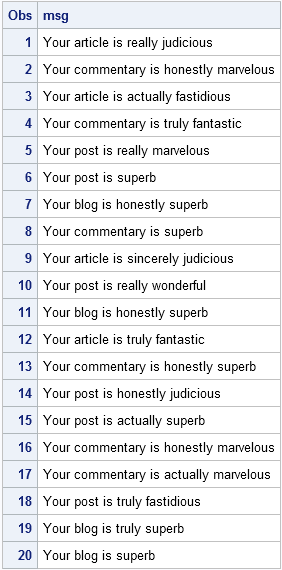
This article is actually fastidious: How spammers generate random comments for blogs
Last week Chris Hemedinger posted an article about spam that is sent to SAS blogs and discussed how anti-spam software helps to block spam. No algorithm can be 100% accurate at distinguishing spam from valid comments because of the inherent trade-off between specificity and sensitivity in any statistical test. Therefore,
Citigroup and AIG talk big data
Jill Dyché, internationally recognized speaker, author and business consultant, spends her days talking to businesses about big data – how they’re using it, challenges, successes, strategies, plans and more. What she’s hearing again and again from IT leaders is that they have to innovate with big data, move quickly and