“Our corporate data is growing at a rate of 27% each year and we expect that to increase. It’s just getting too expensive to extend and maintain our data warehouse.” “Don’t talk to us about our ‘big’ data. We’re having enough trouble getting our ‘small’ data processed and analyzed in
Uncategorized
“To attain knowledge, add things every day. To attain wisdom, subtract things every day." --Lao Tzu Dataviz is all the rage these days. We just don't hear the term "chart" as often anymore. It's now a data visualization. George Carlin would be proud. Of course, not all data visualizations are
In my previous post, I used a game show metaphor for one aspect of metadata management, namely making sure table definitions are not ambiguously labeled. In this post, I will use name tags as a metaphor to discuss an important intersection of metadata management and master data management (MDM), an
The data quality and data governance community has a somewhat disconcerting habit to want to append the word “quality” to every phrase that has the word “data” in it. So it is no surprise that the growing use of the phrase “big data” has been duly followed by claims of
If you work in the software industry, seeing technologies emerge and catch fire is a great spectator sport. Whether it's a programming language, a platform or something like e-commerce, each new wave ripples throughout the industry. Currently, Hadoop is having its time in the sun, and we are all trying
If you’re reading this, there’s a strong chance your organisation is on the road to data quality management maturity. One of the challenges you’ll obviously face is how to deal with all the defects discovered. Many data quality problems can be "cleansed" instantly using appropriate technology, but for a lot
"Big data isn't useful for investment purposes." So said my friend Walt during one of our recent arguments discussions. By way of background, Walt is not an über-successful 70-year-old investor who earned his chops well before the advents of Twitter, Facebook and their ilk. Rather, he's a man of a similar age to
Although its simplest definition is “data about data,” metadata can be better thought of as a label that provides a definition, description or context for data. Common examples include relational table definitions and flat file layouts. More detailed examples include conceptual and logical data models. Among its other possible uses,
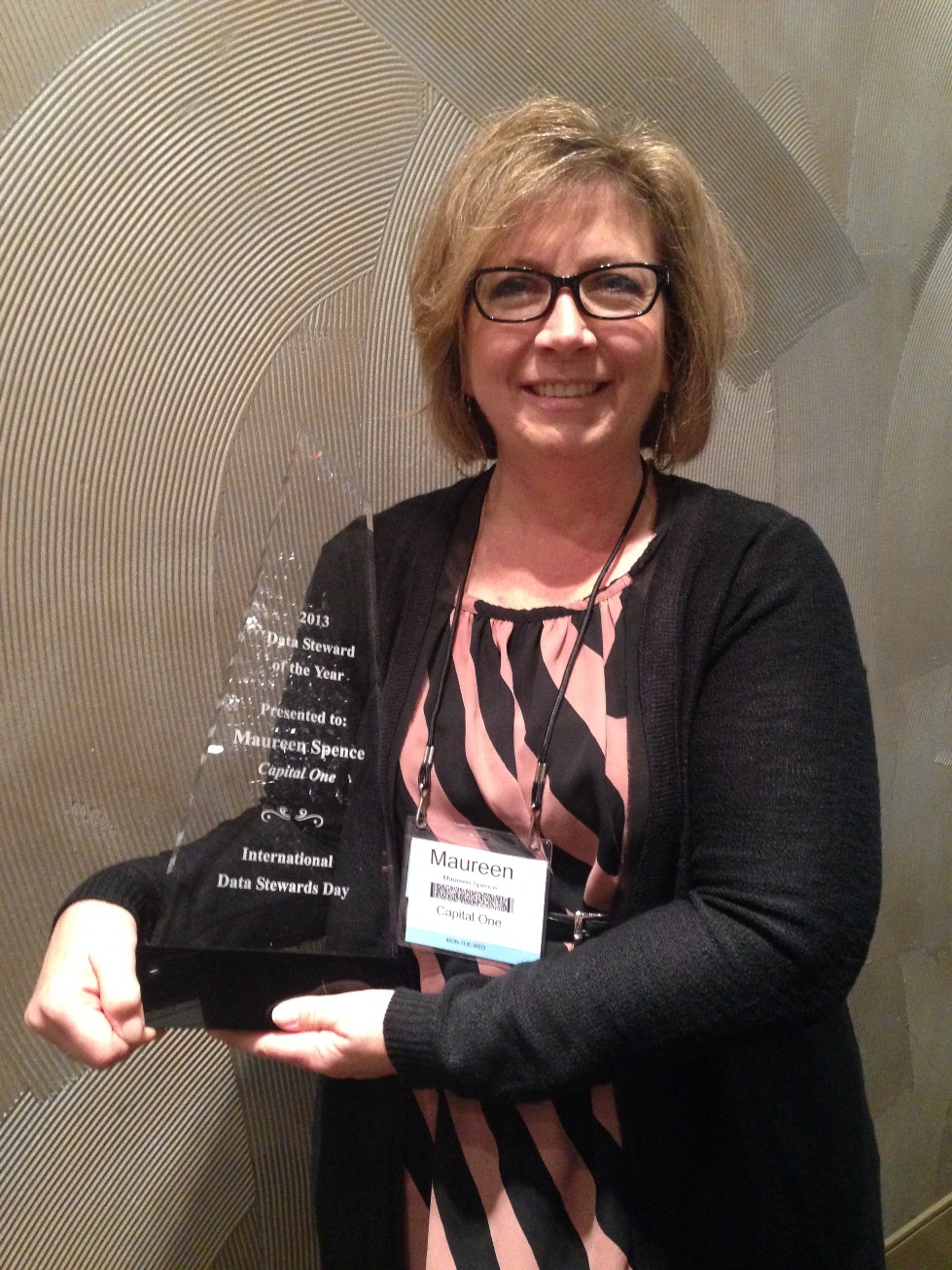
Each year, I'm excited to see the awards nominations for Data Steward of the Year come in. It's not just because we enjoy seeing the program grow each year (which is true, based on the number of nominations we receive). It's also because of the variety of the nominations –
In my last post, we started to look at some of the issues with the concept of “big data governance,” especially when a large part of governance is intended to prevent the introduction of errors into data sets. Many big data analytics applications focus on the intake of numerous varied