Without fail, at every social media conference I attend, someone will approach the microphone during the Q&A portion of a presentation and ask the speaker or the panelsts, "How are you measuring influence for your blogger outreach programs?" Or, "How can we replicate what you're doing to decide whether certain
Uncategorized
In the R programming language, you can use a negative index in order to exclude an element from a list or a row from a matrix. For example, the syntax x[-1] means "all elements of x except for the first." In general, if v is a vector of indices to
2011 was a year when we immersed ourselves in the process of converting existing titles to eBook format. You can now read most of your favorite SAS books on your Kindle or iPad or access them for any device through the Google eBookstore. We are currently in the process of converting
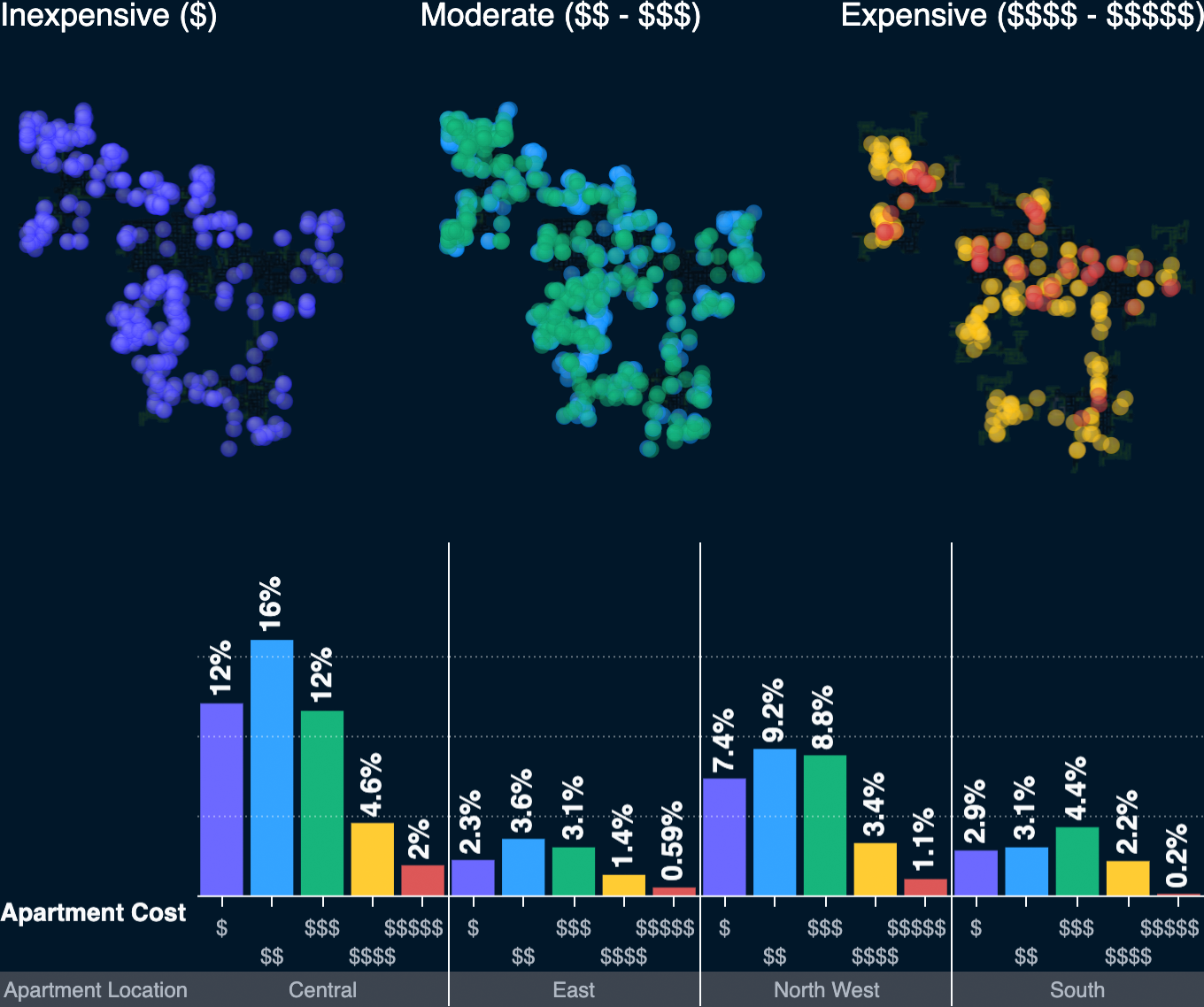
Following up on the theme of graphs commonly used in many applications, here is another one that displays a horizontal bar chart with multiple data columns aligned with the bars. Recently at WUSS, a user stopped by asking how to create just such a graph. While this user wanted something more complex
Early in the new year, many of us make decisions designed to make our lives simpler, more meaningful, and less costly. So selecting 2012's first weekly tip was actually quite easy. Phil Holland's revered guide Saving Time and Money Using SAS is a natural fit. I've featured a few excerpts from Phil's work in the past
Buffon's needle experiment for estimating π is a classical example of using an experiment (or a simulation) to estimate a probability. This example is presented in many books on statistical simulation and is famous enough that Brian Ripley in his book Stochastic Simulation states that the problem is "well known
In the immortal words of Britney Spears: Oops! I did it again. At least, I'm afraid that I did. I think I might have helped a SAS student with a homework assignment, or perhaps provided an answer in preparation for a SAS certification exam. Or maybe it was a legitimate
SAS Publishing is pleased to announce that both the Base and the Advanced SAS Certification Prep Guides are now available as eBooks in the Apple iBookstore. In these guides, you’ll find affordable self-study materials to help you prepare for the SAS® 9 exams. Prepare yourself to achieve certification using your favorite
Happy New Year, everyone! It’s that wonderful time of the year when people start anew and we all start making promises to ourselves about the things we want to accomplish in the year ahead. If you’re looking for some ways to ramp up your personal and professional expertise this year,
Local governments are not immune to the rising demand for more accountability in government run services and programs, and the expenditure of public funds. Elected officials and citizens alike want to know what these programs accomplish for the public investment made. To date, the response to these questions and demands has been
Happy New Year! As we begin 2012, I think we can all agree there is no question that the explosion of digital technology over the past few years has redefined the relationship between vendor and customer. With so much product and vendor information just a click or a tap away,
Let us ring in the new year with something simple and useful. A recent question by a user over the holidays motivated this article on what is likely a commonly used graph. We want to compare the preformance of two categories along with a third measure. This could be something like "How
Hello, 2012! It's a New Year and I'm flushed with ideas for new blog articles. (You can also read about The DO Loop's most popular posts of 2011.) The fundamental purpose of my blog is to present tips and techniques for writing efficient statistical programs in SAS. I pledge to
At the beginning of 2011, I made four New Year's resolutions for my blog. As the year draws to a close, it's time to see how I did: Resolution: 100 blog posts in 2011: Completed. I blew by this goal by posting 165 articles. I recently compiled a list of
Is there anything you'd like to tell your management? Of course, in the spirit of the holiday season, I mean is there anything you'd like to tell your management that isn't anatomically impossible? If so, please join me and Ryan Rickard, Sr. Supply Chain Manager at Newell Rubbermaid, for our
Ron Cody and his supremely helpful book Learning SAS by Example close out our weekly SAS Author's Tip of 2011. Ron Cody is a household name in the SAS user community. And he deserves the moniker on his license plate of "SASMAN". Just mentioning Ron's name at user conferences incites awe. Sometimes
According to Wikipedia, marketing with music can roughly be traced back to 1923 with the dawn of commercial radio broadcasting. What we now know as a "jingle" first aired on Christmas Eve in 1926, touting the merits of General Mills' Wheaties cereal. As we all know, musical messages have since become a staple for advertisements on
Lots of the visitors to this blog arrive here by way of Google search (welcome!). Thanks to search engines and a few well placed keywords, the same older posts (let's call them "timeless topics") seem to attract the most traffic from year to year. I hope that the searchers find
This question and the 53 comments that followed became a highlight of SAS Publishing’s social media engagement in 2011. We initially posed this question on our Fans of SAS Books LinkedIn page earlier in the year and responses occasionally still trickle in. I've greatly enjoyed reading users’ experiences with their “first”
2011 saw incredible change in the states as more than half of the governorships changed hands. As expected, that caused significant turnover at the State CIO level, as well. So while executive and technology policies changed in many ways, the dismal budget situation reinforced the need to allocate tax pay
Bad customer service experiences burn into our brains, creating permanent recall. And although we rightfully expect good customer service across the board, truly exceptional customer care is also unforgettable. This month, I featured an interview with SAS Publishing sales representative Sharon Brandon in the new issue of SAS Publishing News.
You’ve got your raw data visualized, you need a graph that shows the results of a custom analysis, you have a mental image of the graph you want to create, but…you don’t know the procedure needed to create what you want. Sanjay Matange and Dan Heath have written a book
In Simple maps can go a long way, we discussed some techniques to create simple outline maps from map datasets in the MAPS library using GTL. Now, let us take this a step further to do something more useful with this feature. For some graphs, the map information is an essential part of the
On the heels of the release of the popular SAS macro variable viewer from last month, I'm providing another custom task that I hope will prove just as useful. This one is a SAS options viewer, similar in concept to the OPTIONS window in SAS display manager. You can download
This week's SAS author's tip comes from Jack Shostak - manager of statistical programming at the Duke Clinical Research Institute. Despite his youthful appearance, Jack's been using SAS since 1985 and is the author of SAS Programming in the Pharmaceutical Industry and coauthor of Common Statistical Methods for Clinical Research with SAS Examples,
Managing expectations for forecast accuracy is very important, as often those expectations are extreme after management invests in a new system. Software vendors have also been known to make overly (choose one: optimistic? sanguine? idyllic?) accuracy claims as part of their sales pitch. Of course, there is no arbitrary level of accuracy
My friend and colleague, Matt Fulk, has detailed in his posts some of the great ways we've used SAS Customer Intelligence to improve our own marketing. Using SAS fits with our culture of measurement and analysis that keeps us constantly focused on finding better ways to do things, and one
2011 has been a big year for social media at SAS. Our award-winning blogging program got a major makeover We relaunched the Knowledge Exchange in WordPress to provide great thought leadership content to our customers We debuted new corporate social media presences on Facebook and Google+ The popular support.sas.com discussion
A few colleagues and I were exchanging short snippets of SAS code that create Christmas trees and other holiday items by using the SAS DATA step to arrange ASCII characters. For example, the following DATA step (contributed by Udo Sglavo) creates a Christmas tree with ornaments and lights: data _null_;
A new book from SAS Press, "Statistical Graphics Procedures by Example" co-authored by Dan Heath and I has now been published (phew!). For both Dan and I, this was our first foray into writing a book, so it was highly educational to say the least. The key idea behind the presentation