
Lengths and formats in SAS: the long and short of it

What's the difference between LENGTH and FORMAT in a SAS data set? This article shares the answer, with examples.
What's the difference between LENGTH and FORMAT in a SAS data set? This article shares the answer, with examples.

Use SAS DATA step to split a large binary file into smaller pieces, which can help with file upload operations,
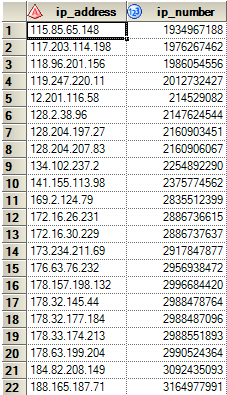
As citizens of the Internet, we are all familiar with IP addresses -- probably more so than our Internet founding fathers had ever intended. These addresses are typically represented in a 4-piece segmented list of numbers separated by dots. Here is an example: "149.173.5.120". Each segment is called an octet

Using relative file paths in your SAS programs? Use the new DLGCDIR function to manage your SAS working directory -- even in SAS Enterprise Guide or SAS Studio -- to ensure your programs are working the way they ought to.
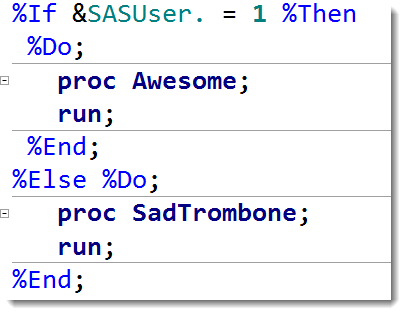
SAS programmers have long wanted the ability to control the flow of their SAS programs without having to resort to complex SAS macro programming. With SAS 9.4 Maintenance 5, it's now supported! You can now use %IF-%THEN-%ELSE constructs in open code. This is big news -- even if it only

One thing that we have a lot of at SAS: installations of SAS software that we can run. I have SAS for Windows on my laptop, and I have access to many centralized instances of SAS that run on Linux and Windows servers. (I also have access to mainframe SAS,
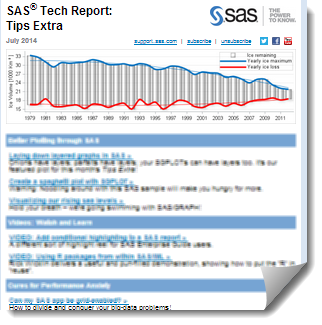
When it comes to e-mail-based newsletters, I'm of two minds. On one hand, I feel like I receive enough (or maybe too much) e-mail and I'm reluctant to clog up my inbox with more stuff -- especially if it's information that's located elsewhere (such as on that big backup drive
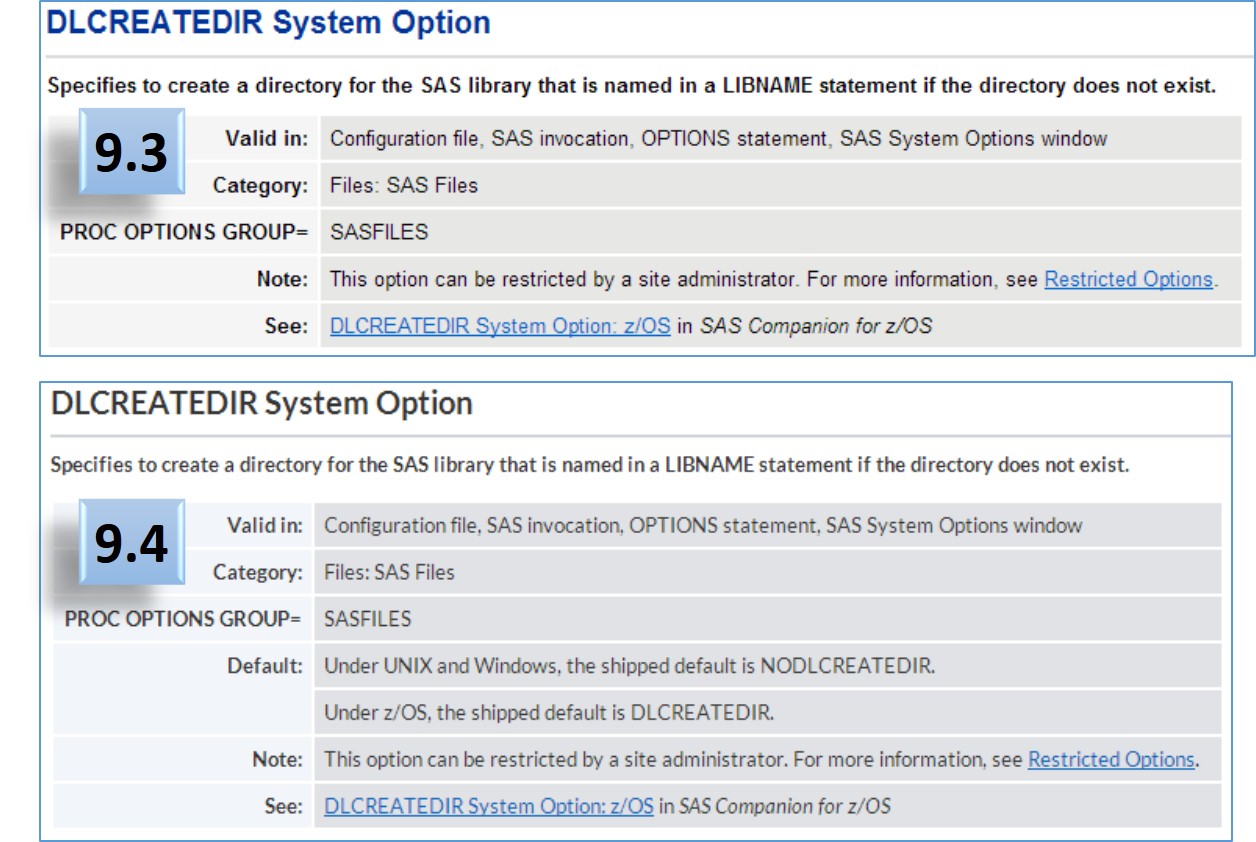
Because I began my SAS career in the Publications division, I like to think that I have a keen eye when it comes to SAS documentation. When I first visited the SAS 9.4 online documentation, I immediately noticed that it had a different look. Examine the image below; can you
When I work on SAS projects that create lots of files as results, it's often a requirement that those files be organized in a certain folder structure. The exact structure depends on the project, but here's an example: /results |__ html |__ images |__ xls |__ data Before you can
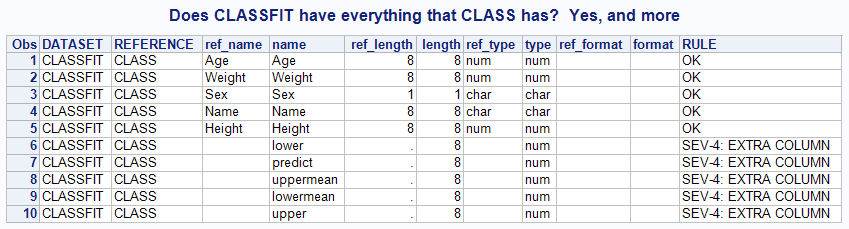
The project that I'm currently working on requires several input data tables, and those tables must have a specific schema. That is, each input table must contain columns of a specific name, type, and length in order for the rest of the system to function correctly. The schema requirements aren't