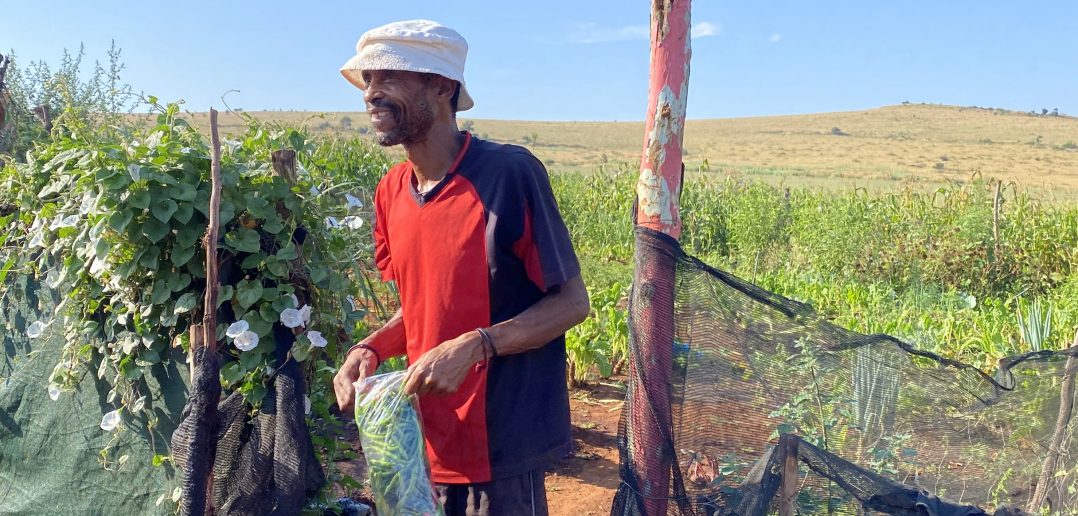
Before the day properly begins, there is already movement. A few steps between shacks. A bucket, a tap and a narrow strip of soil that refuses to be ‘too small’ to matter. In an informal settlement on the edge of the Cradle of Humankind, food is not just bought. It is carried, watered and hoped for.
Too small for commercial farming and too remote for mainstream markets, each year up to 40% of global crops are lost to waste. Just northwest of Johannesburg, South Africa, you’ll find the world-renowned paleoanthropological region known as The Cradle of Humankind. Home of the world’s largest concentration of ancestral remains and covering 47,000 hectares, this UNESCO World Heritage Site is the intersection of some of the most capable farmers and some of the most unforgiving conditions.
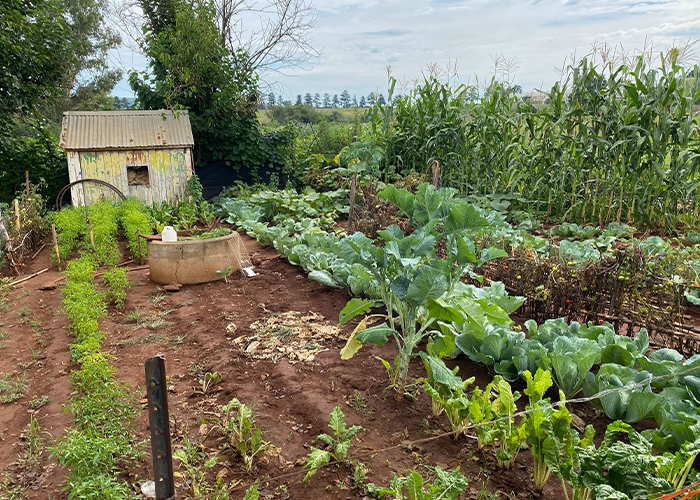
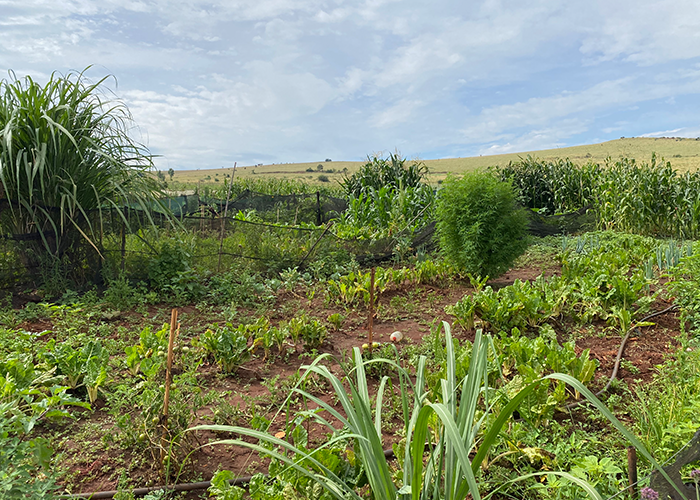
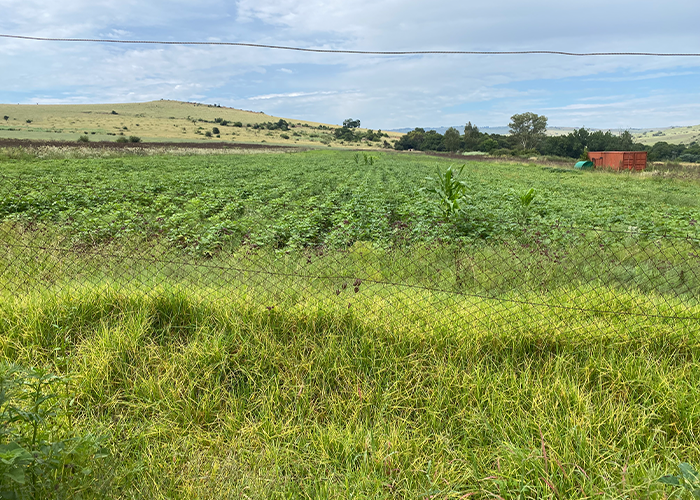
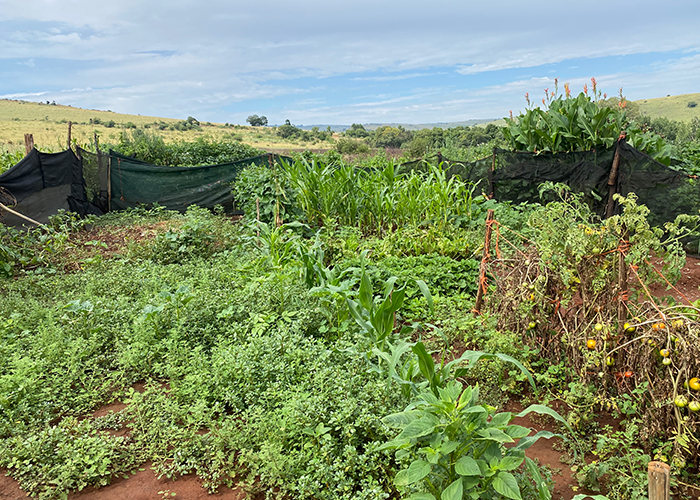
Amongst this unique blend of stubborn ground, scarce water and rules that make every decision feel like a negotiation with the future, our story unfolds within this landscape and its community of mothers, fathers, grannies and young people who grow between homes, not on open farmland, turning small plots into meals.
Facing these challenges head-on, they’re tasked with balancing conservation with opportunity and regeneration with production. As the ultimate stewards of their communities, South African micro-farmers are cultivating seeds of hope.
Life as a micro-farmer
In contrast to traditional commercial farming, these farmers operate on a much smaller scale. They do so without yield predictability and with limited access to local markets and technology.
Here, ‘yield’ is not a metric. It is school lunch, month-end and whether a household can breathe a little easier.
Shouldering the weight of progress without modern conveniences, they rely heavily on manual labor and face additional challenges like a lack of financing and market infrastructure. Despite these obstacles, with every passing season, they continue to nurture the seeds of hope – the hope for greater food security, a more sustainable future and greater economic and community independence.
The challenges farmers face
The tending of these seeds is not without its fair share of challenges.
Sensors and IoT devices used to monitor soil moisture and crop health are widely unavailable. Making data-driven decisions about irrigation, fertilization and yield optimization is an impossible feat. Without access to these insights, farmers must rely on shared knowledge and best practices, unable to adapt to inevitable changes.
While these limitations greatly impact yield, another hurdle may be even greater: market access.
In this region, farmers are disconnected from pricing and market trends. That means they’re also disconnected from buyers.
Recognizing these challenges,' dataDecisions.ai and The Dream – approached SAS with one powerful question:
How can we use data analytics to help South African micro-farmers deliver higher yields?
As Hadley Christoffels, founder of dataDecisions.ai, explains, "Food security will not be solved by commercial agriculture alone. If we are serious about building a more resilient food system, micro-farmers must be treated as essential contributors to the formal economy, not as an afterthought. They are producing food where hunger is most immediate, yet too often they do so without the data, insights and decision support needed to make every resource count."
Turning data into insight
When I joined the collaborative project between our two organizations, I wasn’t entirely sure where the narrative would lead. I only knew I wanted to help humanize the data and discovery as the project’s storyteller.
Admittedly, translating my team's statistical analysis into words that felt authentic proved difficult at first. From afar, the sheer magnitude of the challenges that these farmers share was hard to comprehend. After all, at more than 8,000 miles away, I’m admittedly immersed in an “always on” society, and it’s modern-day conveniences.
With the click of a finger, I’ve used Instacart more in the last several years than I care to admit, and it’s become more second nature to me than stepping into an actual grocery store. Although I am married to a chef with access to a culinary farm, I’ve realized throughout this project how wildly disconnected I truly am from the food sources.
Conversely, I’ve come to realize how deeply connected the South African micro-farmers are to their communities and the pivotal roles they play in redefining responsible consumption and rethinking waste.
Food security will not be solved by commercial agriculture alone. If we are serious about building a more resilient food system, micro-farmers must be treated as essential contributors to the formal economy, not as an afterthought. Hadley Christoffels
These farmers are aware of the ripple effect that farming practices and food choices have on the average consumer, which the average consumer isn’t privy to.
As I began to see the people behind the data, my mindset shifted toward empowerment and agency.
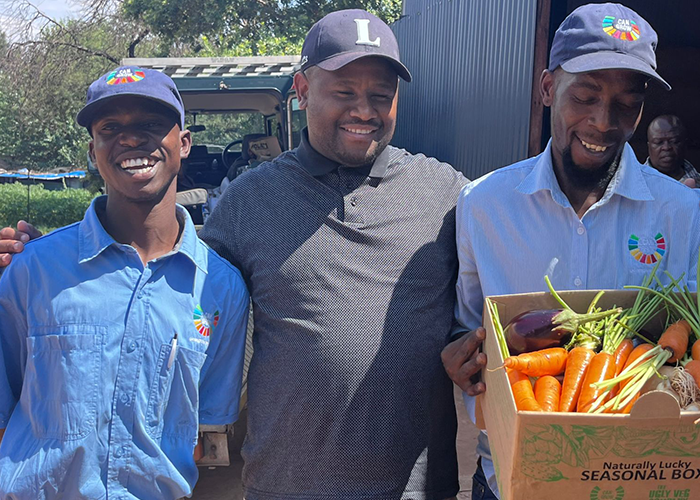
Empowerment through insight
As a group, we began discussing how we could support this community. We studied factors such as how much they can realistically grow and how long it takes to harvest. and what the market is paying when they are finally ready to sell. Not only that, but we wanted to empower the farmers to prioritize profitable crops.
Because the reality is, these farmers are already experts in their craft. Their expertise is the kind that comes from generational knowledge, resiliency and adaptation. It cannot be taught with spreadsheets, nor texts of facts and figures, but it can be illuminated by eliminating some of the burnout that comes when you combine manual labor with an overload of guesswork.
Human agency is human empowerment, and data-driven insights are a key component of that empowerment.
"Dignity is never an abstract idea; it is a daily lived experience, measured by whether a household can feed its children, whether effort turns into outcome, and whether people feel seen rather than managed," said Steve Monty, founder of The Dream. "When I look at growers in informal settlements, I do not see a problem to be solved, I see capability waiting for a fair pathway."
What the data revealed
Seasonal crop analysis revealed several patterns across the farms studied:
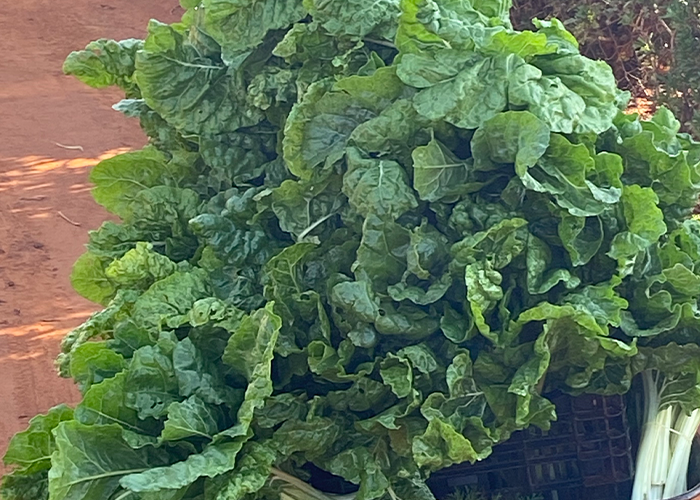
- Autumn: Most crops showed relatively low but consistent yields. Carrots, spinach and kale dominated production.
- Spring: Spinach yielded the highest amount, followed by pumpkin and beetroot. Clustered planting in late 2024 demonstrated stronger stability.
- Summer: There was notable variability. Pumpkins and spinach again led by significant margins, with tomatoes also achieving notable yields.
- Winter: Spinach once again led by a significant margin, followed by carrots and rape, while most other crops remained low but consistent.
Across all seasons:
- Crop yields were generally low and variable.
- Pumpkins and spinach performed strongly in spring.
- Sweet potato, maize and pumpkin performed well in summer.
- Rape, carrots and kale appeared more frequently in autumn harvests.
- Radish and spinach dominated the winter months.
- Longer growth periods (100–150 days) were associated with higher yield variability.
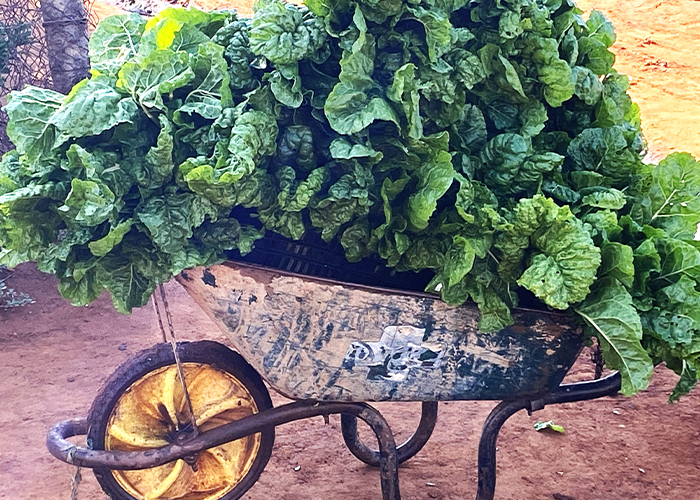
Overall, spinach, carrots and pumpkin generated the highest returns, largely due to larger batch volumes and higher adjusted market selling prices (MSP).
Growing opportunity through data
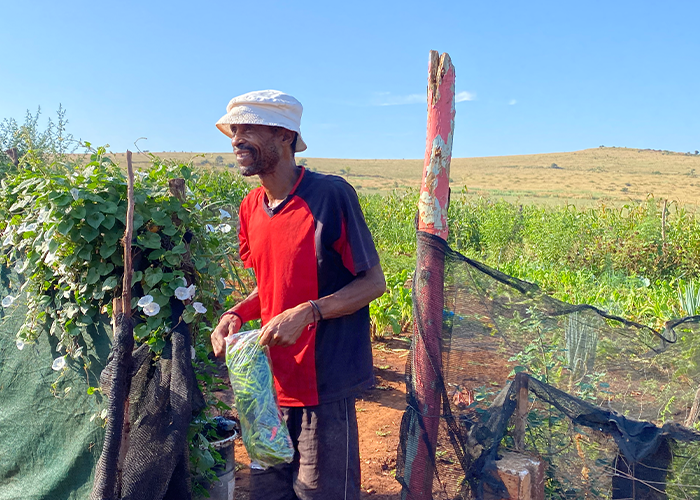
South African micro‑farmers are champions of the land and the fabric of their communities – communities often among the most affected by hunger. They deserve a seat at the table of discussions on food economies well beyond their region. Their stewardship shows us that thoughtful consumption is thoughtful living and that caring for the land is a responsibility shared by all.
Dignity is never an abstract idea; it is a daily lived experience, measured by whether a household can feed its children, whether effort turns into outcome, and whether people feel seen rather than managed. Steve Monty
Data helps us see the world as it is, but more importantly, it helps us imagine what it can become. As one partner in the project reflected, “This work creates a scalable pathway from informal growing to dignified livelihoods – enabling better production, better incomes and a resilient supply chain built on transparent, high‑quality data.”
Through thoughtful partnership, collaboration and analytics, information becomes action and challenges become opportunities. Together – with those leading stewardship as the Seeds of Hope, we’re proving that when data meets humanity, hope takes root.

1 Comment
Let's keep building the nature nd society 🙏