The DO Loop
Statistical programming in SAS with an emphasis on SAS/IML programs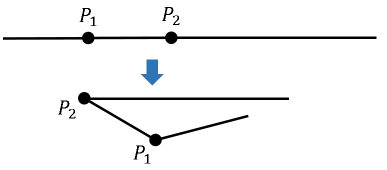

A classical problem in elementary probability asks for the expected lengths of line segments that result from randomly selecting k points along a segment of unit length. It is both fun and instructive to simulate such problems. This article uses simulation in the SAS/IML language to estimate solutions to the

For a time series { y1, y2, ..., yN }, the difference operator computes the difference between two observations. The kth-order difference is the series { yk+1 - y1, ..., yN - yN-k }. In SAS, the DIF function in the DATA step computes differences between observations. The DIF function
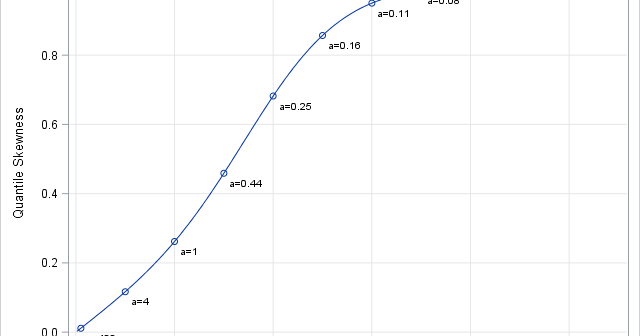
Skewness is a measure of the asymmetry of a univariate distribution. I have previously shown how to compute the skewness for data distributions in SAS. The previous article computes Pearson's definition of skewness, which is based on the standardized third central moment of the data. Moment-based statistics are sensitive to