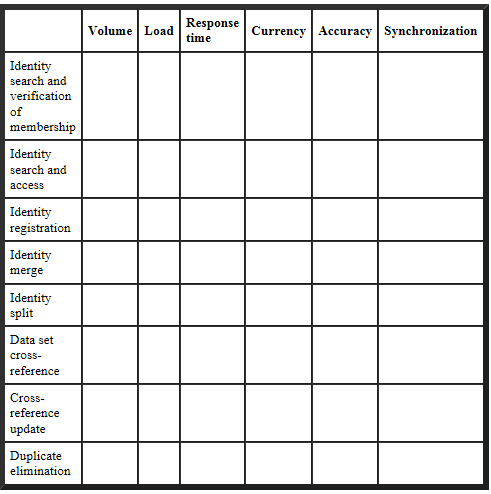
In my last series of posts, we looked at one of the most common issues with master data management (MDM) implementation, namely integrating existing applications with a newly-populated master data repository. We examined some common use cases for master data and speculated about the key performance dimensions relevant to those
Uncategorized
One of the biggest impediments to (and failures of) a new data governance program is the perceived level of “extras” required. Let’s enumerate some of the concerns that I hear consistently from our clients: Extra people will be required to staff the implementation. Extra budget money will be needed to fund the
One of the big problems with data migration projects is that, to the outside sponsor, they appear very much like a black box. You may be told that lots of activities and hustle are taking place, but there isn’t a great deal to show for it until the final make-or-break
"Technology is neither good nor bad; nor is it neutral." –Melvin Kranzberg The quote above is my favorite one of Kranzberg's six laws of technology. The law applies to everything from typewriters to tablets. Think of it as Moore's Law sans limits. I doubt that Kranzberg was a heavy-metal fan, but his
In previous posts, I pondered the evolution of problem solving that is being data-driven by our increasing reliance on algorithms, which some mistrust as a signal that we’re shifting from human to artificial intelligence (AI). Would you like to play a game? “Slowly but surely,” John MacCormick explained in his book Nine Algorithms that Changed the
Over the past few posts we've looked at developing an integration strategy to enable the rapid alignment of candidate business processes with the services provided by a master data environment. As part of a preparatory step, it is valuable to at the very least understand the implementation requirements to meet the
I recently discovered this technical white paper on SAS’ customer support site called Data Modeling Considerations in Hadoop and Hive, written by one of SAS’ R&D teams. I was intrigued by the team’s findings, so in this post, I want to share its highlights – without getting into the technical
It is easy to consider data migration as a movement problem. After all, we need to get our data from A to B with as little effort and cost as possible. With this viewpoint, many practitioners commence mapping and linking the source and target systems together to form an elaborate
As others have pointed out, 2013 may well go down as the year of Bitcoin, the first "mainstream" form of cryptocurrency. It's easy to dismiss Bitcoin as a fad, but other events from the previous year suggest that privacy is making a comeback. Exhibit A: Temporary photo and message app Snapchat, arguably the
My previous post was inspired by what Andrew McAfee sees as the biggest challenge facing big data: convincing people to trust data-driven algorithms over their expertise-driven intuition. In his recent VentureBeat blog post, Zavain Dar explained that the real promise of big data is that it will change the way