The DO Loop
Statistical programming in SAS with an emphasis on SAS/IML programs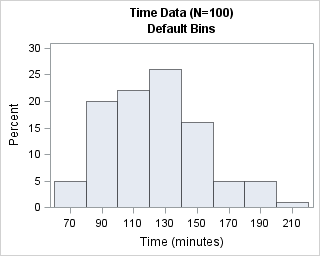

When you create a histogram with statistical software, the software uses the data (including the sample size) to automatically choose the width and location of the histogram bins. The resulting histogram is an attempt to balance statistical considerations, such as estimating the underlying density, and "human considerations," such as choosing

A SAS customer wrote, "I have access to PROC IML through SAS OnDemand for Academics. What is the best way for me to learn to program in the SAS/IML language? How do I get started with PROC IML?" That is an excellent question, and I'm happy to offer some suggestions.

Unless you diligently read the "What's New" chapter for each release of SAS software, it is easy to miss new features that appear in the language. People who have been writing SAS/IML programs for decades are sometimes surprised when I tell them about a useful new function or programming feature.