The DO Loop
Statistical programming in SAS with an emphasis on SAS/IML programs

While researching a topic in probability, I encountered a special mathematical function that I had not previously known about. The function is called Owen's T function (Owen, 1956, Ann. Math. Stat.). It is useful for computing multivariate probabilities, for defining the skew-normal distribution, and for computing probabilities associated with certain
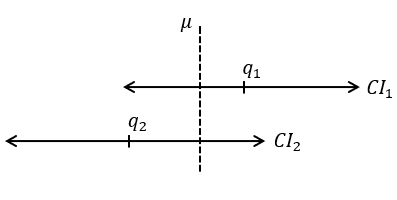
I write a lot of Monte Carlo simulations. This article discusses how to assess whether two independent Monte Carlo estimates are close to each other. This result can be used to test the correctness of a Monte Carlo simulation. It can also be used to compare different Monte Carlo algorithms

SAS has more than 25 common probability distributions that are supported in the PDF, CDF, QUANTILE, and RAND functions. If you want to work with a less common distribution, you can implement these functions yourself. For example, I previously showed how to use PROC FCMP in Base SAS to implement